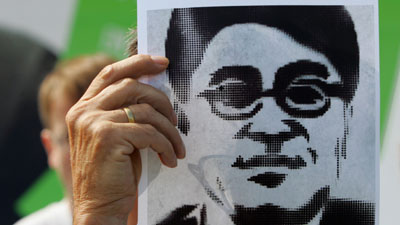
As Wang is freed, Chinese journalist Shi Tao still held
Chinese dissident Wang Xiaoning was released today after serving a 10-year prison term on charges of “incitement to subvert state power,” a case built in good part on client information supplied by Yahoo. Wang had used his Yahoo email account and the discussion forum Yahoo Groups to spread ideas the government deemed dangerous. His case…
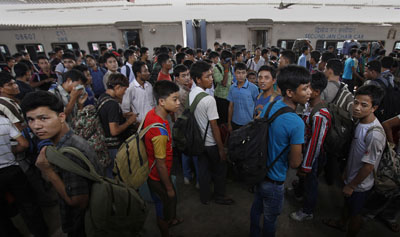
India’s clumsy Internet crackdown
Indian Internet advocates and journalists are in an uproar this week over the news that the government has blocked access to around 300 websites, pages, and social media accounts in an effort to quell communal violence in the turbulent northeast. The rationale is that inflammatory online content has fanned tensions between Muslims and non-Muslims in…
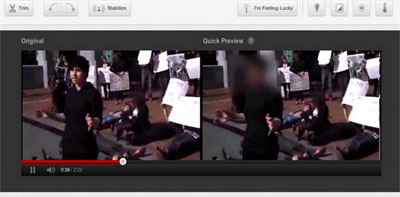
Face-blurring comes into focus for journalists
This week, YouTube announced a feature that should catch the eye of video journalists and bloggers working in dangerous conditions. After uploading a video to YouTube, you can now deploy a “blur faces” post-production tool that, in theory, should disguise the visual identity of everyone on the screen. The Hindu newspaper has an excellent how-to…

What to do if Google warns of state-sponsored attack
Some journalists continue to receive the warning from Google about state-sponsored attacks that we mentioned last week. The message appears on top of logged-in services like Gmail. Occasionally it will disappear for a few hours and then reappear, but there is no way to remove it.
State-sponsored attacks: open season on online journalists
The last few weeks have offered the strongest indications yet that nation-states are using customized software to exploit security flaws on personal computers and consumer Internet services to spy on their users. The countries suspected include the United States, Israel, and China. Journalists should pay attention–not only because this is a growing story, but because…

Internet giants submit to external free expression scrutiny
Journalists and bloggers in authoritarian countries have their work cut out thwarting governments that try to restrict their writing and reporting. The last thing they need to worry about is the provider of their publication platform helping authorities with censorship or surveillance. Cue the Global Network Initiative (GNI), a voluntary grouping of Internet companies, freedom…
UK surveillance plan must be watched carefully
When journalists make enemies in high places, they become vulnerable to the powers those figures wield. One such power is the state’s capacity to wiretap and obtain personal records from communications companies. From Colombia’s phone-tapping scandal to last year’s case of Gerard Davet–a Le Monde reporter whose phone records were obtained by the French intelligence…
Ahead of elections, Iran cracks down on press freedom
New York, February 28, 2012–The Iranian regime continued its persistent campaign against press freedom days ahead of its parliamentary elections on March 2 by sentencing two journalists to prison and periodically blocking millions of users from accessing the Internet, according to news reports. In addition, two journalists are suffering from deteriorating health conditions in prison,…
Old issues, new debates on Internet freedom in India
Just how free should the Internet be in India? And whose job is it to police the Web? Two recent court cases turn on these questions and, more specifically, whether Internet companies have a responsibility to filter content. In a country where Internet usage is growing exponentially, but where the scars of communal violence, terrorism,…