Ivory Coast authorities suspend a critical daily for one month
The government-run National Press Council on August 10, 2015, suspended for one month the privately owned daily Aujourd’hui, according to news reports. The council said the suspension was in connection with a series of articles the paper published between July 16 and July 31, 2015.
Pakistani government mandates guidelines for broadcasters
New York, August 21, 2015–The Committee to Protect Journalists is concerned by the sweeping nature of guidelines from Pakistan’s Electronic Media Regulatory Authority (PEMRA) for on-air news coverage and commentary on the nation’s television and radio channels. The Electronic Media (Programs and Advertisements) Code of Conduct, 2015 was made public Thursday in Pakistan and is…
South Sudanese President Salva Kiir threatens to kill journalists
Nairobi, August 17, 2015–The Committee to Protect Journalists condemns statements made by South Sudan President Salva Kiir on Sunday in which he threatened to kill journalists for reporting “against the country.” Kiir made the statement at the airport in the capital, Juba, before flying to Addis Ababa to attend peace talks with former Vice President…
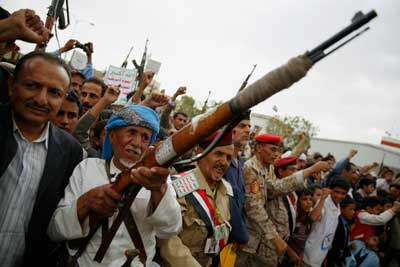
Yemeni journalists: ‘Our mouths are gagged’
In March 2014, Sana’a University media student Hisham al-Yousifi stood next to Dar al-Hajar, a royal palace built on the precipice of a rock formation just outside the capital, and announced to the video camera, “Here, there are a lot of tourists!” But there were no tourists, just his friends barely failing to hold back…
Moroccan court orders news website to shut for three months, fines editor
New York, August 14, 2105–A Moroccan criminal court on Monday ordered the independent news website Badil to suspend operations for three months and handed a harsh fine to its editor-in-chief, according to news reports and the journalist who spoke to CPJ. Hamid al-Mahdaoui was convicted of criminal defamation.
Q&A: How to cope with perils of being a Chinese news assistant for foreign media
News assistants, or zhongmi (which literally means “Chinese secretaries”), are Chinese citizens working for foreign journalists in China. They play a number of roles including monitoring news leads, conducting research, translating materials, and arranging interviews, as well as acting as cultural liaisons who can explain social and political phenomena to journalists who may not be…
Outlets banned in Bahrain and Syria over allegations of false news
New York, August 7, 2015–The Committee to Protect Journalists calls on authorities in Bahrain and the Kurdish-run territory of Syria to rescind two separate decisions this week to suspend the operations of three news outlets that fill a critical journalistic space in their respective areas. The three outlets have been accused of spreading false news…
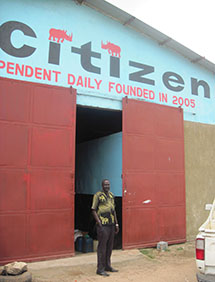
South Sudanese authorities silence three media outlets
Nairobi, August 5, 2015–Authorities in South Sudan have shut down three independent media outlets in the past five days, according to news reports and the outlets’ editors. The Committee to Protect Journalists condemns the closures, which come as international mediators seek to arrive at a peace deal between the government and the armed opposition following…
Militia in central Somalia detains six journalists for four days
Ahlu Sunna Waljama, a formerly government-aligned religious militia based in central Somalia, detained six journalists from July 31, 2015, to August 3, 2015, in the central town of Dhusamareb, according to news reports and local journalists.