
Michael Anti’s exile from Facebook over ‘real-name policy’
The Chinese journalist Michael Anti had his Facebook account deleted in January. The reason Facebook gave was that Michael Anti isn’t his real, government-recorded, name–which is true. Instead, Anti is the name that he has written under for almost a decade, on his own personal blogs, and in his writing for the New York Times…
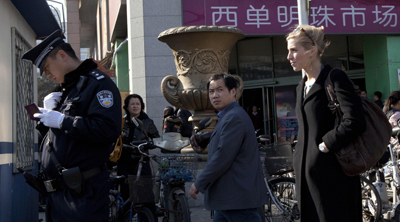
Mideast protests a red flag to Chinese censors
Working to defend press freedom, I take it that I’ve hit the mark when I get censored. So I smiled today when I got an e-mail from a friend in China who said he was in the gym watching breakfast television when my face came up on CNN. I opened my mouth and the screen…
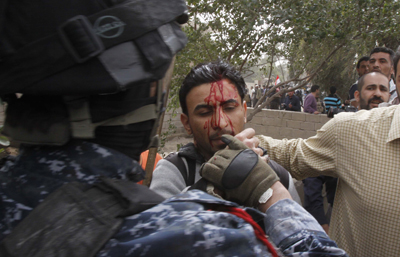
Libya keeps journalists from protests; Iraqi forces beat five
New York, March 4, 2011–Today in Libya, authorities prevented foreign journalists invited to report in the country from covering the crackdown on protesters in the capital, according to news reports. In southern Iraq, anti-riot police attacked at least five local journalists covering protests in Basra, according to news reports.
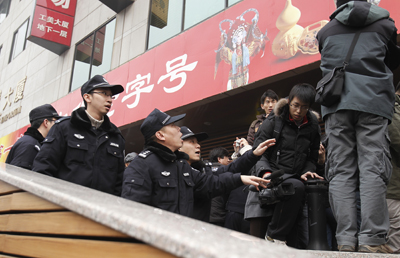
China threatens foreign journalists for ‘illegal’ reporting
New York, March 3, 2011–Police threats to revoke foreign journalists’ visas and require advance permission for newsgathering are disturbing new efforts to restrict reporting on protests in China, the Committee to Protect Journalists said today.
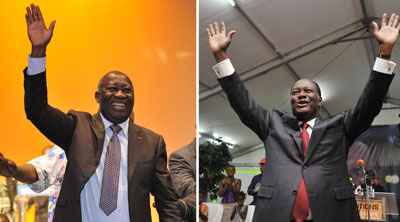
Ivory Coast political camps target rival media outlets
New York, March 1, 2011–Supporters behind incumbent Ivorian president Laurent Gbagbo and rival Alassane Ouattara are targeting rival partisan media oulets and their journalists in an increasingly bloody struggle for power, the Committee to Protect Journalists said today.
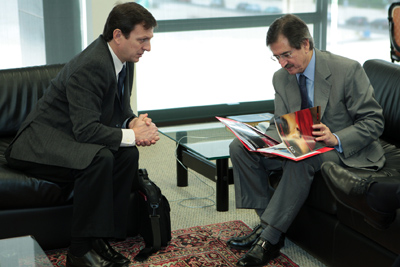
Brazilian officials tell CPJ they see judicial censorship
Government officials in the administration of Brazilian President Dilma Rousseff acknowledged that judicial censorship is inhibiting the work of the local press during meetings with CPJ on Thursday and Friday. At the same time, they said that due to the separation of powers under the Brazilian constitution, there is not much they can do to…
Cambodia orders popular blog blocked
Bangkok, February 23, 2011–The Committee to Protect Journalists is concerned by reports that Cambodian authorities have ordered local Internet service providers to block a number of websites, including the popular KI Media news aggregator and commentary blog, considered critical of the government.
Libya’s disordered Internet
Craig Labowitz at Arbor has been sifting through the evidence of how countries in the Middle East have been blocking and throttling the Internet in the last week. His analysis indicates that while both Bahrain and Yemen had periods of slowed or impaired access, only Libya seems to have taken the drastic step of shutting off the…
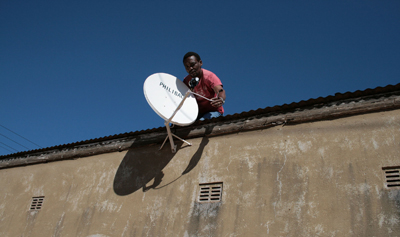
Sub-Saharan Africa censors Mideast protests
As news of Middle Eastern and North African protests swirl around the globe, satellite television and the Internet prove vital sources of information for Africans as governments fearful of an informed citizenry and a free press such as in Eritrea, Equatorial Guinea, and Zimbabwe impose total news blackouts on the developments.
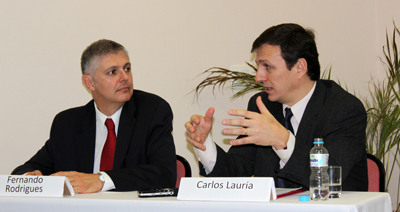
Attacks launch: Judicial censorship strikes a chord in Brazil
During the presentation of our annual survey, Attacks on the Press, in Sao Paulo, there was clear concern about the ability of the local media to report on issues of public interest without judicial interference. Journalists for three of the largest national dailies–O Estado de Sao Paulo, Folha de Sao Paulo, and O Globo–together with…