DRC’s Kabila government bans broadcaster favorable to rival
New York, July 13, 2011–The Committee to Protect Journalists condemns the Democratic Republic of Congo’s ban of a private broadcaster favorable to opposition presidential candidate Etienne Tshisekedi. The blocking and ban of the broadcaster since Saturday is in violation of the country’s press laws.

Chinese censorship fans rumors on Jiang Zemin
Sina’s Twitter-like microblog platform Weibo blocked searches for “death,” “river” and “301 Hospital” on Wednesday, according to The Wall Street Journal website. The company was responding to what Reuters reported was the service’s most-discussed topic yesterday–the rumored demise of former President Jiang Zemin, whose surname, Jiang, means “river,” and who may or may not have…
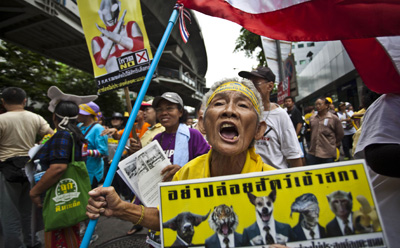
Media targeted in Thai political transition
Bangkok, July 7, 2011–The Committee to Protect Journalists condemns the raid and seizure of broadcasting equipment by police at six community radio stations in Thailand’s northeastern Nakhon Ratchasima province. The raids were staged two days after caretaker Prime Minister Abhisit Vejjajiva’s government lost to the opposition Peua Thai party in general elections held on July…
Sudan mounts contrived legal cases against journalists
New York, June 29, 2011–The Sudanese government continues to aggressively target individual journalists and publications through contrived legal proceedings, politicized criminal charges, and confiscations, the Committee to Protect Journalists said today.
On food safety, China misapplies a ‘blacklist’
Sarcasm reflects how aware the Chinese public has become of the dangers of adulterated food. After Japan’s Fukushima nuclear crisis, a rumor circulated in China that table salt could prevent radiation. In spite of the government’s efforts to curb the rumors, tons of overpriced table salt were sold overnight. Chinese netizens reassured the public in…
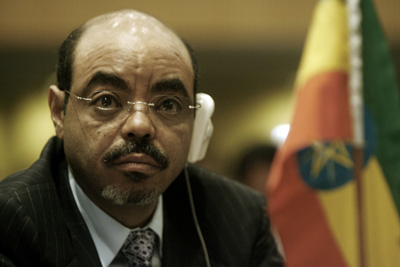
In Ethiopia, anti-terrorism law chills reporting on security
How can an Ethiopian reporter cover the activities of Ethiopia’s leading opposition figure, Berhanu Nega, or an attack by the Ogaden National Liberation Front (ONLF) rebels without risking prosecution and a 20-year prison sentence? Such questions have haunted Ethiopian journalists since a far-reaching anti-terrorism law came into effect in 2009. The law criminalizes any reporting…
Rimjin-gang’s latest reporting from North Korea
Here’s a quick pointer to Rimjin-gang, my favorite website delivering current reporting from North Korea. Produced by Japan-based Asia Press Network, Rimjin-gang is also just about the only site producing news from one of the world’s most censored nations.
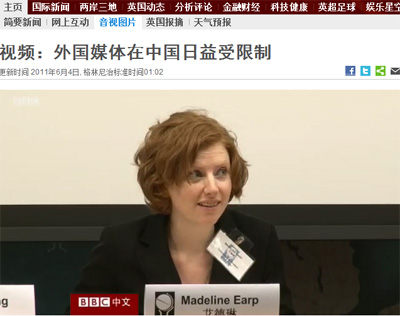
Chinese media freedom in a ‘sensitive’ period
I was in London on Friday, speaking at a seminar joint-hosted by the BBC Chinese service and the British think tank Chatham House called “Media Freedom in China and the Role of International Broadcasters.” There was a lot of impassioned discussion about the range of challenges facing international broadcasters, from slashed budgets to the recent…
In Egypt, military harasses critical journalists
New York, June 2, 2011–The Committee to Protect Journalists today called on Egypt’s ruling Supreme Council of the Armed Forces (SCAF) to stop its harassment of journalists who report critically on the military. Officers and military prosecutors have censored, harassed, or otherwise intimidated numerous critical journalists since February, and particularly in recent weeks.