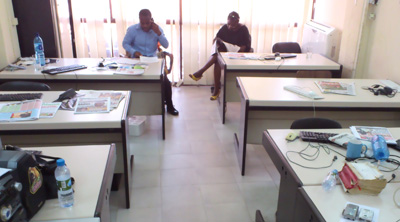
Angolan police raid weekly’s office, seize computers
New York, March 12, 2012–The Committee to Protect Journalists condemns today’s Angolan police raid at the independent weekly Folha 8, which was conducted in connection with a politicized investigation into the publication of a satirical photo montage. Officers confiscated all of Folha 8’s computers, effectively crippling the operations of one of the country’s two remaining…

Journalists at work in China: Tibet and Beijing edition
China media analysts are looking to two significant events to shape coverage this month: The anniversary of a failed uprising in Tibet, and the annual meetings of China’s top political bodies, the National People’s Congress and the Chinese People’s Political Consultative Conference in Beijing. Journalists at work in both areas attracted coverage of their own…
Puntland radio station closed, director held
New York, March 5, 2012–Authorities in the semi-autonomous region of Puntland in Somalia shut down an independent radio broadcaster and arrested the station’s director over coverage of fighting between the government and Al-Shabaab militants, local journalists said.Around 10:20 p.m. Saturday, armed police arriving in two vehicles raided Codka Nabadda (Voice of Peace) in the port city of…
Kuwaiti daily suspended for ‘creating sectarian strife’
New York, March 5, 2012–Kuwaiti authorities must lift their suspension of the privately owned newspaper Al-Dar and drop antistate charges lodged in connection with articles that sought to defend the country’s Shiite minority, the Committee to Protect Journalists said today.
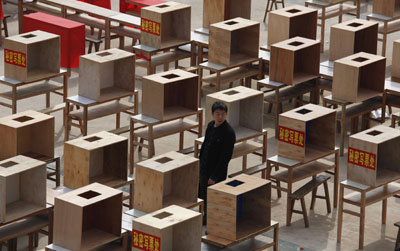
On board the election bus in China’s Wukan
Village elections taking place this weekend in southern Guangdong province’s Wukan illustrate the strengths and weaknesses of China’s media control. Censorship measures have not prevented strong domestic and international coverage of the democratic process. But has official tolerance of dissenting views increased since leaders cracked down on the attempted Jasmine revolution last year? Or is…
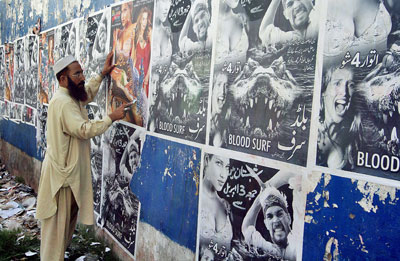
Pakistan’s excessive Internet censorship plans
Last month, Pakistan’s government put out requests for proposals for a massive, centralized, Internet censorship system. Explaining that “ISPs and backbone providers have expressed their inability to block millions of undesirable web sites using current manual blocking systems,” the state-run National Information Communications Technology Research and Development Fund said it therefore requires “a national URL…
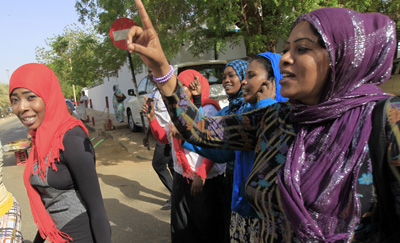
Sudan attempts to silence opposition news coverage
New York, March 1, 2012–Sudanese authorities must halt their efforts to silence news coverage of opposition leadership, the Committee to Protect Journalists said today. Authorities have already closed three newspapers in 2012 and confiscated thousands of copies, CPJ research shows.

Ethnic violence renews information clampdown in China
Two months into 2012, all-too-familiar stories are emerging from China’s troubled minority regions, Tibet and Xinjiang. Following riots against Chinese rule in 2008 and 2009, violence and its corollaries–increased security and censorship–have become commonplace. Independent bloggers and journalists who cover the unrest pay a high price: Over half the 27 journalists documented by CPJ in…
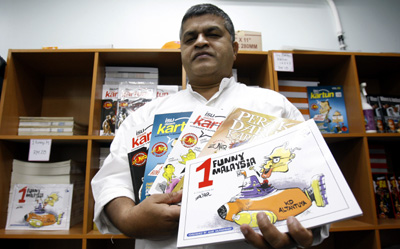
No joke: Malaysian cartoonist stands up to government
Tuesday marks the next step in a legal faceoff between Malaysian authorities and the well-known political cartoonist Zulkiflee Anwar Haque, also known as Zunar. Hearings will resume in civil lawsuit filed by Zunar that challenges the legality of his arrest and detention in September 2010. Malaysian police arrested him hours ahead of the scheduled launch…