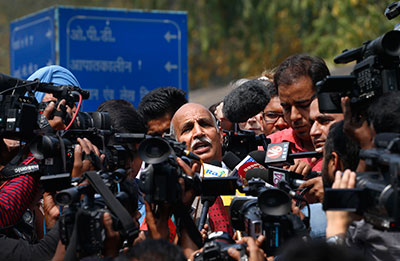
In India, media gag order on rape trial lifted
In a welcome move, Indian media will finally be allowed to cover court proceedings in the rape case that shook India’s conscience. On Friday, the Delhi High Court lifted a gag order on media covering the ongoing trial of those accused of the gang rape and murder of a 23-year-old student in Delhi in December.
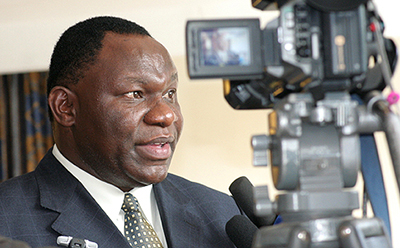
New challenges for local and foreign press in Kenya
Kenya has passed peacefully through its election period, but questions still hang over the legitimacy of presidential candidate Uhuru Kenyatta’s victory–as well as over the future of the country’s media coverage. During polling, challenges arose for both local and international media, and they have not subsided. For the foreign press, it is now unclear how…
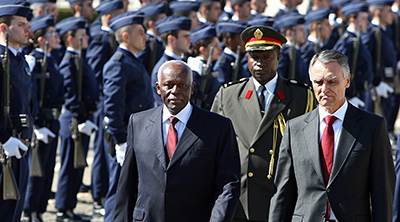
Portuguese media chilled by Angolan involvement
Portuguese journalists are increasingly concerned by Angola’s growing investment and influence in their country. Buoyed by petrodollars and diamonds, powerful Angolan interests have been indulging in a buying spree in their former colonial power. Angolan capital invested in Portugal increased 35 times in the past decade, according to news reports. In a process often acidly…
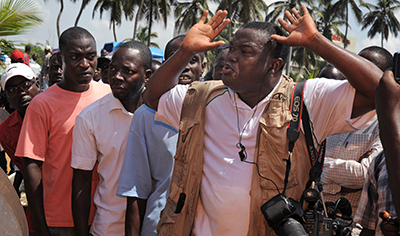
In Togo, police attack journalists protesting media law
Lagos, Nigeria, March 18, 2013–Togolese police on Thursday fired rubber bullets and tear gas to disperse journalists protesting new censorship authority granted to the government media regulator, according to news reports and local journalists.
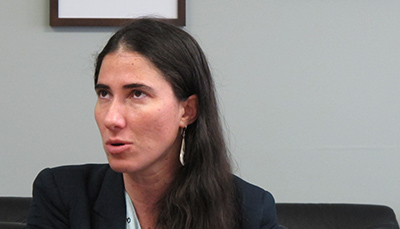
Sánchez, Cuba’s blogging pioneer, eyes a new trail to blaze
Having broken through one long-standing barrier, Yoani Sánchez, the pioneering figure in Cuba’s independent blogosphere, is looking to smash another. “It seemed like an impossible dream, but here I am,” Sánchez told a gathering today at CPJ’s New York offices. After being denied travel authorization at least 20 times in the past, Sánchez is in…
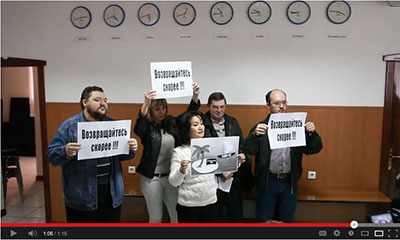
Under official pressure, Kazakh broadcaster closes
A blocked website; reporting equipment confiscated; a newsroom sealed; and reporters denied information from state agencies: these things together spelled the end of Stan.kz, a local, independent Internet-based broadcaster which for two years had tirelessly reported on developments in Kazakhstan. “We are forced to shut down the Stan.kz newsroom,” Bauyrzhan Musirov, owner of parent Stan…
Mission Journal: Who is a journalist in Egypt?
Egyptian journalists, besieged by punitive lawsuits and under threat, agree that under President Mohamed Morsi “there is no press freedom, only the courage of journalists,” as editor Ibrahim Eissa put it. What they can’t agree on is–in a climate of freewheeling, mutable media–who exactly is a journalist?
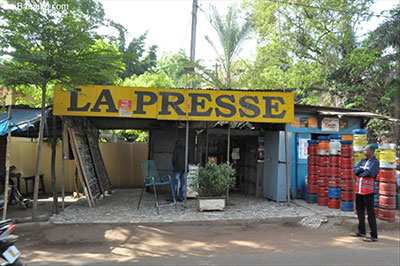
In Mali, one journalist’s detention ignites press revolution
Mali’s press has endured one attack too many. Since the coup d’état of March 22, 2012, CPJ has documented a staggering 62 anti-press violations across Mali. Journalists and media houses have become ready targets of attacks, threats, intimidation, assassination attempts, arbitrary arrests, detentions, and censorship by separatist and Islamist militant groups and government security forces…