Democratic Republic of the Congo: Two editors face death penalty for criticizing Kabila
Your Excellency, The Committee to Protect Journalists (CPJ) is alarmed at your government’s ongoing persecution of two Kinshasa weekly newspaper editors: Emile-Aimè Kakekese Vinalu of Le Carrousel, and Jean-Pierre Ekanga Mukuna of La Tribune de la Nation. Both journalists have been charged with high treason and face the death penalty if convicted, according to CPJ sources.
IPF Awards 2000 – Announcement
New York — The Committee to Protect Journalists (CPJ) presented its International Press Freedom Awards for the year 2000 to four journalists–from Bosnia-Herzegovina, the Democratic Republic of Congo, Malaysia, and Iran–for their courage and independence in reporting the news. These honorees endured jail, had their lives threatened and, in one case, survived a car-bomb attack,…
Panama: Jail for journalists as government drags heels on gag-law reform
Your Excellency, The Committee to Protect Journalists (CPJ) is concerned about the lack of progress in the reform of Panama’s “gag laws.” Two recent cases in which Panamanian journalists were sentenced to prison for allegedly defaming public officials highlight the urgency of abolishing these unjust statutes without delay.
Belarus: Independent press systematically intimidated
May 25, 2000 His Excellency Alexander Lukashenko President of Belarus Republic Minsk 220020 VIA FAX: 011-375-172-23-58-25 Your Excellency: The Committee to Protect Journalists (CPJ) is deeply disturbed by the continuing pattern of intimidation by federal and local authorities of the independent press in Belarus. Over the past few months, we have monitored many violations of…
TAOUFIK BEN BRIK ENDS 43-DAY HUNGER STRIKE
New York, May 16, 2000 —Tunisian journalist Taoufik Ben Brik, who went 43 days without food to protest government harassment, ended his hunger strike yesterday in Paris, where he has been staying since leaving Tunisia on May 4. Ben Brik had vowed to continue his strike until Tunisian authorities released his brother Jalal Zoughlami, who…
Free to travel but still on hunger strike, Tunisian journalist arrives in France for medical care
Click here to read more about press freedom conditions in TUNISIA. New York, May 5, 2000 — Tunisian authorities lifted a travel ban imposed on journalist Taoufik Ben Brik, who arrived in France yesterday. But Ben Brik vowed to continue his 33-day hunger strike until his brother is freed from government custody, the Committee to…
French press delegation assaulted outside home of beleaguered Tunisian journalist
Click here to read more about press freedom conditions in TUNISIA. New York, April 26, 2000 — Tunisian police assaulted a group of French press freedom advocates and journalists today when they attempted to visit Tunisian journalist Taoufik Ben Brik, who was in the 24th day of a hunger strike to protest two years of…
Journalist Enters 19th Day of Hunger Strike
Click here to read more about press freedom conditions in TUNISIA. Click here to read CPJ and Human Rights Watch’s recent joint protest letter to President Ben Ali: New York, April 21, 2000—Tunisian journalist Taoufik Ben Brik today entered the 19th day of a hunger strike launched on April 3 to protest the Tunisian government’s…
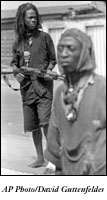
Attacks on the Press 1999: The Trauma of Sierra Leone
Introduction On January 6, 1999, rebel forces entered Freetown and launched a campaign of terror. Revolutionary United Front (RUF) fighters systematically murdered, mutilated, and raped thousands of civilians. During the three weeks that it took for Nigerian-led West African peacekeeping troops to expel the rebels from Freetown, Sierra Leone officially became the most dangerous country…