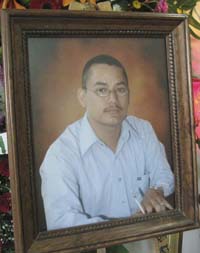
Mexico should investigate murder of abducted journalist
New York, May 21, 2012–Mexican authorities must break the cycle of impunity in journalist murders by fully investigating the killing of police beat reporter Marco Antonio Ávila García and bringing the perpetrators to justice, the Committee to Protect Journalists said today. Ávila’s body, which showed signs of torture, was found on Friday on a dirt…
Crime reporter abducted in Mexico
New York, May 18, 2012–The veteran crime beat reporter Marcos Ávila García was abducted Thursday afternoon in the Mexican town of Ciudad Obregón, in northwest Sonora state, according to news reports. Ávila reports for the local daily El Regional de Sonora, the newspaper said.
In Mexico, cartels target journalists
On May 4, CPJ reported the murder of two Mexican photographers and a former photojournalist in the Veracruz state of Mexico. Also in Veracruz, a month prior, CPJ documented the killing of journalist Regina Martinez Perez and recognized Veracruz as one of the most dangerous places for the press. Senior America’s Program Coordinator, Carlos Lauria, speaks…

Safer mobile use is key issue for journalists
As the Internet and mobile communications become more integrated into reporters’ work, the digital threats to journalists’ work and safety have increased as well. While many press reports have documented Internet surveillance and censorship–and the efforts to combat them–mobile communications are the new frontline for journalist security.
Organized Crime and Corruption
Crime and corruption are extremely dangerous beats, CPJ research shows. Thirty-five percent of journalists killed worldwide since 1992 covered these two topics. The lines between political and criminal groups are blurred in many nations, raising the risk for reporters. From Mexico to Iraq, criminal groups are operating increasingly like armed political forces, and armed political…
Iraqi cybercrime bill is the worst kind
After the rash of political revolutions and criminal attacks on governments and companies last year, it wasn’t hard to predict that 2012 would be the year of a cybercrime crackdown. The United States is considering its own cybercrime legislation, and the European Union is seeking to harmonize its member state’s computer crime laws. Governments understandably…
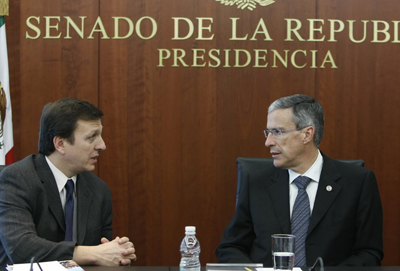
CPJ Impact
News from the Committee to Protect Journalists, March 2012 Landmark legislation in Mexico After years of advocacy by CPJ and other press freedom groups, Mexico’s senate finally approved legislation ensuring the punishment of anti-press crimes. Mexican President Felipe Calderón had promised a CPJ delegation in 2008 and again in 2010 that he would get the…
In Mexico, two media outlets attacked within a week
New York, March 27, 2012–Mexican authorities must investigate attacks on a newspaper and TV station in the northeastern state of Tamaulipas and ensure the offices and its staff members are protected, the Committee to Protect Journalists said today. Both attacks occurred within the space of one week.
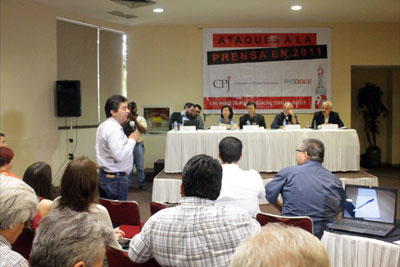
Solidarity in Sinaloa: Journalists, others address crisis
A unified front is crucial when facing a crisis in press freedom like that in the violent state of Sinaloa in Mexico, Colombian journalist and CPJ board member María Teresa Ronderos said this week. She was speaking to a packed room of print, radio, and television reporters; members of civil society groups; state legislators; union…