Filipovic Trial Starts Tomorrow in Belgrade Serbian Investigative Reporter Charged with Espionage, Spreading False Information
New York, July 24, 2000 — Starting tomorrow, a military court in the city of Nis (235 kilometers south of Belgrade) will hear the case of Miroslav Filipovic, a leading Serbian investigative journalist charged with espionage and spreading false information. The trial is expected to last two days, according to CPJ’s local sources. The verdict…
IPF Awards 2000 – Announcement
New York — The Committee to Protect Journalists (CPJ) presented its International Press Freedom Awards for the year 2000 to four journalists–from Bosnia-Herzegovina, the Democratic Republic of Congo, Malaysia, and Iran–for their courage and independence in reporting the news. These honorees endured jail, had their lives threatened and, in one case, survived a car-bomb attack,…


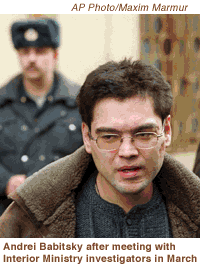
Freedom and Captivity: Terry Anderson Interviews Andrei Babitsky
July 17, 2000– Earlier this month, CPJ Vice Chairman Terry Anderson visited Moscow as a member of an international delegation of press freedom advocates. The delegation met with a consortium of Russian journalists and officials to voice concern over the increasing number of attacks on the Russian media. On July 12, Anderson spoke with Russian…
INTERNATIONAL PEN PRESIDENT DECLINES YUGOSLAV AWARD
New York, August 7, 2000 –To protest the repression of writers in Serbia, Homero Aridjis, the President of International PEN, is refusing the “Smederevo Golden Key” literary prize at the Smederevo Fall Poetry Festival (Belgrade, October 2000). Mr. Aridjis, internationally acclaimed Mexican poet and a columnist for the daily Reforma, was invited to come to…
The Gambia: CPJ concerned about recent press freedom violations
Your Excellency: The Committee to Protect Journalists (CPJ) is deeply concerned about recent press freedom violations in The Gambia, including the prosecution of one journalist on murder charges. Based on our investigation into the abuses related in this letter, we have come to the unfortunate conclusion that these attacks against journalists are not isolated incidents, but part of a systematic campaign to suppress reporting on issues of legitimate public concern.
Lebanon: Repected journalist’s passport revoked
Your Excellency: The Committee to Protect Journalists (CPJ) is writing to strongly protest the Lebanese authorities’ recent decision to annul the passport of Raghida Dergham, the New York bureau chief for the London-based daily Al-Hayat and a widely respected commentator on Arab affairs.
Junta Cracks Down on the Press after “Failed Coup”
Click here to read more about press freedom conditions in CÔTE D’IVOIRE New York, July 7, 2000 — On July 5, in the aftermath of what he described as a “failed coup,” Côte d’Ivoire’s military ruler General Robert Gueï warned local journalists to be “careful” because they will now be severely punished for politically motivated…