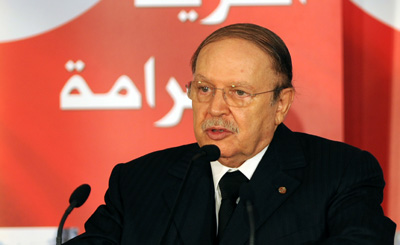
Tunisian media: One year after the revolution
The doses of freedom that the Tunisian revolution injected into national media have not been sufficient to revive it after decades of systematic destruction. It is not surprising that our evaluation of media one year after the tyrant fell reveals more negativity and pessimism.
Online publishers, developers sentenced to death in Iran
Politically-related Iranian prosecutions often take place in near secrecy, with unclear charges morphing and changing over time. It doesn’t get any easier to work out the motivations of prosecutors when the charges are connected to technology.
Sudan confiscates, shuts down newspapers again
New York, January 18, 2012–The Committee to Protect Journalists condemns Sudan’s routine use of newspaper closures as a means to censor critical reporting. Over two weeks, the authorities have shut down and confiscated the assets of two daily newspapers.
Attacks, arrests, legislation restrict Israeli press freedom
Dear Prime Minister Netanyahu: The Committee to Protect Journalists is alarmed by ongoing attacks on and detention of journalists in the Occupied Palestinian Territories as well as by a recent series of developments that restrict freedom of the press in Israel. Physical attacks, arrests, and other restrictions are creating an environment that undermines the vitality of the media, a key component of Israel’s democracy.
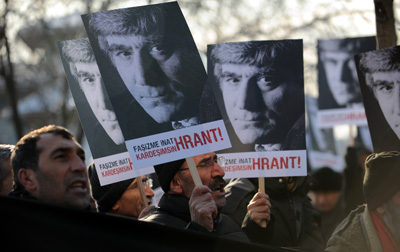
Further investigation necessary in Hrant Dink murder
New York, January 17, 2012–The conviction of several accomplices in the 2007 assassination of Hrant Dink, then-editor of the Turkish-Armenian weekly Agos, fails to address the issue of who commissioned the slaying, thus perpetuating impunity in the case, the Committee to Protect Journalists said today.
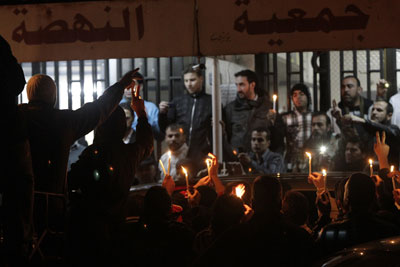
Jacquier’s killing raises chilling questions on Syria
The killing on January 11 of a French TV reporter has sent a chill through the international press corps trying to cover the violence in Syria. Gilles Jacquier, 43, who was on assignment for the French public service channel France 2, was a seasoned journalist and the laureate of France’s most prestigious journalism prizes. As…