News coverage of economic sanctions barred by Iran
New York, July 12, 2012–Iranian authorities have issued new censorship guidelines barring domestic news outlets from reporting on the impact of Western economic sanctions, local and international news outlets reported Wednesday. And, with at least three imprisonments reported, the government is continuing its years-long anti-press campaign.
Libyan journalists kidnapped after covering elections
New York, July 10, 2012–Libyan authorities must establish the whereabouts of two journalists kidnapped on Saturday and do all in their power to secure their safe release, the Committee to Protect Journalists said today. The journalists were abducted on their way to the city of Misurata after covering the country’s first elections in decades, according…
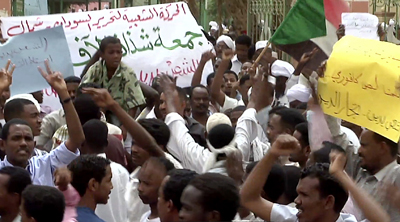
In Sudan, journalists detained after covering protests
New York, July 9, 2012–Sudanese authorities must immediately release two journalists who were taken into custody nearly a week ago after covering anti-government protests in Khartoum, the Committee to Protect Journalists said today. The whereabouts or any charges against the journalists have not been disclosed.
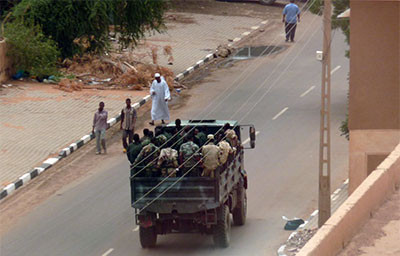
Sudan must end crackdown on press covering protests
New York, July 3, 2012–Sudanese authorities should allow journalists to cover anti-government demonstrations in Khartoum, the Committee to Protect Journalists said today. Over the past week, authorities have raided a media office and a journalist’s home, arrested one journalist and interrogated another, deported a third journalist, and blocked at least three critical websites.
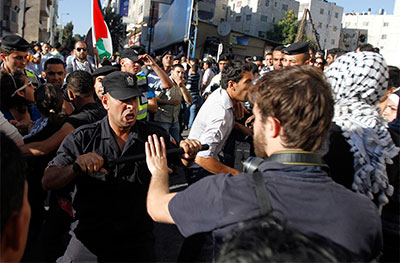
Palestinian security forces assault journalists at protests
New York, July 2, 2012–The Committee to Protect Journalists today condemned attacks by Palestinian security forces on at least four journalists who were covering protests against the Palestinian Authority in Ramallah on Saturday and Sunday, according to news reports.
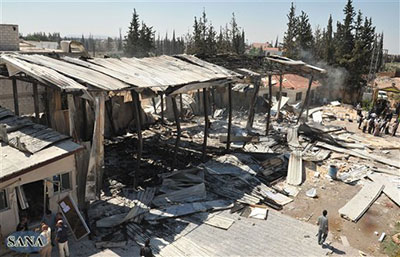
Deadly attack launched on Syrian TV station
New York, June 27, 2012–A number of employees for the pro-government Syrian television station Al-Ikhbariya were killed when the station was attacked by gunmen this morning, according to the official news agency Sana. Other employees were reported wounded or kidnapped, the agency said.

Another journalist reports sex assault in Tahrir Square
The story sounds hideously like another–one of a chaotic, predatory attack on a woman journalist in Cairo’s Tahrir Square. Clothes torn from her body, hundreds of men surging to grab her breasts and claw at her. A woman wondering, “Maybe this is how I go, how I die.” It has been almost a year and…

What to do if Google warns of state-sponsored attack
Some journalists continue to receive the warning from Google about state-sponsored attacks that we mentioned last week. The message appears on top of logged-in services like Gmail. Occasionally it will disappear for a few hours and then reappear, but there is no way to remove it.