Attacks on the Press 2010: Morocco
Top Developments • Government pressures advertisers, uses courts to punish critical media. • Authorities obstruct Spanish and other foreign reporters in Western Sahara. Key Statistic 2: Leading independent weeklies that closed under government pressure. A daily facing harassment moved online. The government continued using the judiciary to settle scores with critical journalists and pressuring private…
Moroccan authorities impeding Spanish journalists
New York, November 9, 2010–The Committee to Protect Journalists is alarmed by an increasing climate of hostility for Spanish journalists in Morocco, highlighted by official measures to prevent Spanish journalists from covering clashes in the Western Sahara. CPJ calls on Rabat to allow journalists to do their work unimpeded.
Morocco suspends Al-Jazeera operations indefinitely
New York, November 1, 2010–The Committee to Protect Journalists condemns the Moroccan authorities’ decision to indefinitely suspend Al-Jazeera’s reporting in Morocco. The government withdrew accreditations from Al-Jazeera staff. CPJ calls on the Ministry of Communications to rescind its decision.

CPJ urges Morocco to improve press conditions
New York, September 26, 2010–On the eve of a high-profile conference on press freedom in Rabat, the Committee to Protect Journalists reiterates its call to King Mohammed VI to use his constitutional prerogatives to bring Moroccan legislation in line with international standards for freedom of expression. CPJ also urged the monarch to end the use…
Morocco declares itself ‘democratic’ while restricting media
While high-ranking Arab officials are not held accountable for misinforming or misleading the public, critical journalists in their respective countries are increasingly dragged into courts and handed harsh jail sentences following unfair trials for “spreading false news.”
Morocco pardons journalist to create smokescreen
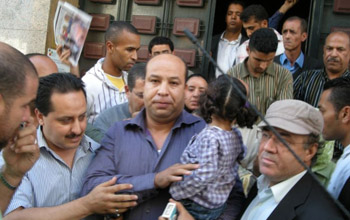
On Friday evening, after receiving an unexpected royal pardon, Driss Chahtan, the editor of the independent weekly Al-Michaal, was released from Oukacha Prison in Casablanca. However, his release is one of the few positive developments amid many alarming cases of worsening press conditions in Morocco.
European Human Rights Court takes on press freedom
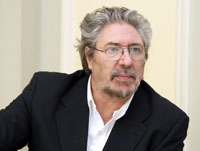
The European Court of Human Rights issued a historic sentence on June 1, when it ruled that Spain’s sentencing in a case between the now-deceased Moroccan king Hassan II and me, formerly the editor of the Madrid-based newspaper Diario 16, violated the rights of freedom of expression and of the press.
CPJ urges Morocco to halt politicized prosecutions
Your Majesty: The Committee to Protect Journalists is disappointed by the government’s continued use of the courts to suppress freedom of expression, and it urges you to use your constitutional prerogatives to end the unjust imprisonment of our colleague Driss Chahtan. We also ask you to instruct authorities to end the practice of withholding accreditation from journalists working for critical foreign news outlets.
CPJ trip to Morocco reveals gap between rhetoric and reality
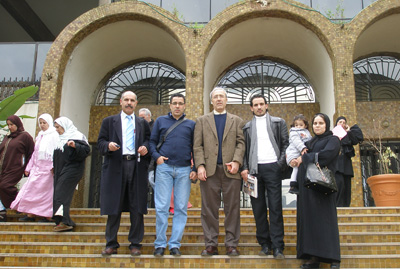
Two weeks ago, Mohamed Abdel Dayem, CPJ’s Middle East and North Africa Program Coordinator, and I were in Morocco to hold meetings with government officials as well as journalists. In some ways the trip was a success, but in other ways it left much to be desired from a country that claims to be “at the forefront of…