Doing the numbers on press freedom
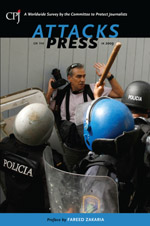
On Tuesday, CPJ released its annual report, Attacks on the Press, with a global launch in six cities—Tokyo, New York, Brussels, Bogotá, Cairo, and Nairobi. We’ve noticed that different media reports, using our data, have cited slightly different numbers in regards to two key statics, the number of journalists killed and the number imprisoned in…
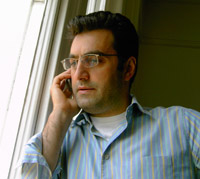
Columbia J-students learn the price of reporting in Iran
The two venues for the launch of Attacks on the Press in New York couldn’t have been more different. On Tuesday morning I was joined by Newsweek’s Maziar Bahari, and CPJ Asia Program Coordinator Bob Dietz in the hushed auditorium of the Dag Hammarskjöld Library at United Nations headquarters. The event was so well attended…

Haiti’s online news agencies barely functioning
The three main online news agencies in Port-au-Prince, the Haitian capital, are struggling in the aftermath of the quake. Clarens Renois, the founding director of Haiti Press Network, addressed the outlet’s future frankly: “In three months, I will close the agency,” he said.
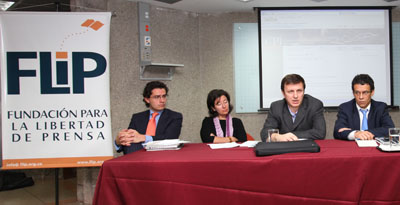
Colombian government tells CPJ it ‘rejects’ illegal spying
Shortly after arriving in Bogotá to launch Attacks on the Press, I realized the Colombian government was well aware of our concerns about illegal espionage against the media. Top government officials, including President Alvaro Uribe Vélez, had confirmed meetings with a delegation from CPJ and the local press freedom group Foundation for Freedom of the…
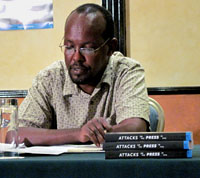
African journalists face increasing risk for foreign outlets
“I didn’t wear the bulletproof jacket and helmet that Reuters gave me,” explained veteran Somali journalist Sahal Abdulle to a packed crowd at Nairobi’s Serena Hotel for CPJ’s launch of Attacks on the Press. “It didn’t seem right when my colleagues, local journalists, were risking their lives trying to cover the same event.” Abdulle, like…
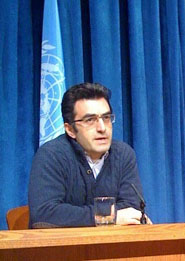
At U.N, Bahari and CPJ urge global attention
Newsweek journalist Maziar Bahari helped us launch Attacks on the Press at the United Nations in New York today. Bahari, an Iranian-Canadian citizen, was labeled an enemy of the Iranian regime and cruelly imprisoned for 118 days last year in Tehran. His very presence today, CPJ Deputy Director Robert Mahoney noted, was testament to the…

Citizen journalist helped report Philippine massacre
“The e-mail came in at 8.48 p.m.,” Philippine journalist Maria Ressa told a hushed audience at CPJ’s panel discussion, Press Freedom: On the Frontlines and Online, this morning at the Foreign Correspondents Club of Japan in Tokyo. She was describing how the first photo from the November massacre in Maguindanao province reached the mainstream Philippine…
Press freedom, new media in Tokyo
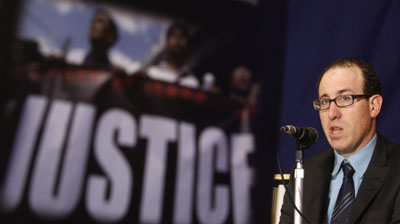
CPJ’s six-city launch of Attacks on the Press began today in Tokyo, where we hosted a panel discussion with Maria Ressa of ABS-CBN TV in the Philippines, Asahi Shimbun deputy foreign editor Nobuyoshi Sakajiri, NHK Middle East correspondent Nobuhisa Degawa, CPJ China expert Madeline Earp, and me.
CPJ support helps an injured Haitian reporter
His collarbone severely fractured in the January 12 earthquake, Haitian journalist Yves Adler Boissonniere needed considerable medical attention—care that he could not get in his devastated country. With US$40 and a few gourdes (Haiti’s currency) in his pocket, Boissonniere decided in late January to cross the border to the Dominican Republic in hopes of getting…