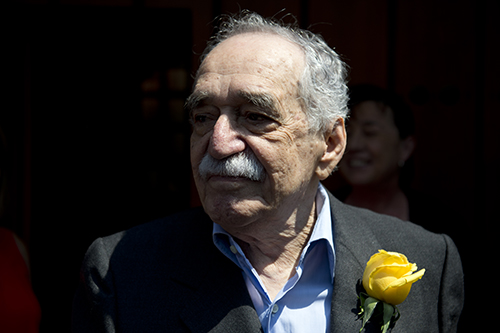
Why García Márquez’s work to improve press protection in Colombia is still vital
To coincide with Colombia’s national day for journalists the Colombian organization Foundation for Freedom of the Press (FLIP) has published its annual report on press freedom conditions. The review of challenges faced by the media in 2014 comes as we remember the loss last year of one of the great defenders and promoters of Colombian…
Uneasy alliance: State Department and journalists discuss rise in violence
Doug Frantz spent more than three decades in the journalistic trenches covering wars, overseeing investigative reporting, and directing national security coverage. He did stints at The New York Times, the Los Angeles Times, and The Washington Post. Today Frantz works for the State Department, serving as Assistant Secretary of State for Public Affairs. Alarmed by…
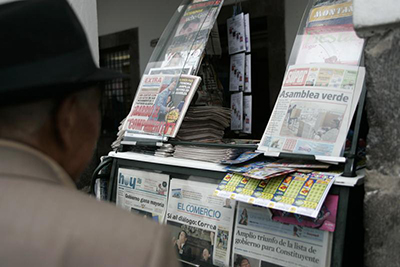
How Ecuador’s plans to make communications a public service is threat to free press
Attempts to amend Ecuador’s constitution to categorize communications as a “public service” has sparked a fierce debate, with one critic drawing comparisons to the way dictators such as Stalin and Hitler used the press as a propaganda tool, and supporters of President Rafael Correa’s government arguing that the proposed reforms will make journalism more accountable…
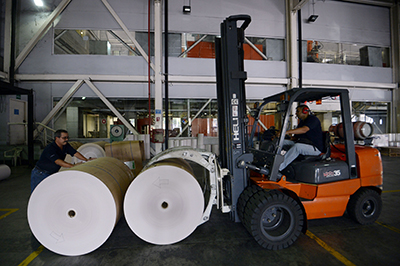
News rationed as Venezuela seeks to control newsprint imports
Venezuelan newspapers have traditionally handed out hundreds of courtesy copies in their lobbies and at hotels. But Correo del Caroní, an independent daily in the industrial city of Ciudad Guayana, treats every edition as if it were precious and now gives away just 14 copies, including one to the owner.
Slideshow: Journalists killed in 2014
In 2014, at least 60 journalists and 11 media workers were killed in relation to their work, according to CPJ research. Local and international journalists died covering conflicts, including in Syria, Iraq, and Ukraine, while many others were murdered reporting on corruption and organized crime in their own countries. Here, CPJ remembers some of the…

In Cuba, case for harassing press has collapsed
Throughout the years, the Cuban government has justified the imprisonment of independent journalists on charges that they were acting against the State’s sovereignty at the behest of the United States. During the so-called Black Spring in March 2003, when the government then led by President Fidel Castro launched a massive crackdown against dissidents while the…
Life on the run in Amazon jungle for journalist charged with defaming president
For Ecuadoran journalist and political activist Fernando Villavicencio, life on the lam has meant wading through jungle rivers to avoid police checkpoints, dining on crocodile and monkey meat, and penning his latest book from a series of safe houses.
Accounting for impunity is obligation for all states
This week, members of UNESCO’s International Programme for the Development of Communication will meet to discuss the director general’s biannual report, which examines the cases of nearly 600 journalists killed around the world from January 1, 2006 to December 31, 2013. The report, and lacklustre response from member states who had been asked to provide…
In Reynosa, Mexico, suspected murder of social media user spreads fear
On October 16, photographs of a woman were posted on the Twitter account @Miut3 with an ominous message. “My life has come to an end today. Don’t put your families at risk like I did,” the tweet read. “I’m sorry. I died for nothing. They are closer on our trail than you think.”