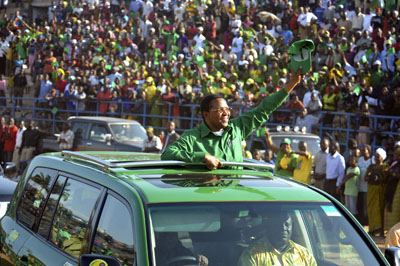
Government threatens press in pre-election Tanzania
As the October 31 national elections draw near, Tanzania’s media is in a frenzy trying to cover the close race between the two leading presidential candidates. But government threats and draconian media laws may be getting in the way of objective coverage.
Protecting journalists from Firesheep
There’s been a great deal of coverage in the last day or so of Firesheep, a plugin for Firefox that lets you take over the Facebook and Twitter accounts of others on your local network. If you use Firesheep, you can pick one of the people on, say, the same open wireless at your nearby…

In South Africa, echoes of Black Wednesday
On October 19, 1977, South Africa’s government banned The World newspaper, along with Weekend World, the paper’s weekly magazine, and Pro Veritate, a Christian publication. Authorities also detained scores of activists and outlawed 17 anti-apartheid groups during the one-day crackdown, which came to be known as Black Wednesday.

South Africa weighs dropping media tribunal plan
For the first time in South Africa’s months-long debate over the proposal for a government-run media appeals tribunal, a top official from the African National Congress (ANC) indicated on Friday that the plan could be dropped altogether–under certain conditions.
Obiang prize suspended indefinitely
The Obiang prize, named for and funded by one of Africa’s most notorious dictators, was a very poor idea from the start and our goal, bluntly, was to kill it. We didn’t quite succeed in getting an outright cancellation, but the prize, while technically alive, is in a deep coma with virtually no chance of…
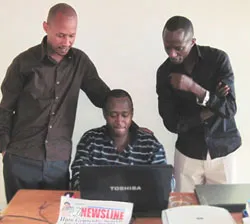
Censored in Rwanda, editors work from exile
Though it has been a dark year for Rwanda’s press, it has also been a year of resistance and turning to a new sort of reporting–from exile. Ever since Rwandan authorities began cracking down on the nation’s independent press before the presidential elections in August, the space for critical reporting has been dissipating.

In Gabon, censorship lingers from 2009 vote
In Gabon, more than a year after the historic and contested presidential elections won by Ali Ben Bongo Ondimba, the main radio and television stations of Ondimba’s two main opponents still face administrative obstructions imposed during the polls, according to interviews CPJ conducted with journalists and officials between July and September.
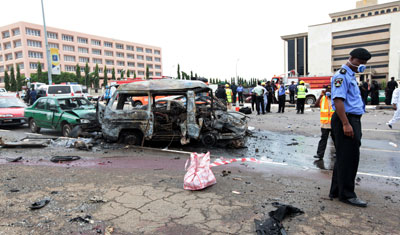
Abuja Twitterers chronicle #Nigeriaat50 bomb explosions
A few minutes before deadly explosions ripped through Nigeria’s 50th Independence Day celebration in Abuja on Saturday, Twitter user Achonu Stanley wondered about darkening skies over the festivities: “Would the day be marred by rain? It has become cloudy and dark. Sorry for the thousands of people at Eagle Square.”
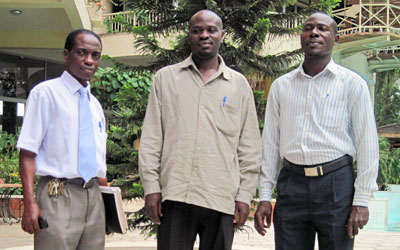
Ugandan station still closed, an ill omen for election
More than a year has passed since the government-influenced Broadcasting Council summarily closed the popular Central Broadcasting Service, or CBS. The council closed the station in September 2009 as riots were erupting in response to the government’s decision to block the traditional Buganda king from attending a youth celebration north of the capital, Kampala. Its…

Jammeh ‘award’ coverage reflects chill in Gambian press
“President Jammeh bags 4 awards,” trumpeted a September 17 headline of the Daily Observer, a pro-government newspaper in the Gambia, a West African nation whose idyllic façade as “the smiling coast of Africa” is maintained in part by President Yahyah Jammeh’s brutal repression of the independent press.