Threatened radio director gets refugee status in the U.S.
New York, August 12, 2004—The director of the shuttered Kyiv radio station Kontinent has arrived in Washington, D.C., after gaining refugee status from the U.S. Citizenship and Immigration Services. In a telephone interview with CPJ, Sergey Sholokh said he fled Ukraine five months ago and applied for refugee status through the U.S. Embassy in Poland.…
CPJ Calls on Putin to ensure editors’ killers are brought to justice
Your Excellency: The July 9 slaying of Forbes Russia Editor Paul Klebnikov in the capital, Moscow, is a grim reminder of the years-long pattern of deadly, unchecked violence against journalists in Russia that is damaging your nation’s international reputation and depriving your citizens of the independent reporting essential to democracy. Eleven journalists have been murdered in contract-style killings during your tenure–and four others have died as a result of other violent, work-related circumstances–yet no one has been brought to justice for these killings.
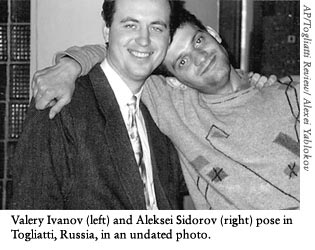
CPJ CALLS ON PUTIN TO ENSURE EDITORS’ KILLERS ARE BROUGHT TO JUSTICE
New York, August 9, 2004—Saying that Russian authorities “have repeatedly disregarded pertinent evidence and witnesses” in the slayings of two editors of a Togliatti newspaper, the Committee to Protect Journalists (CPJ) called on President Vladimir Putin today to “devote the full resources of your office” to bring the true killers to justice.
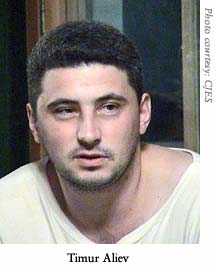
Chechen editor reports ongoing harassment
New York, August 6, 2004—The campaign of harassment against the independent weekly Chechenskoye Obshchestvo (Chechen Society), which is based in Ingushetia’s capital, Nazran, continued this week, according to the publication’s editor. Editor Timur Aliev told CPJ that on August 2 and 3, the paper’s Web site was down, and that some e-mails and phone calls…
Mother of missing journalist requests new investigation of the case
New York, August 5, 2004—Two weeks after the Belarusian president said he had information and documents about the investigation into a 29-year-old cameraman’s disappearance, the journalist’s mother is demanding a renewed inquiry. Olga Zavadskaya, whose son Dmitry is presumed dead after vanishing four years ago, told CPJ in an interview today that she filed a…
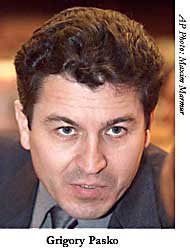
Environmental journalist Grigory Pasko receives international passport
New York, August 4, 2004—After weeks of delays, Russian officials have approved a passport for environmental journalist Grigory Pasko, whose prior reporting on the dumping of nuclear waste had drawn the ire of authorities. “I am happy with this development even though authorities had no right to keep my application in limbo for that long,”…
A journalist released, but struggling
New York, August 4, 2004—Uzbek authorities have released Madzid Abduraimov, a journalist with the national weekly Yangi Asr, who was imprisoned for three years after criticizing authorities in the southern Surkhandarya region. Abduraimov said he is struggling now to reclaim his home and other personal belongings that were confiscated by authorities. “Being in prison was…
CPJ calls on Putin to end harassment of Chechen newspaper
New York, July 29, 2004—The Committee to Protect Journalists (CPJ) calls on Russian President Vladimir Putin to ensure that government officials in the southern republics of Ingushetia and Chechnya end their campaign of harassment against the independent weekly Chechenskoye Obshchestvo (Chechen Society), which is based in Ingushetia’s capital, Nazran. According to Chechenskoye Obshchestvo Editor Timur…
Taking sides: Haiti
Under Haiti’s new transitional government, journalists-especially those who supported former President Jean-Bertrand Aristide-remain at risk in a politically polarized environment. By Carlos Lauria and Jean-Roland Chery Nearly five months after the ouster of President Jean Bertrand Aristide, journalists in Haiti still confront great dangers in a country marked by lawlessness. Before the unrest began in…
Journalist found dead outside Moscow
New York, July 21, 2004—The body of Armenian journalist Pail Peloian was found on the side of a highway outside Russia’s capital, Moscow, on July 17, according to local and international press reports. Peloian had been severely beaten and stabbed multiple times and had a cracked skull and bruised face. The police found money, documents,…