
French weekly gives issue over to Haitian journalists
The French weekly Courrier International opened its columns on February 4 to Haitian print media journalists in a special edition being circulated worldwide. The paper’s managers did it to express solidarity with Haitian journalists following the earthquake, which completely paralyzed the publication of the country’s dailies. The two dailies in Haiti’s capital, Port-au-Prince, Le Nouvelliste and Le Matin, were honored in the special edition. Haiti Liberté,…
CPJ outraged by ruling freeing Yevloyev’s killer in Russia
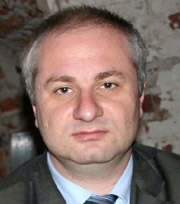
New York, March 2, 2010—The Committee to Protect Journalists condemns today’s court decision to release Ibragim Yevloyev, the high-ranking security officer who shot and killed independent Ingush publisher Magomed Yevloyev (no relation to the killer) in police custody in August 2008.
Fatullayev isolation prolonged in Azerbaijan
New York, March 1, 2010—The Committee to Protect Journalists issued the following statement today in response to Azerbaijani press reports that the isolated detention of imprisoned editor Eynulla Fatullayev, a 2009 recipient of CPJ’s International Press Freedom Award, on a new trumped-up charge of drug possession, has been prolonged by two months.
CPJ calls for UK to investigate Munadi death in rescue
Dear Prime Minister Brown: We last wrote to you on November 5 to urge you to authorize the Ministry of Defence to carry out an investigation into the September 9, 2009, military operation that rescued British-Irish journalist and New York Times correspondent Stephen Farrell and unfortunately led to the death of his Afghan colleague, Sultan Munadi. In our November 5 letter, we offered our condolences on the loss of British Parachute Regiment Cpl. John Harrison, but also pointed out that many questions about the operation remain unanswered. Among them is whether Munadi’s rescue was a central objective, what circumstances existed when he was killed, and why his remains were left behind after British forces withdrew.
CPJ seeks information on Estemirova murder in Russia
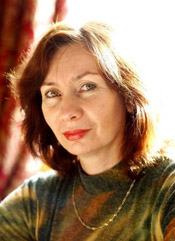
New York, February 26, 2010—The Committee to Protect Journalists calls on authorities investigating the July 2009 murder of prominent Russian journalist and human rights defender Natalya Estemirova to publicize their progress on the case seven months after the crime. The New York Times reported on Thursday that a top investigator with the Investigative Committee of…

Chilling Google verdict in Italy
Italy was already the Internet freedom bad boy among western European democracies with its plans to extend broadcast TV licensing requirements to video sites. But the conviction today by a Milan judge of three Google executives is more than a one-off case of antisocial cyber behavior. It could end the protection that Web platforms now enjoy for…

CPJ launches yearly findings globally, and is heard
On February 16, CPJ held an ambitious international launch of our annual report Attacks on the Press. We coordinated events in six cities on four continents in order to expand the reach of our international headlines while also focusing on specific issues in each region. So how did we do?