Turkish authorities target media in nationwide crackdown
New York, December 14, 2014–The Committee to Protect Journalists condemns today’s raids on media outlets in which police detained journalists and media workers on politicized anti-state charges. Among those detained today were Ekrem Dumanlı, editor-in-chief of Zaman, one of Turkey’s largest dailies, and Hidayet Karaca, chairman of the Samanyolu Broadcast Group, reports said.
Belarusian journalist held by the KGB on espionage charges
New York, December 8, 2014–The Committee to Protect Journalists today called for the immediate release of journalist Aleksandr Alesin, who according to news reports is being held by the Belarusian national security service, known as the KGB.
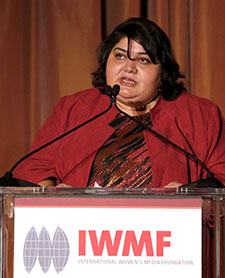
Investigative reporter Khadija Ismayilova jailed in Azerbaijan
New York, December 5, 2014–An Azerbaijani court in Baku today ordered the imprisonment of award-winning investigative journalist Khadija Ismayilova for two months pending trial after a local man accused her of urging him to commit suicide, according to news reports. The Committee to Protect Journalists condemns the ruling and calls on authorities in Azerbaijan to…
Press in Ukraine still suffering one year after attacks on journalists
A year ago today, the Committee to Protect Journalists reported on the first mass assaults on press freedom in Ukraine, after police were ordered to disperse protesters in the capital, Kiev, and other cities. At least 51 journalists–including local and international reporters–were attacked by police and protesters while covering the early days of the standoff…
Accounting for impunity is obligation for all states
This week, members of UNESCO’s International Programme for the Development of Communication will meet to discuss the director general’s biannual report, which examines the cases of nearly 600 journalists killed around the world from January 1, 2006 to December 31, 2013. The report, and lacklustre response from member states who had been asked to provide…
CPJ calls on Belgium to defend press freedom at Committee of Ministers
CPJ calls on Didier Reynders, Belgium’s foreign minister, to use his country’s presidency at the Committee of Ministers of the Council of Europe–the largest pan-European human rights watchdog–to defend press freedom in Europe, and address violations by members states. CPJ’s letter highlights press freedom abuses in Azerbaijan, Hungary, Russia, Turkey, and Ukraine.