Journalist released on bail after 17 months behind bars
New York, May 2, 2005—The Committee to Protect Journalists welcomes the release on bail Saturday of Salah Uddin Shoaib Choudhury, editor and publisher of the now-defunct weekly tabloid Blitz. Choudhury spent 17 months behind bars awaiting trial on sedition and antistate charges, despite repeated requests for bail. “While we are relieved that our colleague Salah…
Journalist ordered not to receive UNESCO press freedom award
New York, May 2, 2005—The Committee to Protect Journalists today condemned Chinese authorities’ refusal to allow journalist Cheng Yizhong to receive a United Nations press freedom award on Tuesday. Cheng, who was imprisoned for five months in 2004 after his aggressive investigative journalism angered local officials, was ordered not to attend a ceremony honoring him…
CPJ condemns 10-year sentence of journalist
New York, May 2, 2005—The Committee to Protect Journalists today denounced the unfair trial and harsh sentencing of journalist Shi Tao, who was convicted of “illegally providing state secrets to foreigners” in a closed trial in the Intermediate People’s Court of Changsha in central China’s Hunan Province. Shi was sentenced on Saturday to 10 years…
CHINA
APRIL 30, 2005 Posted: May 4, 2005 Shi Tao, Dangdai Shang Bao LEGAL ACTION, IMPRISONED Shi was sentenced to 10 years in prison on April 30 after being convicted in March of “illegally providing state secrets to foreigners” in a closed trial in the Intermediate People’s Court of Changsha in central China’s Hunan Province.
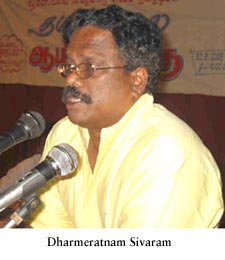
CPJ condemns murder of veteran Tamil journalist
New York, April 29, 2005—The Committee to Protect Journalists condemns the brutal killing of leading Tamil journalist Dharmeratnam Sivaram, who was abducted yesterday and found dead this morning near the capital, Colombo, from gunshot wounds to the head. Four unidentified men forced Sivaram into a jeep at 10:30 last night as he left a restaurant…
Nepal: Laws
Nothing against the “letter and spirit” This directive for journalists was published in Gorkhapatra, the government-owned daily, on February 3: “Invoking Sub Clause 1 of Clause 15 of His Majesty’s Print and Publication Act 2048 and considering the nation and national interest, His Majesty’s Government has banned for six months any interview, article, news, notice,…
A young, vibrant media
Before the arrival of democracy in 1990, no independent newspapers were published in Nepal. State media praised government policies and refused to carry critical comment or analysis. A few privately owned tabloids vaguely affiliated with political parties were tolerated, largely because their news coverage was sensationalist and often sleazy. Radio and television were entirely government run.