
As strikes continue in Nepal, attacks on journalists reported
New York, April 14, 2006—Thirteen journalists were arrested today in Baglung, west of Kathmandu, while protesting against media restrictions during the seventh day of a nationwide strike, the Federation of Nepalese Journalists reported. Others detained during the past week, including veteran journalist Kanak Mani Dixit, remain in police custody.
China: Writer Li Jianping tried for online pro-democracy articles
New York, April 12, 2006—The Committee to Protect Journalists is outraged by the prosecution of Internet writer Li Jianping on charges of “inciting subversion” for articles criticizing Communist Party leaders and Chinese government actions. Li was tried today in a proceeding that lasted less than three hours, according to Agence France-Presse. “How can China, one…
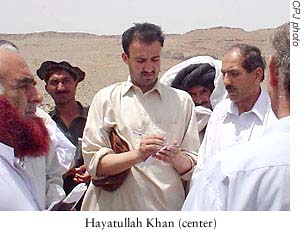
Pakistan: CPJ calls on Pakistani and U.S. authorities to reveal all information about missing journalist
New York, April 11, 2006—The Committee to Protect Journalists today called on U.S. and Pakistani authorities to reveal all information they have on abducted Pakistani journalist Hayatullah Khan after his brother claimed he was being held by the United States. Khan was seized by unidentified gunmen in the lawless North Waziristan tribal region bordering Afghanistan…
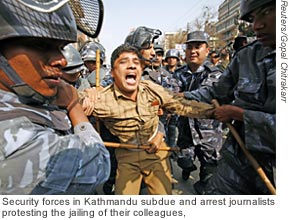
Nepal: Security forces target journalists covering crackdown
New York, April 10, 2006—The Committee to Protect Journalists deplores the use of force against journalists covering pro-democracy demonstrations across Nepal in which at least three people have died. Police in Kathmandu today beat four journalists affiliated with the independent news group Kantipur in what news editor Guna Raj Luitel said was retribution for critical…
Bangladesh: CPJ urges court to dismiss sedition charges against journalist
New York, April 4, 2006—The Committee to Protect Journalists calls on Bangladeshi authorities to dismiss sedition charges against journalist Salah Uddin Shoaib Choudhury whose trial begins April 5 in Dhaka’s Additional Metropolitan Session Court. Sedition carries the death penalty. Choudhury, editor of the Bangladesh tabloid weekly Blitz, was originally charged with passport violations after he…
Burma: Two journalists arrested and summarily tried for filming
New York, April 4, 2006—The Committee to Protect Journalists condemns the arrest and summary trial of two journalists accused of filming the countryside from a public bus outside Burma’s controversial new capital. Ko Thar Cho, a photojournalist, and Ko Kyaw Thwin, a columnist at the Burmese-language magazine Dhamah Yate, were arrested on March 27 while…
China: Reporter detained after alleging local corruption
New York, April 4, 2006—The Committee to Protect Journalists is alarmed by the continuing detention of Hunan-based newspaper reporter Yang Xiaoqing who wrote about corruption in the sale of a state-owned company. Yang’s wife, Gong Jie, told CPJ that he was under threat for months before his arrest in January, and had gone into hiding…
Philipines: CPJ calls for probe of killing of journalist
New York, April 4, 2006—The Committee to Protect Journalists calls for an immediate and full investigation into the shooting death today of part-time newspaper editor and columnist Orlando Tapios Mendoza. Philippine media reports and the Center for Media Freedom and Responsibility (CMFR) said Mendoza was shot several times by unidentified men as he was returning…
Thailand: Police ban edition of political journal after articles on king
New York, April 4, 2006—The Committee to Protect Journalists condemns a ban on an edition of Thai-language political quarterly Fah Diew Kan. On March 30, national police chief Gen. Kowit Wattana sent a notice to the journal’s editor Thanapol Eawsakul informing him of a decision to ban further distribution of the publication’s October-December 2005 edition.…

Hong Kong complaint targets Yahoo for role in jailed journalist case
New York, March 31, 2006—A Hong Kong legislator and a representative for the family of jailed Chinese journalist Shi Tao filed a privacy complaint Thursday against U.S. Internet giant Yahoo for its role in the imprisonment, according to news reports. The family is also considering legal action against the company in Hong Kong or the…