
In Pakistan, a media group cries foul over government advertising
CPJ’s Bob Dietz discusses the situation in Pakistan. (mp3). New York, March 27, 2007— The Committee to Protect Journalists is concerned about a deteriorating media environment in Pakistan that includes both business retaliation and outright attacks on media companies.
In Bangladesh, reporter jailed for reporting on local mismanagement
New York, March 26, 2007—The Committee to Protect Journalists called for the immediate release of Daily Star reporter E.A.M. Asaduzzaman Tipu, who was jailed in the northern Bangladesh district of Nilphamari on Wednesday. The correspondent suffered a severe asthma attack two days after being arrested for his reporting on official mismanagement, the Dhaka-based daily reported.…

Press for release of Afghan journalist Ajmal Nakshbandi
Dear Colleagues, We are asking you–journalists and news organizations–to help pressure the Afghan government to work for the release of Ajmal Nakshbandi, the freelance Afghan journalist who was seized with La Repubblica reporter Daniele Mastrogiacomo and the group’s driver Sayed Agha. As you know, Agha was beheaded a few days after the men were taken on March 5. According to most sources, Ajmal is still being held by the Taliban group that abducted them and is still somewhere in Helmand province.
CPJ calls for further investigation into death of Bangladeshi reporter
New York, March 23, 2007—The Committee to Protect Journalists calls on Bangladeshi authorities to thoroughly investigate the death of Jamal Uddin, an independent reporter in the southeastern district of Rangamati. Jamal Uddin, 25, went missing on March 5, and his body was found the next day in the outskirts of his hometown Kathaltala, according to…
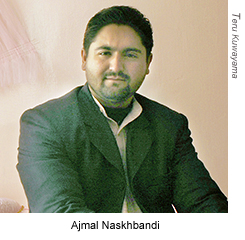
CPJ renews call for release of Afghan journalist Ajmal Naskhbandi
New York, March 22, 2007—The Committee to Protect Journalists remains concerned about kidnapped Afghan freelance journalist Ajmal Naskhbandi, who was acting as La Repubblica reporter Daniele Mastrogiacomo’s translator when they were abducted by the Taliban on March 5. The two men and their driver Sayed Agha—who was beheaded while the group was held—were seized by…
In Sri Lanka, Tamil journalist released after four-month detention
New York, March 22, 2007—The Committee to Protect Journalists welcomes today’s release of Tamil journalist Parameswaree Maunasámi, who petitioned the Supreme Court that she was being illegally detained after being held for four months without charge. Maunasámi, a reporter for the Sinhala-language weekly Mawbima, was arrested November 24 at her home in the capital Colombo,…
CPJ calls for release of Afghan translator Ajmal Naskhbandi
New York, March 20, 2007— The Committee to Protect Journalists is greatly concerned about Afghan freelance journalist Ajmal Naskhbandi, who was kidnapped over two weeks ago while acting as La Repubblica reporter Daniele Mastrogiacomo’s translator. “We call on the Afghan government to do everything in its power to secure the release of our colleague Ajmal…
In China, writer sentenced to six years in prison for critical articles
New York, March 20, 2007—The Committee to Protect Journalists is appalled that freelance writer and former Web site editor Zhang Jianhong was sentenced Monday to six years in prison by a court in Ningbo, in the eastern province of Zhejiang. Zhang was arrested in September 2006 and charged the following month with “incitement to subvert…
Thailand’s military government censors satellite TV station
New York, March 20, 2007—The Committee to Protect Journalists condemns the censorship of a new satellite television station by Thai authorities, part of an ongoing ban against the broadcaster since the military seized power in a coup last September. Over the weekend, government agencies blocked news programs carried by PTV, or People’s Television, which was…