
In China, rebellion grows over Southern Weekly
In the past few days, Chinese journalists and their supporters have launched startlingly direct opposition to Communist Party rule, protesting a heavy-handed move by Guangdong’s provincial propaganda department to unilaterally replace a Southern Weekly editorial on constitutionalism with pro-Party bromides. Defying censors’ directives, media organizations around the country continue to post messages of support of…
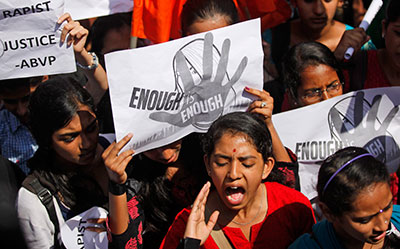
Indian police to charge broadcaster for rape interview
New York January 4, 2013–The Committee to Protect Journalists calls on authorities in India to refrain from pressing charges against a media group that televised an interview with the companion of the Delhi rape victim who died last week. The December 16 case has garnered global attention.
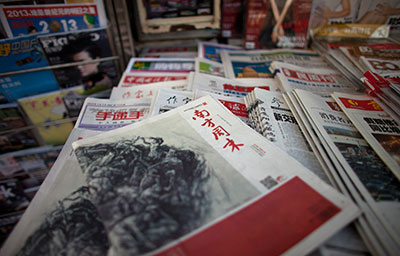
Southern Weekly journalists air anger with Chinese censors
Staffers at the Guangdong-based Southern Weekly magazine have publicly expressed their outrage at the heavy handed intervention of propaganda officials who unilaterally rewrote a New Year’s editorial calling for improved constitutional rule in China. A piece extolling the virtues of the Communist Party ran in its place. Sixty staffers posted an open letter to the provincial government…
Crime reporter assaulted in Malaysia
Malaysian crime reporter Ang Kean Siang, a journalist at the local Guang Ming Daily Chinese-language newspaper, was physically attacked on December 30, allegedly by members of a local civilian voluntary patrol unit, after taking pictures of a woman who appeared to have fallen to her death from an apartment building in Penang state’s Georgetown city,…
Pakistan’s problematic record on Internet restrictions
The fleeting nature of YouTube’s availability in Pakistan this weekend–the site, which has been banned in the country since September, was unblocked for a whole three minutes–is only the latest emblem of Islamabad’s erratic and confounding approach to Internet censorship. Those who have been hoping for less opaque tactics apparently are in for disappointment.
China’s name registration will only aid cybercriminals
China’s mounting crackdown on online news dissemination took an extra step today, when the country’s Standing Committee of the National People’s Congress, its de facto legislative body, announced new requirements on Internet service providers and mobile phone companies to identify their users. The new rules would potentially allow ISPs and the authorities to more closely…
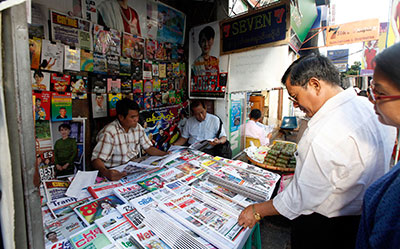
Burmese government allows dailies to resume publishing
New York, December 28, 2012–Burmese authorities’ decision to allow private daily newspapers to resume publication is a welcome change to a policy that has stifled press freedom in the country for decades, the Committee to Protect Journalists said today.
Reuters Institute focuses on Sri Lankan journalism
The most recent paper produced by the Reuters Institute for the Study of Journalism at Oxford, “Media Freedom in post-war Sri Lanka and its impact on the reconciliation process<,” does a great job of cataloging the abuse Sri Lankan journalists continue to face after the decades-long civil conflict with Tamil secessionists ended in May 2009.