Police raid, seize books from Malaysian cartoonist’s office
Bangkok, February 2, 2015–The Committee to Protect Journalists calls on Malaysian authorities to halt the legal harassment of a Malaysian cartoonist. Zulkiflee Awar Ulhaque, also known as Zunar, is a frequent contributor to the news website Malaysiakini and the author of several volumes of political cartoons.
CPJ welcomes release of Al-Jazeera journalist Peter Greste
February 1, 2015–Al-Jazeera journalist Peter Greste, who was serving a seven-year prison sentence in Egypt for “conspiring with the Muslim Brotherhood,” was deported today, according to Egypt’s state-run news agency. Greste, who is Australian, was arrested in December 2013 with his colleagues Mohamed Fadel Fahmy and Baher Mohamed.
CPJ condemns murder of Japanese journalist Kenji Goto
New York, January 31, 2015–The Islamic State militant group released a video Saturday purporting to show the murder of Japanese journalist Kenji Goto, according to news reports. Japanese authorities have not yet verified the footage is authentic, according to news reports. Goto, a well-respected journalist who reported primarily on humanitarian issues, was kidnapped in Syria…
Sri Lankan president should ensure improved climate for press freedom
Dear President Sirisena: The Committee to Protect Journalists, an international press freedom organization, is writing to congratulate you on your recent victory in Sri Lanka’s presidential election. As Sri Lanka readies itself for a new chapter in its history, we urge your government to take concrete and meaningful steps to improve the climate for press freedom.
China doubles down on counterproductive censorship
In a move unlikely to surprise those who access the Internet from mainland China, the country’s Ministry of Industry and Information Technology recently blocked several popular tools used to bypass the “Great Firewall” national Internet censorship system. Citing the need to protect “cyberspace sovereignty” and to “maintain cyber security and steady operation,” the Ministry changed…
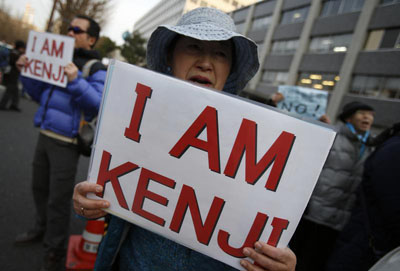
Kenji Goto’s reporting is voice of humanity in times of atrocity
Kenji Goto, the 47-year-old television journalist held captive by the Islamic State (IS), is not a typical reporter, nor is he typically Japanese. But his courage and commitment to broadcasting humane stories from some of the world’s most dangerous conflict zones would put him at the pinnacle of his profession anywhere in the world. It…

After Charlie Hebdo attack, vigils, protests and publishing bans
Protests against the French satirical weekly Charlie Hebdo were held in Afghanistan, Pakistan, the Middle East and parts of Africa over the weekend, as crowds demonstrated against the magazine’s portrayal of the Prophet Muhammad, according to news reports.
CPJ calls on Japan to explore all options for journalist held in Syria
New York, January 22, 2015–The Committee to Protect Journalists is deeply concerned by a video released on Tuesday by the Islamic State militant group in which the group said it would kill Japanese freelance journalist Kenji Goto and another Japanese citizen, Haruna Yukawa, if it did not receive a US$200 million ransom within three days.
Cyber security bill threatens media freedom in Thailand
Bangkok, January 20, 2015–The Committee to Protect Journalists calls on Thailand’s military-appointed legislature to scrap proposed legislation that would allow for mass surveillance of online activities and platforms. The Cyber Security Bill was approved this month by Prime Minister Prayuth Chan-ocha’s Cabinet and is pending in the National Legislative Assembly.