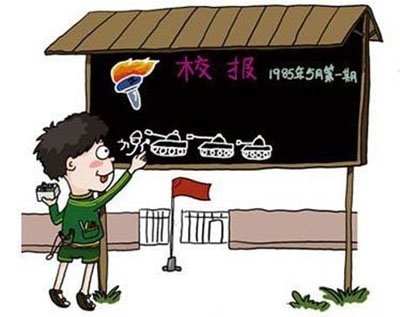
Tank cartoon erased before Tiananmen anniversary
Twenty-one years after the Tiananmen Square crackdown, China’s censors are still working to purge public discourse about the tragic events of June 4, 1989. But some Chinese Web users clearly have a healthy appetite for such a debate and are willing to circumvent the government censors.
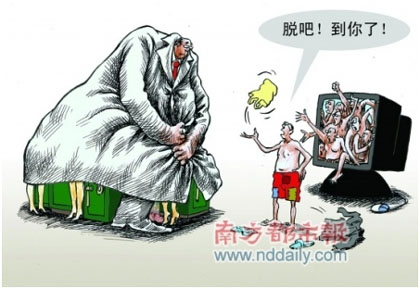
China’s state secrets law leaves journalists exposed
The Standing Committee of China’s National People’s Congress adopted a revised state secrets law on April 29. The changes, which take effect October 1, put greater onus on media and telecommunications companies to defend state secrets and cooperate with authorities investigating alleged violations of the legislation. Chinese commentators point out that while individuals are having…
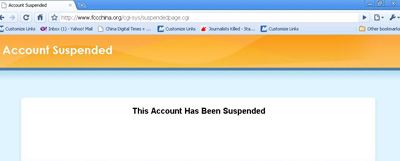
Foreign Correspondents’ Club of China site under attack
New York, April 2, 2010—The denial of service attack on the Foreign Correspondents’ Club of China (FCCC) Web site is contributing to an atmosphere in which journalists feel their communication is not secure and their reporting is under threat, the Committee to Protect Journalists said today.

China imposed strict controls on Google coverage
Our friends at China Digital Times have translated recent orders from China’s State Council Information Office to domestic news organizations and Web sites about how to handle the country’s ongoing dispute with Google. We’re posting an excerpt here, but please read the whole link. There’s a great discussion about government censors’ plans for monitoring social…
Journalists report Yahoo e-mail accounts hacked in China
New York, March 31, 2010—News reports that the Yahoo e-mail accounts of reporters and others in China and Taiwan have been compromised are a reminder that journalists must be vigilant when communicating over the Internet, the Committee to Protect Journalists said today. CPJ called on Internet companies to reassess their business practices in countries where…
Google’s Chinese wake-up call
On Monday, Google made good on its promise to stop censorship of its Chinese search engine, Google.cn, by rerouting viewers to its unfettered Hong Kong site. According to the company’s chief legal officer, David Drummond, the move was “a sensible solution to the challenges we’ve faced—it’s entirely legal and will meaningfully increase access to information…
Chinese official urges political education for journalists
New York, March 11, 2010—A state official responsible for media regulation said Wednesday the government should require Chinese journalists to obtain official training to report the news, according to local and international news reports. Domestic journalists already need government-issued identity cards to work in China.
Senior Chinese editor forced out for controversial editorial
“Some have commented that this event should go down in media history.” So says Zhang Hong (in English translation on The Wall Street Journal’s China blog today), co-author of an unprecedented joint editorial published last week by 13 Chinese newspapers. The editorials, criticizing the hukou system, which registers individuals in their place of birth and limits their ability to find work and education…
Attacks on the Press 2009: China
Top Developments• More access for foreign reporters, tighter rules for local assistants.• As online use grows, government censors sites, jails critics. Key Statistic 24: Journalists jailed as of December 1, 2009. While China’s ruling communist party celebrated 60 years in power in 2009, its critics commemorated antigovernment movements in Tibet in 1949 and Tiananmen Square…