Afghan journalist’s death must lead to better combat rules
Wednesday, the Afghanistan Analysts Network (AAN) released its report, “Death of an Uruzgan Journalist: Command Errors and Collateral Damage,” by Kate Clark on the July 2011 shooting death of journalist Omaid Khpalwak. Clark’s details on how Khpalwak died corroborate and then go beyond the investigation already conducted by the U.S.-led NATO forces who were responsible.…

Video: Getting Away With Murder
CPJ’s María Salazar-Ferro names the 12 countries where journalists are murdered regularly and governments fail to solve the crimes. Where are leaders failing to uphold the law? Where are conditions getting better? And where is free expression in danger? (4:46) Read CPJ’s 2012 Impunity Index. And visit our Global Campaign Against Impunity and see how…
Ahmed Rashid on U.S. policy in South Asia
At Columbia University on Monday evening, CPJ board member Ahmed Rashid held forth to a full house in a conversation with Steve Coll about U.S. foreign policy in Afghanistan and Pakistan. If you’re reading this blog, there’s most likely no need to explain who Rashid is–or Coll, for that matter. The earliest reference I could…
Afghanistan must uphold its commitment to free press
Dear President Karzai: We are deeply concerned by the potential repercussions of a March 10 statement released by Ministry of Defense spokesman Gen. Zahir Azimi over an article written by The Wall Street Journal reporter Maria Abi-Habib. The statement, which personally attacks the journalist, sends a chilling message to other reporters who write about alleged government misconduct. We call on you to publicly address Azimi’s statement and ask all government officials to refrain from attacks on journalists. We also ask you to uphold your commitment to a free press in Afghanistan that you have made many times in the past.
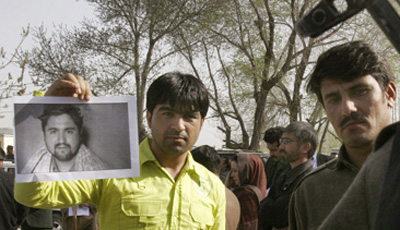
Attacks on the Press in 2011: Afghanistan
As NATO and Afghan military forces faced off with militant groups, the news media worked in a hostile and uncertain environment. Two journalists were killed for their work, both during major insurgent attacks. Accusations of widespread fraud marred the second post-Taliban parliamentary elections, which were resolved only by a presidential decree that ousted several apparent…