Judge orders book seizure
New York, May 12, 2005 – The Committee to Protect Journalists protests the recent decision of a Brazilian district judge to seize all copies of a nonfiction book by journalist and author Fernando Morais. On May 4, Judge Jeová Sardinha de Morais, of the 7th Civil District of Goiânia, the capital of the central state…
Radio reporter beaten by national police
New York, May 11, 2005—The Committee to Protect Journalists said today it was alarmed by reports that Chilean radio reporter Paola Briceño Verdina was beaten and improperly detained by national police agents after covering a student protest in Santiago last week. CPJ called on Chilean officials to investigate the attack and take action against those…
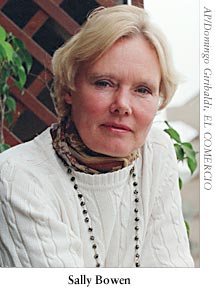
In Peru, journalists convicted of criminal defamation
New York, May 5, 2005—The Committee to Protect Journalists condemns yesterday’s verdict against Sally Bowen, a British freelance journalist who was tried on criminal defamation charges stemming from a single sentence about a high-profile businessman in a 2003 book. Judge Alfredo Catacora Acevedo found Bowen guilty of criminal defamation and ordered her and her publisher…
BRAZIL
MAY 4, 2005 Posted: June 9, 2005 André Lima, Diário do Nordeste ATTACKED Military police officers attacked Lima, a photographer for the daily newspaper, while he was covering a demonstration in Fortaleza, the capital of northeastern Ceará state. The protesters opposed efforts by a public utility to install a high-voltage power line inside a poor…
CHILE
MAY 4, 2005 Posted: May 17, 2005 Paola Briceño Verdina, Radio Bío-Bío HARASSED, ATTACKED Radio reporter Briceño Verdina was beaten and detained by national police agents after covering a student protest in Santiago. Local press reports said a large number of university students gathered in Santiago to protest a bill that would give private banks…
PERU
MAY 4, 2005 Updated December 12, 2005 Sally Bowen, freelance LEGAL ACTION, HARASSED In May 2005, Judge Alfredo Catacora Acevedo found British freelance journalist Sally Bowen guilty of criminal defamation and ordered her and her publisher to pay $10,000 Peruvian soles (US$3,000) to businessman Fernando Zevallos. Catacora also sentenced Bowen to one year of probation…