Czech leader supports CPJ effort to free Cubans
The Czech prime minister has expressed support for CPJ’s efforts to gain the release of imprisoned Cuban jouirnalists. We sent Prime Minister Mirek Topolánek, who is also president of the Council of the European Union, a copy of a March 17 letter to an EU envoy. In the letter, we asked envoy Louis Michel to seek the…
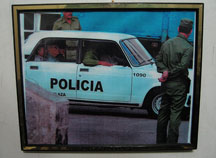
Black Spring of 2003: A former Cuban prisoner speaks
March 18, 19, and 20 will mark the sixth anniversary of the detention of 75 peaceful journalists and librarians, as well as human rights activists, convicted weeks later to up to 28 years in jail during summary trials. Fifty-four of these innocent people, who demanded a democratic society and respect for human rights, remain imprisoned…
EU envoy urged to seek release of jailed Cubans
Dear Mr. Michel: Your planned trip to Havana this week coincides with the sixth anniversary of Cuba’s massive crackdown on independent journalists and dissidents. The Committee to Protect Journalists calls on you to urge Raúl Castro’s government to release the 21 journalists still jailed in Cuban prisons and extend the internationally guaranteed right of free expression to all Cubans.
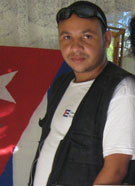
Independent Cuban journalist details four-day detention
Roberto de Jesús Guerra Pérez, a Havana-based independent journalist, sent an e-mail message this morning to his “brothers, colleagues, and organizations that protect and watch over press freedom around the world” announcing that he had been released from police custody after a four-day detention. In his e-mail, titled “Thanks to you and to your demands,…
Independent journalist in Havana detained without charge
New York, March 4, 2009–An independent Cuban journalist arrested on Sunday should have the charges against him made public or he should be released immediately, the Committee to Protect Journalists said today. He was picked up on the eve of the sixth anniversary of the crackdown against Cuba’s independent press.
Mexican editor’s home shot at in Sinaloa
Early in the morning of February 9, 2009, about 25 gunshots were fired from at least one assault rifle at the home of Moíses García Castro, editor-in-chief of the Guasave-based daily El Debate in the western Mexican state of Sinaloa, according to local news reports and CPJ interviews. There was minor damage to the house…
Crime photographer shot dead, reporter injured in Mexico
New York, February 17, 2009–The Committee to Protect Journalists called today for a thorough investigation into a shooting of two journalists on Friday in Mexico. A gunman killed a photographer and injured a reporter in the southern city of Iguala, Guerrero state, according to international news reports.
Remarks from Cuban journalist Alejandro Gonzalez Raga
Exiled Cuban journalist Alejandro Gonzalez Raga spoke to reporters in Madrid on Monday as part of CPJ’s launch of our book, Attacks on the Press. He talked about the brutality of life in a Cuban prison, the torture he and other journalists who were jailed for their writing endured. Here are his remarks, in Spanish: