
Brazil, Pakistan, India fail test on journalist murders
Brazil, Pakistan, and India–three nations with high numbers of unsolved journalist murders–failed an important test last month in fighting the scourge of impunity. Delegates from the three countries took the lead in raising objections to a U.N. plan that would strengthen international efforts to combat deadly anti-press violence.
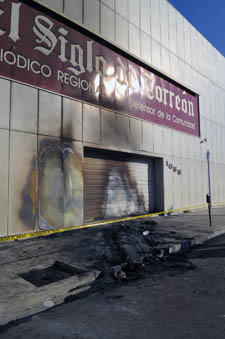
Amid Mexican impunity, paper in the crossfire
It was 3 o’clock in the morning on Tuesday, November 15, 2011, when a car stopped in front of the offices of El Siglo de Torreón, the most widely read newspaper in the northern Mexican states of Coahuila and Durango. The driver pulled the vehicle onto the shoulder, stepped out, poured gasoline on it, and…

In Boston, journalist Moloney battles to protect sources
In December 2002, the U.N. Tribunal charged with prosecuting war crimes in the former Yugoslavia ruled that Washington Post reporter Jonathan Randal could not be compelled to provide testimony in the case of a Bosnian Serb official accused of carrying out a campaign of ethnic cleansing.”If war correspondents were to be perceived as potential witnesses…

Remembering Cuba’s Du Bouchet Hernández
On Wednesday morning, exiled Cuban journalist Albert Santiago Du Bouchet Hernández took his own life, according to reports in the Cuban exiled media. He was the last of more than 20 Cuban journalists to be released from prison and sent to Spain following July 2010 talks between the government of Cuban President Raúl Castro and…

El Salvador government pledges to protect El Faro
“El Salvador is committed to guaranteeing the safety of El Faro and its staff so they can continue their investigative work,” David Rivas, spokesman for President Mauricio Funes Cartagena, told CPJ in a recent phone conversation. The government’s pledge came after groundbreaking reporting by the digital newspaper about secret negotiations in which local gangs, known…
In Mexico, two media outlets attacked within a week
New York, March 27, 2012–Mexican authorities must investigate attacks on a newspaper and TV station in the northeastern state of Tamaulipas and ensure the offices and its staff members are protected, the Committee to Protect Journalists said today. Both attacks occurred within the space of one week.
Venezuelan court ruling limits coverage of water quality
New York, March 26, 2012–The decision by a Venezuelan court to forbid the press from reporting on issues of water contamination without using a government-approved report is a clear attempt by authorities to censor critical information, the Committee to Protect Journalists said today.
Ahmed Rashid on U.S. policy in South Asia
At Columbia University on Monday evening, CPJ board member Ahmed Rashid held forth to a full house in a conversation with Steve Coll about U.S. foreign policy in Afghanistan and Pakistan. If you’re reading this blog, there’s most likely no need to explain who Rashid is–or Coll, for that matter. The earliest reference I could…