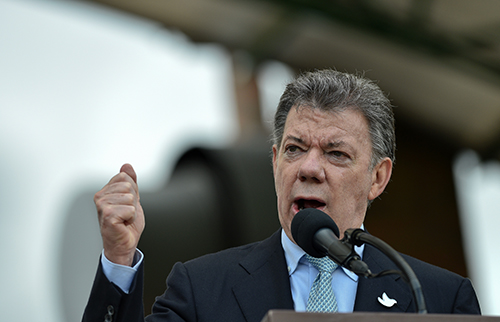
Are intelligence sector reforms enough to protect Colombia’s journalists?
When Colombia’s national intelligence agency, known as DAS, was disbanded in October 2011 after revelations of illegal surveillance and harassment of the press and public figures, many journalists breathed a sigh of relief. But recent claims of reporters being spied on and government agencies buying advanced surveillance technology without ensuring clear guidelines over its use,…
Call for Secretary Kerry to support journalist safety measures
Dear Secretary Kerry: Your support for press freedom and journalist safety is welcome and can play an important role in helping to protect journalists around the world. There are specific actions that you could take that would ensure the agenda you launched last year continues and leaves a lasting legacy.
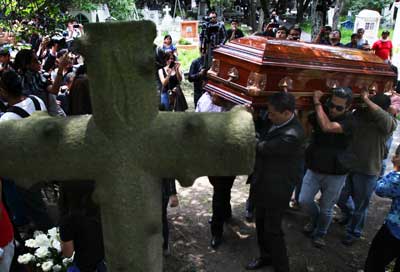
Why the governor of Veracruz should resign
EDITOR’S NOTE: This article was originally published, in Spanish, on Univision.com. The state of Veracruz has become one of the world’s most lethal regions for the press. According to research by the Committee to Protect Journalists, when you include the case of Anabel Flores Salazar, whose body was found on Tuesday, at least 12 journalists…
Body of missing Veracruz crime reporter Anabel Flores Salazar found in neighboring state
New York, February 9, 2016–The body of Anabel Flores Salazar, a reporter for El Sol de Orizaba who was abducted from her home near the city of Orizaba in Veracruz on Monday, was found today in the neighboring state of Puebla, according to a Puebla state official who spoke on the condition of anonymity because…
Mexican crime reporter abducted in Veracruz
New York, February 8, 2016–The Committee to Protect Journalists is concerned for the safety of Anabel Flores Salazar, a Mexican crime reporter who was abducted from her home in Orizaba, Veracruz state, at about 2 a.m. today by armed men who claimed to have an arrest warrant for her, according to reports. The general prosecutor…
Claims police spied on two journalists revive surveillance fears of Colombia’s press
When Claudia Morales’s six-year-old daughter asks about her mother’s bodyguards, the Colombian journalist tells her they are colleagues. “She’s too young to understand,” Morales, who works for the Bogotá-based Caracol Radio in the city of Armenia, told CPJ in a telephone interview. Vicky Dávila, the news director of LA Fm Radio who also has private…
CPJ Newsletter: January
Turkey releases jailed Iraqi journalist Following months of advocacy by VICE News, CPJ, and other groups, Iraqi journalist Mohammed Ismael Rasool was released from Turkish prison on January 5. Rasool was arrested in August along with his VICE News colleagues, Jake Hanrahan and Philip Pendlebury, while they were reporting from southeastern Diyarbakir province. The three…
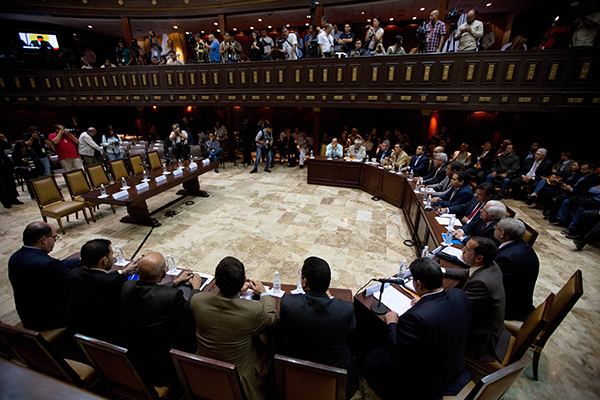
Venezuela’s national assembly reopens to the press after five-year ban
When security guards opened the doors to Venezuela’s colonial-era National Assembly building last Wednesday, I was among the dozens of reporters who swarmed inside. Even though the day’s legislative session would not be called to order for another three hours, every seat in the press galley, located on the second-floor balcony overlooking the chamber, was…