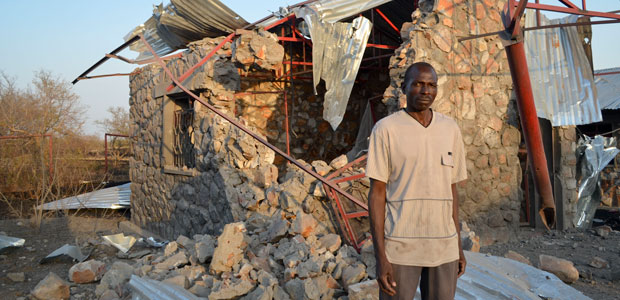
Journalists overcome obstacles through crowdfunding and determination
During South Africa’s Boer War, at the turn of the 20th century, a determined news organization relocated reporters, copy editors, and printing presses to the front line to ensure accurate reporting. In the Warsaw Ghetto, during World War II, a literal underground press, established to counter Nazi propaganda, required the nightly movement of cumbersome printing…

South African police repeatedly force journalists to delete photos
South Africa is synonymous with crime in the eyes of many–as evidenced by the recent mugging of a TV crew live on camera–but for the press, a more sinister threat to freedom lies in the growing number of cases where it is the police, in flagrant denial of their orders, who intimidate and threaten journalists,…

After Charlie Hebdo attack, vigils, protests and publishing bans
Protests against the French satirical weekly Charlie Hebdo were held in Afghanistan, Pakistan, the Middle East and parts of Africa over the weekend, as crowds demonstrated against the magazine’s portrayal of the Prophet Muhammad, according to news reports.
South African court rules that criminal defamation is in line with constitution
Cape Town, South Africa, December 5, 2014–The Committee to Protect Journalists welcomes the decision by the Pretoria High Court in South Africa to uphold journalist Cecil Motsepe’s appeal against a conviction of criminal defamation, but disapproves of the court’s ruling that the crime of defamation for journalists falls in line with South Africa’s constitution. Motsepe,…
2014 International Press Freedom Awards
Honoring courage and perseverance Awardees from Burma, Iran, Russia, and South Africa New York, September 30, 2014–Four journalists from Burma, Iran, Russia, and South Africa will be honored with the Committee to Protect Journalists’ 2014 International Press Freedom Awards, an annual recognition of courageous reporting. These journalists have faced imprisonment, violence, and censorship.
CPJ urges respect for media freedom in South Africa
Dear Hlaudi Motsoeneng: The Committee to Protect Journalists, an independent, nonprofit organization that promotes press freedom worldwide, is writing to express its concern at recent anti-press statements you made at the University of Witwatersrand in Johannesburg.
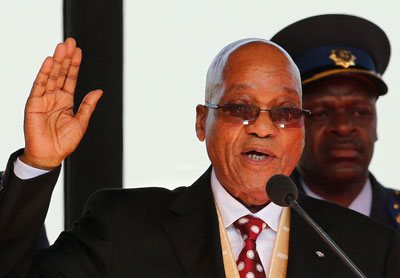
South Africa’s new communications ministry causes concern
Freedom of expression advocates in South Africa are concerned that the new Ministry of Communications, announced by President Jacob Zuma when he unveiled his cabinet on May 25, will compromise the independence of the public broadcaster and serve as a propaganda office.

SABC betrays South Africa’s young democracy
This week, South Africans go to the polls for their fifth democratic elections since 1994, but despite constitutional guarantees of media freedom, the vast majority of South Africans who vote will do so informed only by the positive news and information carried by a public broadcaster widely criticized for its partiality to the ruling party.