Africa

  
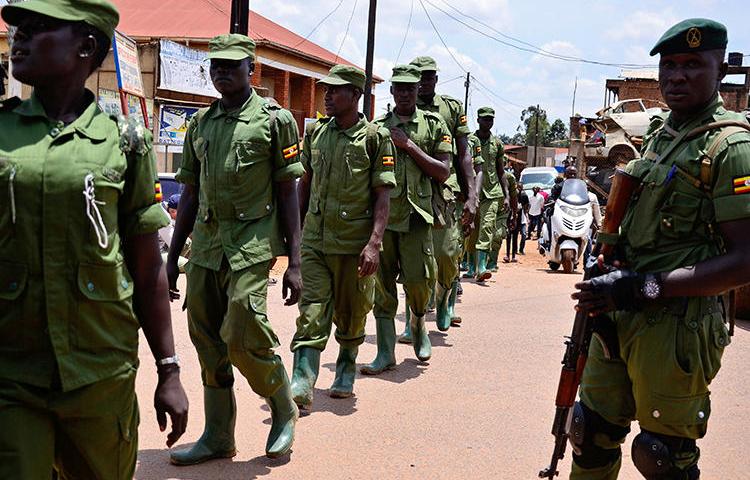
Security forces are seen in Kampala, Uganda, on April 4, 2020. Security forces throughout the country recently attacked and harassed journalists covering the COVID-19 pandemic. (Reuters/Abubaker Lubowa)

Ugandan security personnel enforcing COVID-19 measures assault journalists

Nairobi, April 22, 2020 — Ugandan authorities must investigate security forces’ recent attacks against journalists and hold those responsible to account, the Committee to Protect Journalists said today.

Read More ›

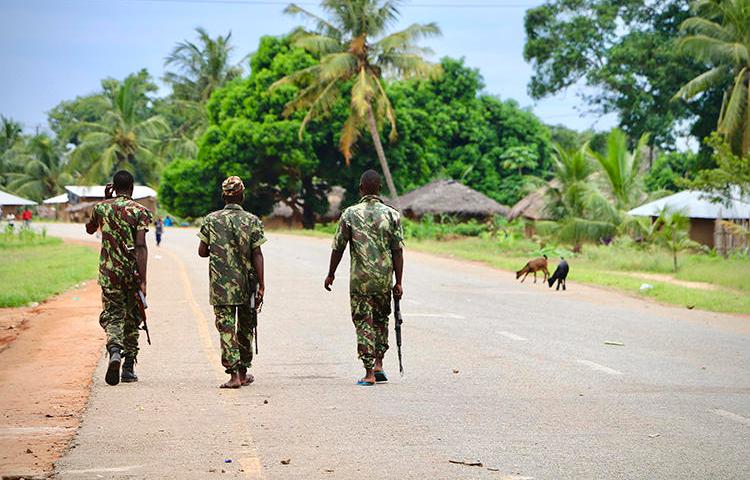
Soldiers are seen in Mocimboa da Praia, Mozambique, on March 7, 2018. Journalist Ibraimo Abú Mbaruco recently went missing in Mozambique. (AFP/Adrien Barbier)

Radio journalist Ibraimo Abú Mbaruco missing in Mozambique

New York, April 17, 2020 — Authorities in Mozambique must conduct a swift and transparent investigation into the whereabouts of journalist Ibraimo Abú Mbaruco and hold those responsible for his disappearance to account, the Committee to Protect Journalists said today.
Read More ›

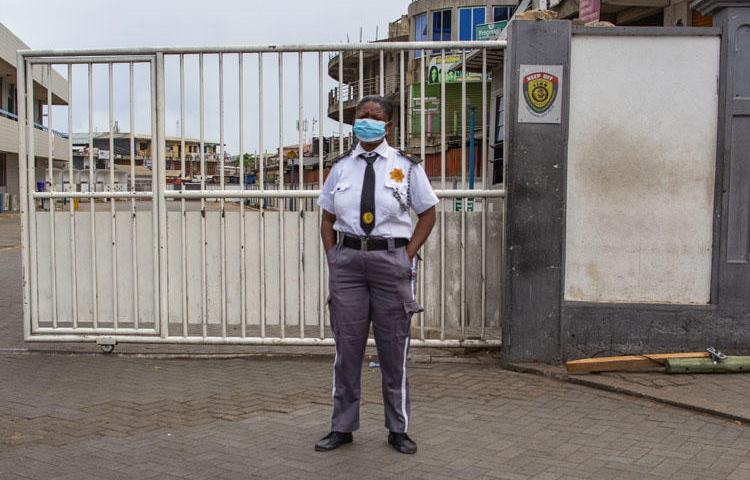
A security guard wears a mask as a protective measure against COVID-19 disease in Accra, Ghana, on April 4, 2020. Soldiers enforcing restrictions related to the pandemic assaulted journalists in two separate incidents. (Nipah Dennis/AFP)

In Ghana, soldiers enforcing COVID-19 restrictions attack 2 journalists

Abuja, Nigeria, April 16, 2020 — Ghana’s military should investigate the recent attacks on the press by soldiers and hold those responsible to account, the Committee to Protect Journalists said today.
Read More ›

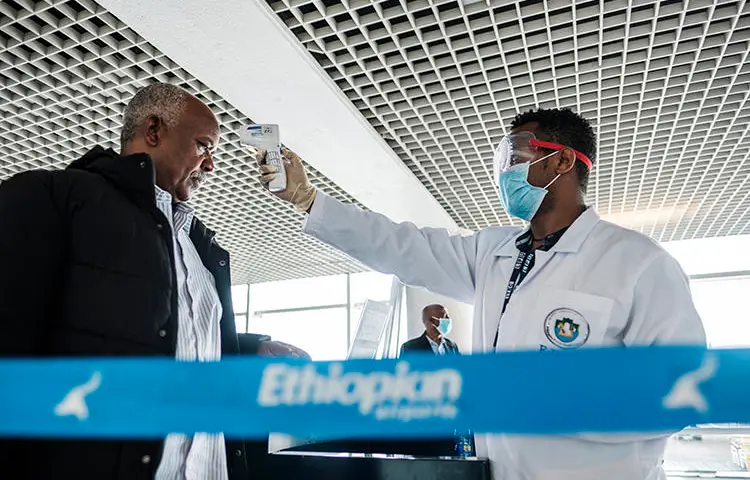
A worker of the Ethiopian Public Health Institute measures a man's temperature in Addis Ababa, on March 17, 2020. Ethiopian police are holding journalist Yayesew Shimelis pending a terrorism investigation. (AFP/Eduardo Soteras)

Ethiopian police hold journalist Yayesew Shimelis pending terrorism investigation

Nairobi, April 16, 2020 — In response to Ethiopian authorities’ new terrorism allegations against broadcast journalist Yayesew Shimelis today, the Committee to Protect Journalists issued the following statement:

Read More ›

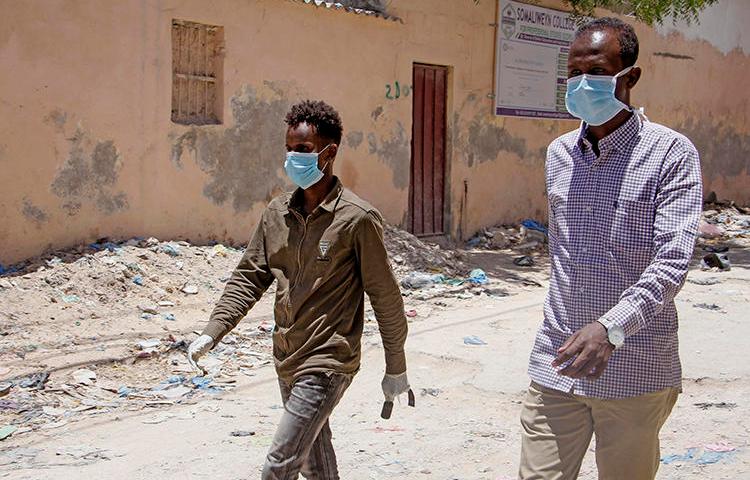
Men are seen in Mogadishu, Somalia, on March 18, 2020. Somali authorities recently arrested journalist Abdiaziz Ahmed Gurbiye over his COVID-19 Facebook posts. (AP/Farah Abdi Warsameh)

Somali journalist Abdiaziz Ahmed Gurbiye arrested over COVID-19 Facebook posts

Nairobi, April 16, 2020 — Somali authorities should immediately and unconditionally release journalist Abdiaziz Ahmed Gurbiye and guarantee that the media can cover and comment on the COVID-19 pandemic without facing jail time, the Committee to Protect Journalists said today.
Read More ›

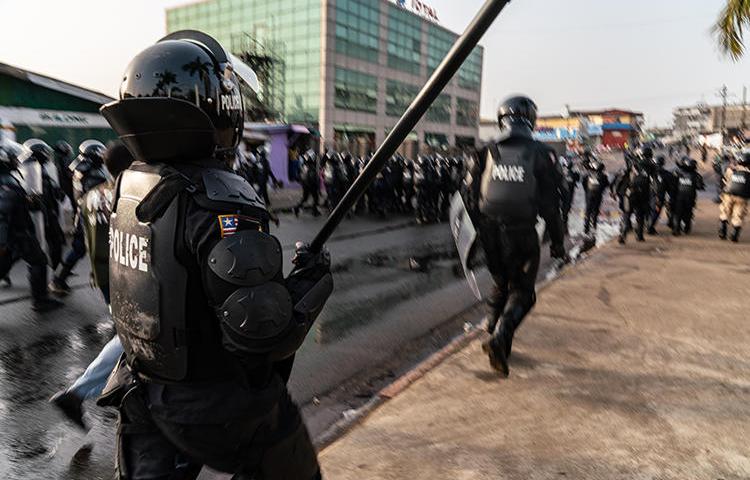
Police are seen in Monrovia, Liberia, on January 6, 2020. Security forces recently harassed and attacked at least four journalists in Liberia. (AFP/Carielle Doe)

Journalists in Liberia attacked, harassed for reporting on COVID-19

Since March 19, 2020, Liberian security forces have attacked or intimidated at least four journalists covering the COVID-19 pandemic, according to the journalists, who spoke with CPJ in phone calls and via messaging apps, and a report posted on Facebook by the Press Union of Liberia, a local trade group.
Read More ›

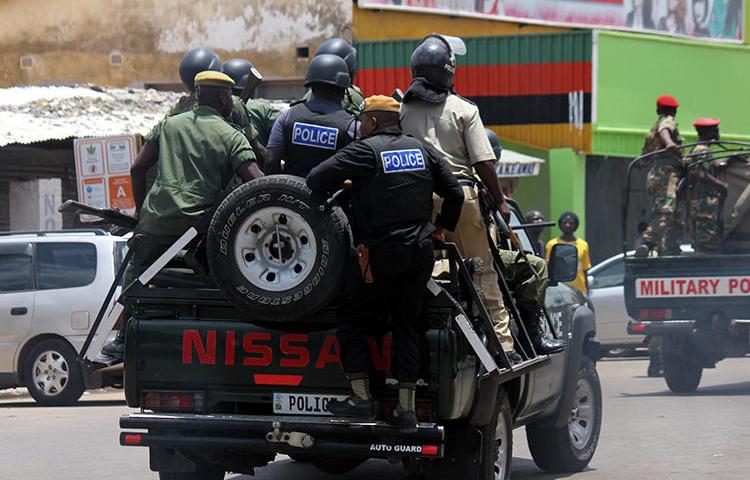
Police officers are seen in the streets of Lusaka, Zambia, on January 15, 2018. Zambia recently cancelled the license of the Prime TV broadcaster and police shuttered its office. (AFP/Dawood Salim)

Zambia cancels broadcaster Prime TV’s license, police shutter office

New York, April 13, 2020 — Zambian authorities should restore Prime TVs broadcast license and cease harassing the outlet, the Committee to Protect Journalists said today.

Read More ›

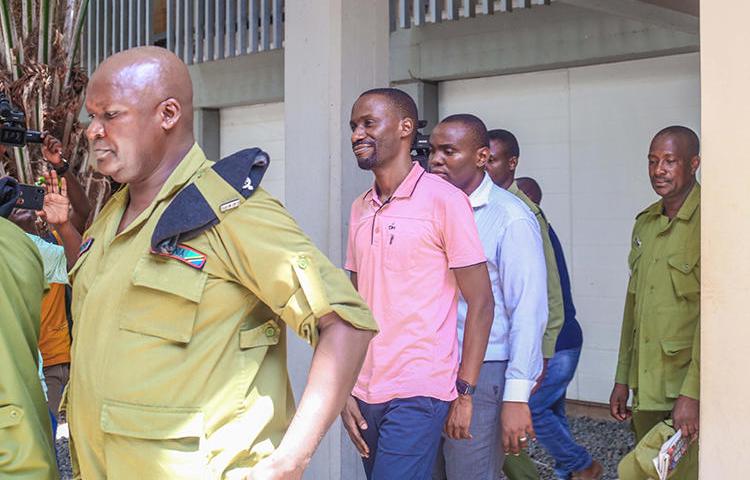
Maxence Melo leaves court in Dar es Salaam yesterday after being convicted of obstructing police investgiations. (Jamii Forums)

Tanzanian court convicts Maxence Melo of obstructing investigation, levies fine

Nairobi, April 9, 2020— In response to a Tanzanian court’s conviction yesterday of Maxence Melo, founder of the online discussion and whistleblowing platform Jamii Forums, on charges of obstructing police investigations, the Committee to Protect Journalists issued the following statement:

Read More ›

Somali freelance journalist Abdalle Ahmed Mumin. (Abdalle Ahmed Mumin)

Somali journalist Abdalle Ahmed Mumin says there is ‘nobody to trust’ for COVID-19 information

Somali freelance journalist Abdalle Ahmed Mumin has covered the news for 17 years, spending much of that time in one of the most dangerous places in the world to work as a journalist. Since CPJ started keeping records in 1992, at least 69 journalists have been killed in Somalia for their work.

Read More ›

CPJ, 80 media and rights groups urge African heads of state to release jailed journalists

CPJ and 80 media, press freedom, and human rights organizations write to African heads of state to call on their respective governments to release all jailed journalists amid the COVID-19 pandemic.

Read More ›