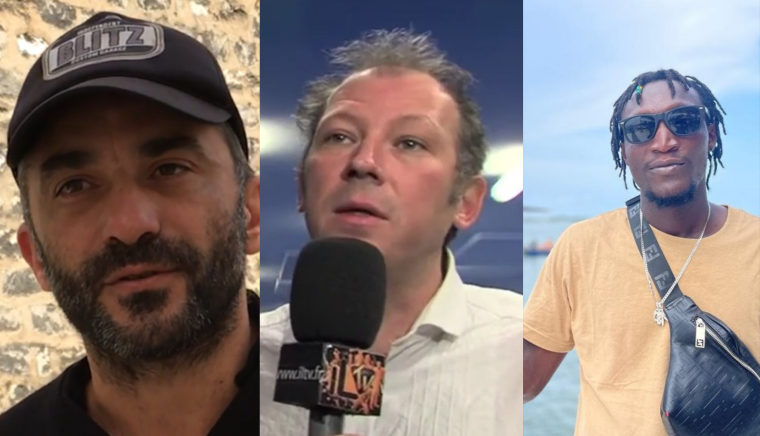
Dakar, August 21, 2026—The Committee to Protect Journalists calls on Togolese authorities to drop the charges against French journalists Sebastian Perez Pezzani and Gaël Mocaër, and Togolese fixer Komi Mawufemo Vedomey, and to release Mocaër and Vedomey who have spent 26 days in detention since they were arrested July 27 while filming a documentary in northern Togo.
On August 20, an investigative judge in Lomé, the Togolese capital, provisionally released Pezzani for medical reasons but ordered his passport be confiscated pending the next appearance of the three journalists to be questioned on the case, their lawyer, Martial Akakpo, told CPJ. Mocaër and Vedomey are detained in a police facility in Lomé.
“Sebastian Perez Pezzani, Gaël Mocaër, and Komi Mawufemo Vedomey have been deprived of their freedom and prevented from carrying out their journalistic work for 26 days through an excessive and prolonged legal process, once again highlighting the Togolese authorities’ reluctance to allow journalists to practice their profession freely in the country,” said Moussa Ngom, CPJ’s Francophone Africa representative. “Togolese authorities should lift Pezzani’s house-arrest, immediately release Mocaër and Vedomey, and drop the charges against them.”
Tony Comiti, founder of the production company Tony Comiti Productions, told CPJ that the journalists were on assignment to produce “a travel and adventure documentary for the ‘Les Routes de l’impossible’ series, broadcast on France Télévisions.”
He told French broadcaster France Inter that the journalists and the fixer were placed under house arrest at a local hotel upon their arrest, had their footage confiscated, and were accused of espionage. The journalists were released after Togolese judicial authorities reviewed their footage, but they were arrested again two hours later.
The lawyer told CPJ that Pezzani and Mocaër were charged on Monday, 13 days after their transfer to Lomé, over allegations of having made “false statements” on their visa applications, which they deny. Vedomey is also being investigated under the same charge over a discrepancy between the profession listed on his passport and that stated in the application he filed to obtain the filming permit for the team. He has denied any wrongdoing, saying that he provided the information following the administration’s guidance, his lawyer said. Comiti said the permit was granted under the status of “documentary filmmakers.”
Akakpo said the National Center for Cinema and the Moving Image (CNCIA), an agency under the Togolese Ministry of Culture, granted the journalists authorization to film in several locations across the Kara region, but they inadvertently crossed the allowed area while trying to shoot a scene involving a truck. CPJ’s calls to the CNC went unanswered.
On Wednesday, the High Authority for the Regulation of Written, Audiovisual, and Digital Communication (HARC), citing Togo’s press code, said in a statement that the two journalists and their media outlet had not requested accreditation as required from foreign press correspondents and special envoys.
Kara borders the Savanes region, further north, which has been under a state of emergency since 2022 due to attacks by jihadist groups. Reporting on security issues is heavily restricted in the area.
In April 2024, French freelance reporter Thomas Dietrich was convicted of illegal entry and expelled from Togo after being arrested while attempting to report on politics.
CPJ’s calls to Yawa Kouigan, spokesperson for the Togolese government, went unanswered.