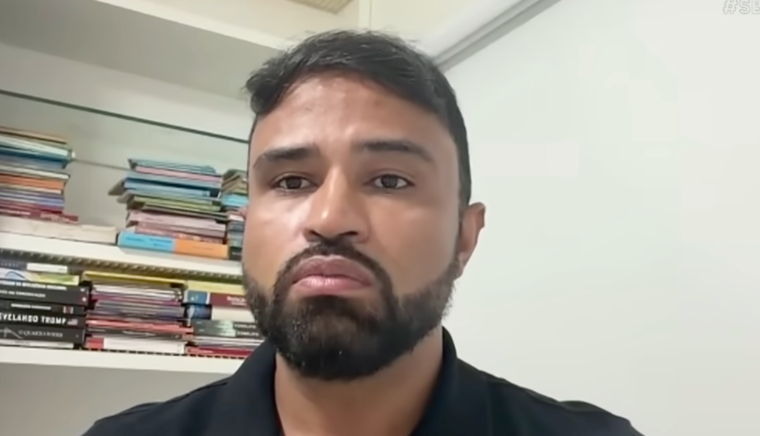
São Paulo, August 14, 2026—The Committee to Protect Journalists is deeply concerned that the Brazilian Supreme Federal Court has decided personal allegations are a reason to break source confidentiality, a right guaranteed by the Brazilian Constitution, in journalist Luís Pablo Conceição Almeida’s reporting.
Brazilian Supreme Federal (STF) Judge Flávio Dino accused Luís Pablo of “stalking” him last year after the journalist published three blog posts reporting that Dino’s family regularly used a state vehicle. As part of an investigation ordered by STF Judge Alexandre de Moraes into Dino’s claims, Federal Police raided the former secretary of Maranhão state government Raimundo Cutrim’s home on Tuesday in connection with Luís Pablo’s reporting. In March, Luís Pablo’s home was raided.
The same day, Federal Police also conducted a raid on a local lawyer’s home for a $19,000 bank transfer receipt as part of the same investigation into Luís Pablo’s alleged attempt to purchase a property.
In a statement sent to CPJ via WhatsApp message, Luís Pablo said “it was troubling that facts and relationships of a strictly private nature, with no connection whatsoever to the production or publication of journalistic content, are being used in an attempt to attribute to me a criminal conduct.”
“All this was only possible due to the breach of Luís Pablo’s source confidentiality, a right guaranteed by the Brazilian Constitution,” said Cristina Zahar, CPJ’s Latin America program coordinator. “When the government violates source confidentiality, it sends a message that speaking to the press carries a risk of legal harassment and erodes trust between journalists and their sources. This is a very dangerous precedent for press freedom in Brazil.”
Luís Pablo’s defense confirmed to CPJ that the bank transfer was meant to pay for a rural property. It also said that it didn’t have access to the investigation, which is under judicial secrecy, to plan the next steps of the journalist’s defense.
The Inter-American Press Association issued a statement saying that the Brazilian Supreme Court’s breach of professional confidentiality poses a serious threat to the practice of journalism in Brazil.
CPJ’s emails to STF press office requesting updated information on the case did not receive any reply.