Impunity in Indonesia: The leads left unfollowed in journalist Rico Sempurna Pasaribu’s murder
- English
In This Report
Introduction
Around 3:30 a.m. on June 27, 2024, Rico Sempurna Pasaribu and three of his family members were murdered when their home in the Sumatran town of Kabanjahe was doused with gasoline and set on fire.
News spread quickly when it became clear the target of the attack was a journalist with news site Tribrata TV who had recently reported on illegal gambling allegedly involving a member of the Indonesian National Armed Forces (TNI). In the days following the arson, journalists and human rights groups demanded a thorough and transparent investigation amid reports that Pasaribu was threatened over his reporting beforehand.
Nine months later, three suspects were convicted and ultimately sentenced to life for premeditated murder. But even though the three perpetrators are in prison, full justice remains elusive for Pasaribu’s family. Ahead of the two-year anniversary of the journalist’s murder, a joint investigation by the Committee to Protect Journalists (CPJ) and Free Press Unlimited (FPU) — drawing on hundreds of pages of court documents, military investigation files, witness testimonies, and interviews with key individuals — has found major shortcomings in the official case.
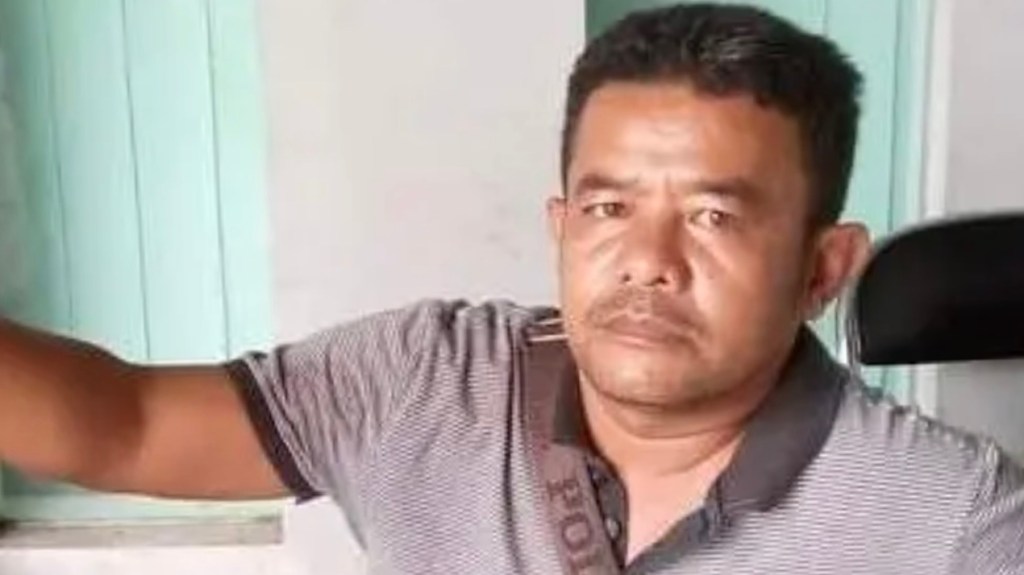
First, authorities did not thoroughly investigate the alleged involvement of a soldier, Cpl. Herman Bukit, in the murder. Substantial evidence connects Bukit to the illegal gambling business at the heart of the case, to meetings with the principal perpetrator Bebas Ginting, and to pressure Pasaribu faced for his reporting. Yet investigators never questioned Bukit as a suspect or used investigative methods such as digital forensics or financial analysis to ascertain the extent of his connections with the victim and perpetrators. Called as a court witness, Bukit testified that he did not own the gambling business Pasaribu reported on, and he did not have a close relationship with the perpetrators.
A military investigation cleared Bukit of allegations that he was involved in the murder, but this joint report reveals significant flaws in that inquiry. The investigation contained contradictory evidence, lacked transparency, and took an excessively narrow approach that would only acknowledge Bukit’s involvement if there were witnesses who directly saw or heard him order Ginting to burn down Pasaribu’s house.
Second, authorities neglected to recognize Pasaribu’s status as a journalist or to investigate threats connected to his reporting on illegal gambling in Kabanjahe. Before he was killed, Pasaribu received threats and takedown demands over his gambling coverage and had expressed serious concerns about his safety, including to a police officer. But the official court files and public police statements show that authorities never sought to pursue these as avenues for inquiry.
Given the case’s many shortcomings, there are serious questions about whether all of the individuals who may have played a role in ordering, paying for, or orchestrating the murder have been properly investigated.
“The brutal murder of journalist Rico Sempurna Pasaribu and his family is a heinous crime. It adds to long-standing concerns about journalists’ safety, and that Indonesia’s military justice system is failing to deliver accountability. Indonesian authorities must now reopen the investigation into Pasaribu’s murder and try any military personnel involved in a civilian court. Impunity for crimes against journalists has no place in a democracy like Indonesia.”
Beh Lih Yi, CPJ’s Asia-Pacific director
Pasaribu’s murder highlights Indonesia’s poor record in ending impunity in cases of violence against journalists — especially when members of security forces are alleged to be involved. Since 1992, 14 journalists have been killed in Indonesia, and eight of the nine cases in which journalists have been murdered in direct reprisal for their work have resulted in partial or complete impunity. Impunity has become entrenched worldwide, with four out of five killers of journalists getting away with murder. If anyone is held accountable, it is usually those who are paid to do the job — and rarely the masterminds.
To attain full justice for the Pasaribu family, we recommend the following:
1. The Indonesian National Police should reopen the investigation into the murder of Pasaribu and his family, with a focus on the alleged involvement of Bukit. The investigation must be transparent, impartial, and swift, taking into account all available evidence, including the forensic examination of cellphone communications and analysis of financial flows between all persons of interest in the case.
2. President Prabowo Subianto, Indonesia’s House of Representatives, the Commander of the Indonesian Armed Forces, and the Chief of the Indonesian National Police must ensure that Bukit is tried in a civilian court for his alleged involvement in the murder of Pasaribu and his family. Handling this case under the military justice system means impartiality cannot be guaranteed. Public transparency and accountability, which constitute the minimum requirement for a fair trial, are not attainable within the closed mechanism of the military justice system. Prosecution of the case should also be conducted in accordance with the appropriate sections of the Indonesian Press Law, which guarantees protection for journalists while they are doing their work.
3. The Indonesian government must empower the Indonesian Press Council and the National Commission on Human Rights to monitor law enforcement activities related to the murder of journalist Pasaribu and his family. As a journalist, Pasaribu’s murder should be viewed as an attack on democracy and civil liberties. Authorities must investigate the role of all masterminds in the murder, as well as the link between the journalist’s work and his killing.
4. The Indonesian government must reform the 1997 Military Justice Law. General criminal offenses committed by military members should be tried in the civilian judiciary system, in line with Indonesia’s international legal obligations. At present, the military justice system lacks fundamental safeguards vital to ensure impartiality and justice, or provide sufficient legal remedy to civilian victims of abuse.
5. The Constitutional Court must, as soon as possible, issue a ruling on the petition for judicial review of the 1997 Military Justice Law that is currently underway, affirming the principle of equality before the law enshrined in Indonesia’s Constitution.
6. Indonesian authorities and media companies must ensure that journalists can work safely, with decent wages, and that reporters observe Indonesia’s Code of Journalistic Ethics in their work.
Born in 1977 in Karo district, a mountainous region about a three-hour drive south from the North Sumatra provincial capital Medan, Pasaribu was the second of nine children from a poor family. After graduating high school and finding his way into journalism, he reported for various local news outlets, including his own news site, Metropublika, before joining the Medan-based Tribrata TV in 2023.
Tribrata TV started as an online television platform partnering with the Indonesian National Police, but became an independent online news outlet in 2021. A former colleague described Pasaribu as an easy-going and sociable person who was not afraid to report on sensitive topics such as gambling — which is illegal in Indonesia — narcotics, and illegal logging in Karo.
In the week before his killing on June 27, 2024, Pasaribu published four stories under an anonymous byline about gambling in Kabanjahe. The second story — published June 22 on Tribrata TV and also on Pasaribu’s personal Facebook page — named Bukit, a junior commander of a machine gun platoon in the Army 125th Battalion, as the alleged owner of a gambling business. The article included a photo of a coffee shop allegedly used as the gambling venue, citing its proximity to the battalion’s barracks.
Gambling is a rampant social problem in Karo, home to roughly 419,000 people, and the military is involved in many of the illegal operations, according to local journalists, who spoke on the condition of anonymity for fear of reprisal.
Indonesia’s military has long generated substantial funding from irregular and illegal economic activity, including military-affiliated businesses, mafia-like criminal activity, and corruption, human rights groups say. This self-financing became entrenched during the authoritarian rule of former President Suharto and has largely resisted attempts at reform.
At the time of Pasaribu’s murder, gambling in Karo was so pervasive that operators were known to pay local journalists, security officials, and community leaders for their silence, according to interviews with local journalists.
Several journalists, speaking on the condition of anonymity, said that Pasaribu himself allegedly received about 3.5 million rupiah (US$200) a week through Ginting. Ginting, a local “preman,” or thug, later testified that Bukit had given him a “special assignment” to protect the gambling operation from journalists.
The practice of journalists receiving payments from subjects of their reporting is ethically problematic, but reflects the precarious conditions some Indonesian journalists face. Research by the Alliance of Independent Journalists found that, in 2023, nearly half of Indonesian journalists earned less than the district minimum wage, while another 15.4% received irregular pay or only earned from advertising commissions.
Edrin Andriansyah, editor-in-chief of Tribata TV, said the news site did not pay its journalists a salary. Instead, reporters were expected to generate advertising revenue to share with the company and were permitted to accept cash from external sources — including gambling operators, he said.
The ethical concerns about this practice do not preclude the fact that Pasaribu’s murder can only be understood in connection to the findings he revealed in his capacity as a journalist. His stories alleging that Bukit owned a gambling operation in Kabanjahe were supported by testimony from four witnesses in court and reflected genuine community fears about the associated social impacts.
In the days leading up to his killing, Pasaribu received at least five threats or demands from Bukit and Ginting that he take down his stories, which he reported to friends, colleagues, and a high-ranking police officer. Yet the case files show that none of those tasked with administering justice in the case ever seriously investigated the threats, instead choosing to ignore the connection between Pasaribu’s journalistic work and the broader power networks behind the illicit economic activity he reported on.
The murder and the prosecution’s case
On June 26, 2024, Ginting instructed two of his associates, Yunus Syah Putra Tarigan and Rudi Apri Sembiring, to set Pasaribu’s house on fire as a lesson, according to the verdict delivered by the Kabanjahe District Court in March 2025.
At around 3:30 a.m. the following day, Tarigan dismounted a motorbike driven by Sembiring and walked about 50 meters (164 feet) to Pasaribu’s small shop-cum-residence on Jalan Nabung Surbakti Ujung in Kabanjahe. He cut the tops off two 1.5 liter plastic bottles containing a cocktail of gasoline and diesel, then poured the mixture over the front door and walls. Forensic evidence presented later in court would show two distinct ignition points at the crime scene.
The resulting fire killed four people: Pasaribu, 47; his wife Elfrida Ginting, 48; his son Sudi Investi Pasaribu, 12; and grandson Louin Situngkir, 3. The coroners noted soot in the victims’ respiratory tracts and hemorrhaging to vital organs, determining the cause of death was suffocation from sixth-degree burns.
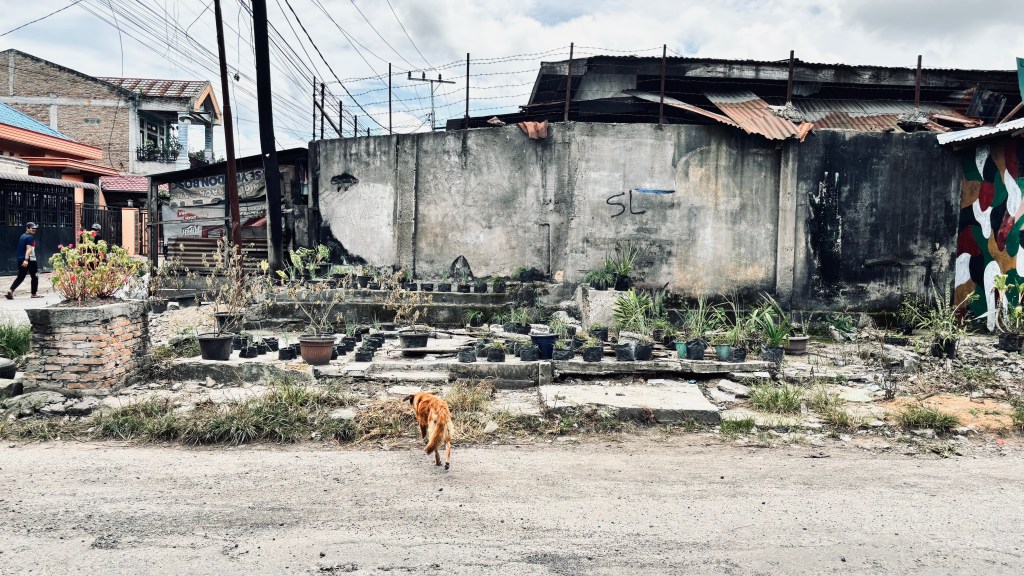
Karo Police opened an investigation into the arson on June 27. Within days, investigators began briefing journalists that the likely cause of the fire was a spark that came into contact with 3 kilogram gas cylinders sold at the family’s shop. The Military Regional Command I/Bukit Barisan, which covers North Sumatra province, began its own investigation on June 28 and — just three days into the probe — said there was no indication of an arson attack.
But on July 8, the same day Pasaribu’s eldest daughter Eva filed a police report alleging that her family was murdered — and amid growing pressure from advocacy groups for a comprehensive investigation — police announced the arrest of Tarigan and Sembiring. Three days later, they named Ginting as a suspect for financing and ordering the arson attack.
In its indictment of Ginting, the Karo District Attorney’s Office said that on June 25 — at Bukit’s request — he met Pasaribu and asked the journalist to remove a Facebook post about the gambling business he had alleged was owned by the soldier. As the indictment makes clear, Ginting was responsible for resolving issues with journalists and NGOs regarding the operation.
The prosecutors theorised that during that meeting, Ginting and Pasaribu hatched a plan to ask Bukit for money by staging an assault on the journalist, filing a police report, and later offering to withdraw it for cash. The scheme unraveled after Pasaribu met Bukit behind Ginting’s back and revealed their meeting. According to the indictment, Ginting resented Pasaribu for this and ordered the arson attack.
CPJ and FPU have serious doubts about this theory because it does not take into account Bukit’s alleged ownership of the gambling business or his instructions for Pasaribu’s reporting to be taken down — aspects of the case cited in the indictment and verdict.
On November 25, 2024, the three suspects were put on trial at the Kabanjahe District Court for premeditated murder. Four months later, the judges found all three guilty, concluding that Ginting ordered the arson out of resentment. Ginting and Tarigan were jailed for life, while Sembiring, the third accomplice and driver, was sentenced to 20 years. On June 4, 2025, the Medan High Court affirmed the ruling and increased Sembiring’s prison sentence to life.
Holes in the official case
By identifying three suspects and supplying a motive, authorities had constructed a theory of the arson that appeared to close the case. But interviews, court documents, and military investigation files reviewed for this report raise questions about whether this is the full story, given that authorities failed to probe the broader context around the murder, including threats tied to Pasaribu’s reporting before he was killed and evidence referenced in court pointing to the possible involvement of Bukit.
Failure to pursue leads suggesting Pasaribu targeted for his work
Before he was murdered, Pasaribu received threats and demands over his reporting on illicit gambling in Kabanjahe and expressed serious concerns about his safety. Yet the official court files and public police statements show that authorities never sought to pursue these as avenues for investigation.
On June 21, the day Tribrata TV published the first story about TNI-backed gambling and its social impacts in Kabanjahe, Bukit allegedly called Pasaribu and asked him to take down the article, according to a local journalist close to the victim, who spoke on the condition of anonymity for safety reasons.
CPJ and FPU were unable to confirm the call because authorities did not perform a forensic analysis of mobile devices in the case — a major omission in the investigative process.
When Bukit’s demands to Pasaribu failed, he twice called Tribata TV’s Adriansyah via WhatsApp and then sent a message requesting that Pasaribu’s article be taken down, according to screenshots of the call log and WhatsApp conversation, reviewed for this report. “Take it down, please. I have a long, good relationship with Pasaribu,” Bukit wrote in the June 21 message. Adriansyah replied via text, asking Bukit to communicate directly with Pasaribu.
Following Bukit’s takedown requests, Pasaribu became increasingly fearful for his safety. On June 23, he told three friends he had received a threatening call from Ginting and was seeking police protection, according to court testimony from another local journalist, Viktor Sembering.
That same day, Pasaribu sent WhatsApp messages from the cellphone of Bastaman Purba, a local journalist and friend, to Rasmaju Tarigan, head of the Tanah Karo Police criminal investigation unit, requesting protection. The messages, reviewed for this report, said: “Please help follow up so our younger brother can feel comfortable carrying out his activities, sir,” and, “Corporal Herman Bukit has become too arrogant, acting like a general and thinking he’s the battalion commander.”
Tarigan received the message but never responded. He later told a military investigation that he was unaware that “our younger brother” referred to Pasaribu — despite the fact that the messages included a photo of Purba and Pasaribu.
As his fears grew, Pasaribu left town during the nights of June 24-25 with Anderson Sembiring, a friend and fellow journalist who was interviewed for this report. While away, Pasaribu — who had pawned his cellphone — borrowed Anderson’s cellphone and called Bukit, asking him why he had ordered Ginting to look for him. He told Bukit he would seek protection for his family from police if he continued pursuing him, according to Anderson, who said he was present for the call.
Limited scrutiny on Bukit’s role
Authorities failed to thoroughly investigate whether Bukit could have played a role in the murders, despite four witnesses testifying that the soldier owned the gambling business Pasaribu reported on and evidence that he had regular contact with Ginting and the victim before the arson.
On June 22, the day the second story appeared online, Ginting met with Bukit, who showed him Pasaribu’s Facebook post alleging that the soldier owned the illegal gambling operation, according to the Kabanjahe court verdict. At the meeting, Bukit told Ginting, “Could you ask Pasaribu to take it down?” Ginting replied, “Sure, I’ll ask Pasaribu to take it down soon.”
This meeting marked the beginning of a series of contacts between Bukit, Ginting, and Pasaribu in the days immediately preceding the murders.
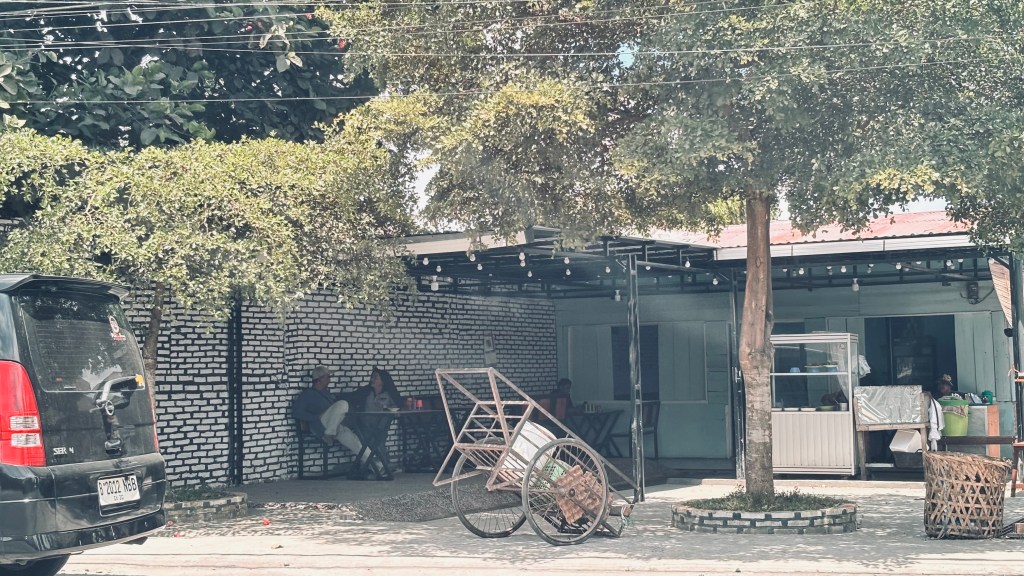
On June 23, according to the verdict, Ginting ordered two of his associates, Pedoman Tarigan and Yunus Syah Putra Tarigan, to locate where Pasaribu lived. On June 25, Ginting summoned Pasaribu to his home in Kabanjahe and asked him to delete the Facebook post. Referring to his payment to Pasaribu, Ginting told him: “Delete that post you made; you got it from Herman Bukit, didn’t you?” according to the verdict.
Later that evening, Bukit and Pasaribu met at the Pos 3 coffee stall in Kabanjahe for a 20-minute discussion, according to interviews with two witnesses, Anderson and Karmel Sitepu, another friend of the victim. The meeting is also acknowledged in the Kabanjahe court verdict and a military investigation discussed below. Although it is unclear what the two spoke about, Anderson told CPJ and FPU that afterwards Bukit allegedly offered Pasaribu 2 million rupiah (US$112) to take down the gambling stories, but the journalist refused.
On June 26, after Pasaribu published a fourth story about public protests against drugs and gambling in Kabanjahe, Ginting met with Bukit for a second time at the alleged gambling location, according to the verdict. Bukit asked Ginting whether he had met with Pasaribu to resolve the issue about the Facebook post. When Ginting replied no, Bukit confronted him by saying Pasaribu had already mentioned their meeting, then instructed him: “Go meet Sempurna right away.”
Pasaribu and his family were murdered the following day.
Despite the sequence of events, police never questioned Bukit as a person of interest in the case, narrowing their focus to Ginting, Tarigan, and Sembiring, and choosing not to pursue leads that pointed to the soldier’s possible involvement.
At the same time, Bukit is central to the police’s own account of events. A 57-scene reconstruction, dated July 19, 2024, begins with the meeting in which Bukit instructs Ginting to remove the Facebook post about the gambling operation. Artha Sigalingging, a lawyer from the Medan Legal Aid Institute (LBH Medan), said it was unusual for investigators not to call all witnesses for questioning for a reconstruction to clearly establish a complete sequence of events.
Although Bukit was never questioned by police, prosecutors summoned him to give a witness statement to the Kabanjahe District Court on February 24, 2025. He told the court he had known the defendants for about five years, though not closely, and that he had spoken with Ginting once over the phone about where to buy manure. He also recalled asking Pasaribu, in a conversation around June 22, 2024, why he had been named in the article when he had been leasing the shop “for a long time.” Pasaribu, the soldier told the court, promised to “fix it tomorrow.”
Bukit’s statement distancing himself from the defendants was inconsistent with Ginting’s testimony. Ginting said he had a good relationship with Bukit, who he testified had given him a “special assignment” to shield the gambling enterprise from reporting by NGOs and journalists. He told judges under examination that he was friends with Pasaribu, and that the dispute between them arose only because of the journalist’s reporting on Bukit’s gambling operation. The court did not discuss this inconsistency.
In addition, on December 17, 2024, Ginting through his lawyer alleged in the Kabanjahe District Court that Bukit was “involved in this case”; however, the panel of judges interrupted and instructed him to repeat the statement during the evidentiary phase of proceedings. The assertion, which was recorded on video but not included as testimony, was never repeated. A source close to the case, who spoke on the condition of anonymity for safety reasons, said that Ginting was paid not to mention Bukit’s name in court again.
Weaknesses in the court ruling
The narrow scope of the investigation was supplemented by the court’s disjointed analysis of events and failure to consider the victim’s status as a journalist.
Ahmad Sofian, a legal scholar at Bina Nusantara University, concluded in an academic paper reviewing the verdict that prosecutors and judges had failed to apply the doctrine of causality in piecing together the events leading up to the murders. Notably, according to Sofian, the prosecutors in their indictment omitted several causes for Pasaribu’s death involving Bukit, including his alleged ownership of the gambling den, his meeting with Pasaribu, and his request that the reporting about the gambling operation be taken down. Similarly, he notes that the judges did not consider several actions regarding Bukit’s alleged involvement in this murder.
This resulted in the “exclusion of one or more acts that contributed to the victims’ deaths,” said Sofian, and the “loss of criminal liability attribution to other actors and raises concerns about the erosion of true justice.”
The prosecutors and judges also neglected the victim’s status as a journalist, meaning there was no examination of the threats Pasaribu received in relation to his work or analysis of the topics he was covering at the time of his murder. Article 8 of the Indonesian Press Law guarantees legal protection for journalists while doing their work, and Article 28F of the constitution affirms everyone’s right to obtain, possess, and convey information. International standards furthermore stress the importance of investigating the connection between a journalist’s work and the crimes committed against them.
“This decision does not mention a single article in the Press Law or relevant human rights principles,” Al Araf, a legal expert from Brawijaya University, wrote in an analysis of the court decision. “Consequently, substantive justice was not achieved because violence against journalists should be viewed as an attack on democracy and civil liberties.”
Flaws in the military investigation
Under Indonesia’s 1997 Military Justice Law, TNI personnel are investigated and prosecuted by military tribunal, rather than civilian courts — a system that has fostered a “culture of impunity” for crimes committed by the military, according to human rights groups.
In Pasaribu’s case, military police under the Military Regional Command I/Bukit Barisan launched an investigation on June 28, 2024, into allegations that Bukit was involved in the deadly arson and gambling. On September 8, 2025, the TNI published a report concluding no further action was needed because investigators did not find two valid pieces of evidence, which are required to designate someone a suspect in Indonesia.
CPJ and FPU have serious concerns about the investigation, which amplifies the omissions and inconsistencies of the civilian court verdict, but also adds a layer of obfuscation.
The TNI report states that, based on the results of the police investigation, police reconstruction, and facts established at the Kabanjahe District Court, neither the defendants nor the witnesses had mentioned Bukit’s involvement in the arson. This conclusion is predicated on an excessively narrow conception of involvement. Although the court did not put Bukit at the scene of the crime, multiple witness testimonies named him as the gambling operator, described his close relationship with Ginting, the instigator of the arson, and explained how he had ordered Pasaribu’s article be taken down.
The police reconstruction, which became the basis for the official case chronology in the civilian court, begins with Bukit instructing Ginting to remove Pasaribu’s post. More paradoxically, the TNI repeats in its own report the same chronology established by the Kabanjahe court and refers to events implying Bukit’s involvement. For example, there are multiple references to Bukit being at the gambling venue and asking Ginting on June 22 and June 26 to urge Pasaribu to remove the articles. The TNI report also acknowledges that Bukit asked Tribrata TV’s Adriansyah to remove a report on the illegal gambling operation and that an eyewitness confirmed he saw Bukit meet Pasaribu on June 23.
In addition, the TNI investigation was not transparent in its assessment of evidence presented by Pasaribu’s daughter Eva that shows Bukit’s central role in the arson. On February 13, 2025, as the civilian court trial entered its final weeks, Eva handed military investigators a USB drive with seven new pieces of evidence, including a recording of a call she had with Ginting in which he told her he “got an order” from Bukit.
(Abridged) Transcript of call between Ginting and Eva on December 22, 2024.
Ginting: Did you get the information yet?
Eva: What information, Grandpa?
Ginting: About Bukit, Bukit.
Eva: Yeah, what did he say?
Ginting: Just remembered this week, the latest update. So you know, I got an order from him. I forgot previously. I realized after I talked yesterday with two of my friends who usually handle the payments. But give me a week; hopefully it’ll be done by then, okay?
Eva: Yes, Grandpa, amen, amen.
Ginting: This is just for your information.
Irvan Saputra, the director of LBH Medan, which prepared Eva’s report to military police, said the organization was “absolutely certain” Ginting’s reference to “an order” was in the context of the arson attack. The phone conversation took place just days after Ginting told the Kabanjahe District Court on December 17, 2024, that Bukit was involved in the case.
The military report, however, concludes that the contents of the flash drive “contain no evidence of Corporal Herman Bukit’s involvement in the arson.” No attempt is made at outlining what evidence was presented or explaining how the conclusion was reached — underscoring concerns about the transparency of the investigation. Because of the closed-door nature of the military proceedings, it is unclear whether Ginting was ever questioned about the statement.
Finally, the TNI investigation also dismissed claims that Bukit was involved in gambling, finding no evidence during a July 1, 2024, inspection of the alleged gambling site and accepting his explanation that he had rented the premises to Janwar Ginting from 2023 to 2025. Yet, three witnesses — Viktor, Pedoman, Bebas Ginting, and Eva, who formerly worked at the site as a coin attendant — testified before the Kabanjahe District Court that Bukit oversaw the operation.
Taken together, there are multiple pieces of corroborating evidence connecting Bukit to motive, communication with the main perpetrator, and pressure on Pasaribu for his reporting that should have been more thoroughly investigated.
It is the military prosecutor’s duty to establish two pieces of evidence during a subsequent investigation to deepen the facts already established in the public trial, said Sofian, of Bina Nusantara University. “The witnesses’ testimony from the public trial should have served as evidence. But in this investigation, they appear to have only sought clarifications,” he told CPJ and FPU.
Conclusion
The investigation by Indonesian authorities into the June 2024 murder of Pasaribu and his family resulted in partial justice, with life sentences imposed on Ginting, Tarigan, and Sembiring for their roles in the arson attack.
However, substantial evidence documented in this report shows that Bukit should be thoroughly investigated and face justice accordingly for his alleged role in Pasaribu’s murder.
After reviewing court documents, military investigation files, and witness testimonies — as well as interviewing individuals close to the case — this report has found major flaws and inconsistencies in authorities’ handling of the murder, from the initial police investigation and court verdict to the military’s investigation of Bukit’s alleged complicity.
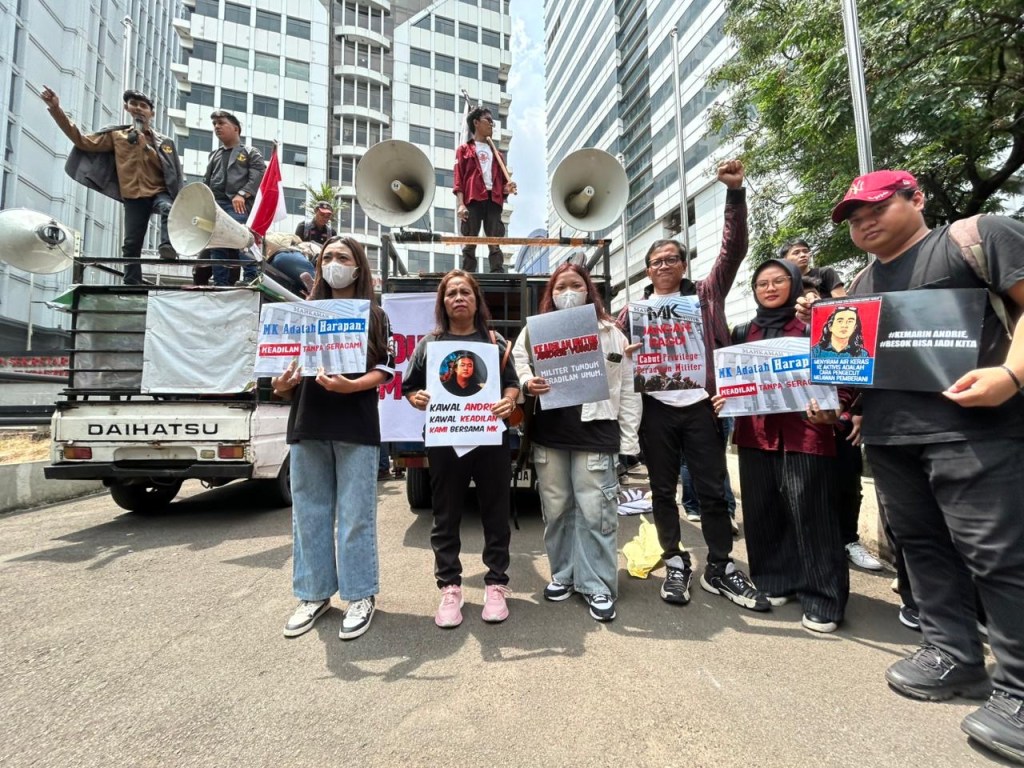
First, authorities failed to investigate threats Pasaribu received in connection with his reporting on illegal gambling, despite the possibility that this could have opened new avenues of inquiry and shed light on more powerful actors behind the crime. Authorities concluded Pasaribu was killed out of resentment, following a dispute with Ginting, who ordered his associates to carry out the arson. Threats and demands from Bukit and Ginting that he take down his stories were absent from the official narrative. In another major investigative omission, police neglected to conduct a forensic analysis of cellphone communication between persons of interest in the case.
Second, authorities did not thoroughly investigate Bukit’s alleged involvement. Substantial evidence links Bukit to the illegal gambling business at the center of the case, to the main perpetrator Ginting, and to pressure on Pasaribu for his reporting. Yet police never questioned him as a person of interest. The court heard Bukit as a witness, but it did not analyze the inconsistencies between his statement and that of other witnesses, which contradicted his testimony on crucial points.
A military investigation into Bukit’s alleged involvement in the murder was excessively narrow in scope, taking an approach that implied if no witness said they had directly heard an order to kill, the soldier was not involved in the murder. The military report contains numerous omissions and inconsistencies, lacked transparency, and shows that military police did not use available methods of investigation such as financial analysis, digital forensics, or network analysis.
Given the case’s many shortcomings, CPJ and FPU recommend that police should reopen the investigation into the murder of Pasaribu and his family, with a focus on the alleged involvement of Bukit. Authorities must also ensure that Bukit is tried in a civilian court. Handling this case under the military justice system means impartiality cannot be guaranteed.
“Two years ago, Rico Sempurna Pasaribu and his family were burned alive, and yet we are still waiting for all the answers. Indonesia’s military justice system ensures that any possible involvement of military personnel is not independently investigated. We urge the Indonesian authorities to move the case to a civilian court, where public transparency and accountability are more attainable than within the closed mechanism of the military justice system.”
Jules Swinkels, senior researcher at FPU
CPJ and FPU sent questions about this report’s findings via email and text message to the Indonesian National Police, North Sumatra Regional Police, Military Regional Command I/Bukit Barisan, and the Indonesian National Armed Forces headquarters, but did not receive a response.
On February 14, 2025, Bukit granted power of attorney to lawyers from the Military Regional Command I/Bukit Barisan. The regional command did not reply to requests for comment about Bukit’s alleged involvement sent by email and text message.
Credits
Research for this report was conducted by a CPJ Asia researcher, Harry Pearl, Jules Swinkels, senior researcher at Free Press Unlimited, and Jasmijn de Zeeuw, lawyer and senior researcher at Free Press Unlimited, Beh Lih Yi.
Featured image: The burnt-out home of journalist Rico Sempurna Pasaribu, who was killed with his wife, child, and grandchild in an arson attack in Kabanjahe, North Sumatra, on June 27, 2024. (Photo: AFP/Risky Cahyadi)