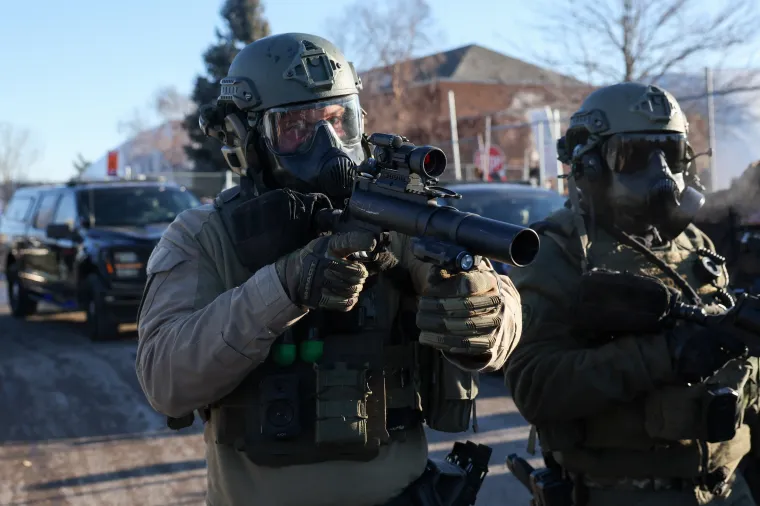
As Immigration and Customs Enforcement (ICE) and Border Patrol operations have intensified in the Minneapolis and Saint Paul areas as part of the Department of Homeland Security’s (DHS) Operation Metro Surge, local journalists have provided an essential look at understanding the impact of federal agents on their community.
While DHS says the operation is aimed at apprehending undocumented immigrants and enhancing public safety, reporting on the operation contradicts this narrative, showing instead the way draconian law enforcement tactics have sown fear and outrage at a local and national scale.
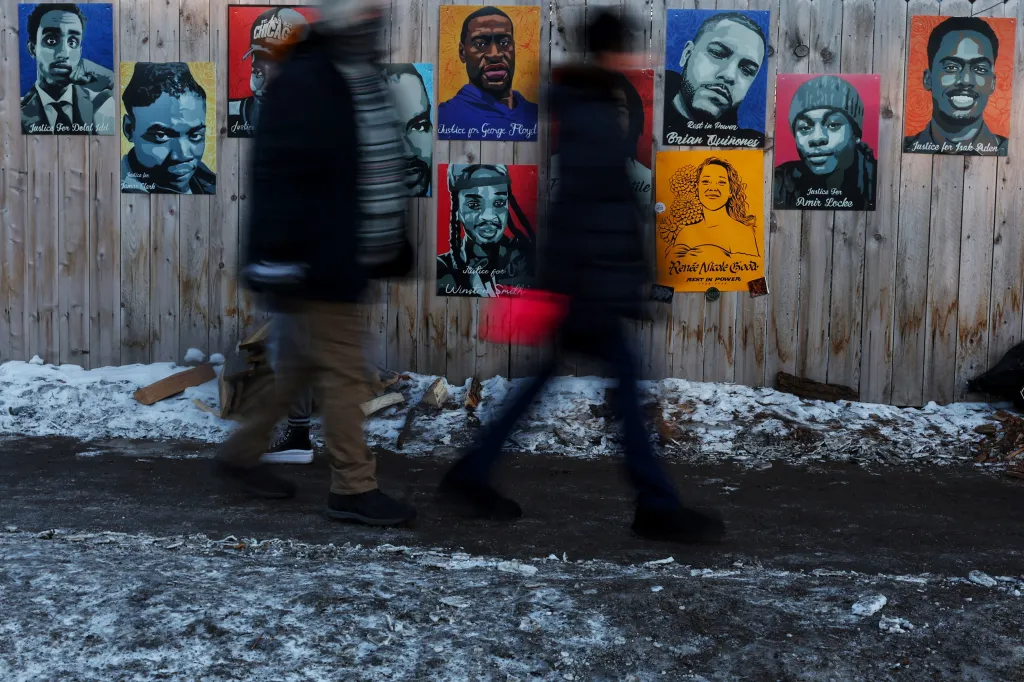
Videos taken by journalists and bystanders— of arrests, protests, and, most notably, the fatal shootings of Alex Pretti and Renée Good — have circulated widely in recent weeks, telling the story of what’s happening on the ground.
The recent arrests by federal authorities of Don Lemon, a former CNN anchor and freelance journalist, and Georgia Fort, an Emmy-winning local reporter, in relation to their coverage of a protest against immigration operations in Minnesota also marks the increasing risks that journalists face when covering immigration operations.
The wide-scale protests inevitably recall the 2020 protests that swept across Minneapolis following the murder of George Floyd by a local police officer during which CPJ documented an unprecedented number of targeted attacks on journalists by law enforcement.
However, in conversations this week with CPJ, journalists covering the current immigration crackdown say risks are different this time, describing a sustained climate of tension in Minneapolis where federal agents—rather than local and state law enforcement—are operating in neighborhoods, sometimes violently arresting individuals including American citizens, and regularly deploying chemical munitions at demonstrations.
CPJ spoke with five journalists to capture how this moment has challenged their ability to safely do their jobs.
The following interviews have been edited for length and clarity.
Alex Kormann, Photographer, Minnesota Star Tribune
You were covering the George Floyd protests in 2020 and are now covering protests against Immigration and Customs Enforcement (ICE) operations. How are the safety situations different for each?
They’re very different. In 2020 there was a lot more erratic police behavior where it felt like they were directly targeting journalists. Now, when I go to a scene, I know it’s going to be dangerous there.
You’ve taken some powerful photographs on the ground. Can you talk about what the safety calculation was like?
I feel a kind of obligation to get as close as I can without being injured. We’ve learned a lot about risk assessments and so I’m mindful of where safe zones are, and how I can get out if I need to.
What is it like, looking for ‘safe zones’ in your own community, a place where you’re usually able to relax?
It’s a weird form of trauma. On Thursday [January 15], some other local photographers and I all decided to take a break at this Vietnamese sandwich place. We [the other local photographers and I] were back there on Saturday [January 17] to cover Alex Pretti’s killing, which just happened to be two storefronts down from the restaurant.
It just feels different now. It’s always going to feel a little different because now I can just see and hear flash bangs and smoke and people screaming and fleeing.
I just think about the fact that my children, and me, and my grandchildren will ask me about what it was like the day Alex Pretti was killed, or the day Renée Good was killed. And how did that feel. And the answer’s horrible. It felt horrible.
What is it like when you hear politicians or even people you know saying that your photographs aren’t accurate representations of what’s going on?
It’s very hard because I have plenty of people in my life that very firmly believe that what Donald Trump and the government say is the truth. I don’t know what to tell them when I was there [as a witness], and my photographs show what I saw. If you’re not going to believe your eyes, you’re not going to believe the people you personally know.
Do you have any advice for journalists who are traveling to Minnesota to cover the story?
Make sure that you’re going out there for the right reasons, that you have proper training, that you know the area you’re going to, and that you remember you’re in someone’s home. If you are coming from another state, even for all the best and right reasons, you eventually will go home. These people, the ones you’re interviewing, remain.
Mohamed Ibrahim, Public Safety Reporter, Sahan Journal
What has it been like covering ICE operations in Minneapolis?
Truthfully, it’s been a bit harrowing. I started my career in 2020 here in Minneapolis at the Associated Press bureau. My first day at work was a week after George Floyd was murdered. The events right now have started to feel more and more familiar to that time almost six years ago now. But now it’s more impersonal. They’re [ICE agents] not members of our community.
What should journalists who might cover ICE operations in their communities do to prepare?
To cover something like this, you need to have connections within your own community and have a level of trust there before things go haywire. When you’re trying to break news, that trust is essential.
How have intensifying ICE actions affected your normal news coverage?
That is the line that we’re trying to straddle: We report the news and put out stories about the terrible things that are happening, and we also try to highlight the community coming together. For example, early after the Renée Goodshooting there was a story about Somali women giving out food to the people at the vigil for Good, and at demonstrations.
Madison McVan, Reporter, Minnesota Reformer
What has it been like to report on what’s happening on the ground?
It’s been intense. The best way to understand what’s going on is to be on the ground. For me, that means riding alongwith observers witnessing firsthand the kind of cat and mouse game that’s happening right now between these observers and ICE officers.
What kind of safety precautions do you take?
Before going out there, it’s a process of doing a risk assessment for me and my colleague, Nicole Neri. She’s a photographer, and we’ve been pairing up on these assignments and going out together. We check in with each other about what we think the most realistic threat we face could be, and then what are kind of the worst-case scenarios.
We’ve seen the worst-case scenario is getting shot, or someone in our car getting shot. But we know that is a relatively small risk. The real threat that we face is being detained by ICE and being swept up with observers. Knowing this, the conversation’s about how to mitigate those risks, and then what kind of gear we need to have on us.
Chemical munitions are being used constantly, so I always have a gas mask, and I usually carry my goggles and my helmet just in case of projectiles, particularly I’m going into a bigger gathering of people where I need to be prepared for possible projectiles like less lethal bullets, CS canisters, or flash bangs and pepper balls.
I also weigh whether I need to bring along my bullet proof vest. Sometimes as a journalist you have to weigh the trauma that comes from putting that on your body, wearing it, and thinking about what it means and if others seeing it could escalate a situation.
What role do videos from observers and bystanders play in your reporting?
It’s a great tool for reporting that we have so many people recording. I did a story that started because a citizen sent me a video that he had recorded from his home that showed someone getting arrested at a bus stop.
That allowed me to tell a story about these quiet arrests that are happening before anyone has time to respond. We know there are people who leave their homes, go to work, and then don’t come back, and no one saw what happened to them. But as a reporter, I struggled with how to prove something that we didn’t necessarily see.
The citizen journalists or just the observers and the video they’re recording has been just a helpful tool in reporting on this.
Liz Sawyer, Reporter, Minnesota Star Tribune
You’ve been at the Star Tribune for nearly 12 years and have covered law enforcement most of that time. How does the law enforcement action now compare to the protests following the murder of George Floyd?
Right now, in Minneapolis we’re facing the largest ever immigration crackdown in U.S. history, but it’s been a slow boil since about November when we started having federal agents flood into the Twin Cities area and conduct these targeted operations.
They said they were going after the worst of the worst– folks with very violent criminal histories– but we also found as the weeks went on that there was sort of a grab-bag approach happening. Even those who were legally monitoring and recording law enforcement operations would often get detained and sometimes physically brutalized while attempting to fulfill their First Amendment right to record or to protest.
What role do citizen journalists play in shaping both public understanding of what is happening on the ground as well as your work as a reporter?
The fact that everybody has a smartphone, everybody has it out and is filming, is important. Citizen journalists are so vital to our democracy and [their work documenting] helps trained journalists do their jobs as well.
Our public service journalism would not be able to perform the same type of video analyses of the Renée Good and Alex Pretti shootings without the bystanders being willing to record and then upload their videos.
I’ve interviewed many people who say, “Listen, I did not get in between law enforcement and the target of their arrest. I just hit ‘record,’” and they were either detained, had their phones ripped out of their hands or were manhandled.
What do you think the American public more broadly needs to understand about what it’s like for local reporters in the Minneapolis area right now?
I don’t think most people realize what hell this town has been through. You can go back to 2020, but in the last eight months, we had a political assassination of a state lawmaker, Melissa Hortman. We had the Annunciation Catholic Church shooting, which wounded many people and killed two young children. And now this longstanding crackdown, three people shot, two of them killed. There’s been a sustained cycle of trauma in Minnesota and specifically in the Minneapolis area.
And yet people have consistently turned out. They have marched en masse, even in negative ten-degree weather. People are flooding the local food banks and churches to deliver food to folks who are too afraid to leave their homes for fear of deportation or even detainment.
Jennifer Mascia, Senior News Writer and Founding Staffer, The Trace
And could you tell me a bit about the reporting that you’ve been doing around ICE and ICE actions across the country?
We really wanted to capture the whole array of how ICE was interacting with the populations of the cities that they were doing immigration enforcement in. And so suddenly our tracker of ICE shootings across the country gained steam.
This and previous work on ICE has allowed us to show that there is no accountability for ICE shootings. That is something that is unchanged from through administrations.
What role do citizen journalists and observers, like the ones we’ve seen on the ground in Minnesota, as well as local reporters, play in your ability to tell these stories?
Social media has been extremely useful for documenting gunpoint incidents, so when armed officers are pointing guns, not just during raids, but during protests.
If it wasn’t for reporters and citizen journalists, we wouldn’t know what’s going on out there. We are not going to be able to rely on the government to tell us to, you know, let us FOIA documentation videos. Even in a sympathetic government, even in a Democratic liberal administration, these things are very hard. As Governor Tim Walz said [on January 18] please continue to record because this is how, this is now evidence in the absence of the federal government doing an investigation that, you know, brings in the local and state authorities. This is all the state has to go on. It’s vital that people are out there.
Editor’s note: This feature has been updated to correct the spelling of Mohamed Ibrahim and Jennifer Mascia.