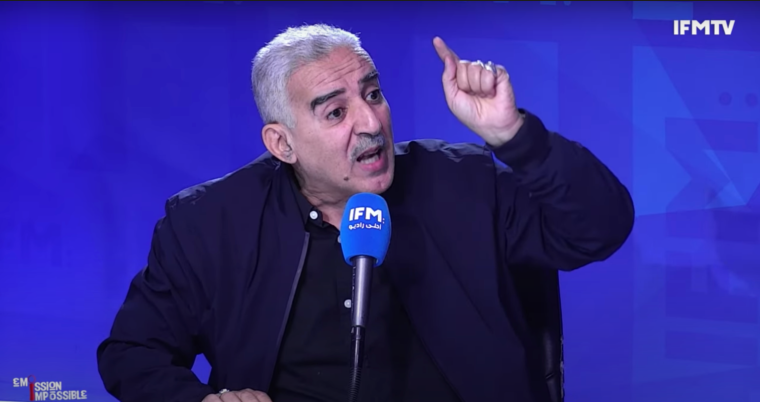
New York, May 8, 2026 – Tunisian authorities must immediately and unconditionally release journalist Zied el-Heni and stop prosecuting journalists under repressive laws for their reporting and commentary, the Committee to Protect Journalists said Friday after a Tunis court sentenced him to one year in prison.
On May 7, authorities convicted El-Heni, founder of the independent news outlet Tunisian Press, of “harming others” under Article 86 of Tunisia’s Telecommunications Code after he criticized the imprisonment of Khalifa Guesmi in a social media post. El-Heni had denounced what he described as a “judicial conspiracy” that led to the wrongful imprisonment of Guesmi and a National Guard officer, both of whom were later acquitted.
“Tunisian authorities’ decision to sentence journalist Zied el-Heni to one year in prison is yet another alarming example of how the government is weaponizing the judiciary to silence critical voices,” said CPJ’s Deputy Advocacy Director, EU Tom Gibson. “Authorities must immediately release El-Heni, stop prosecuting journalists for their work under criminal law, and uphold Tunisia’s obligations to protect freedom of expression.”
El-Heni was detained on April 24, and later placed in pretrial detention. He began a hunger strike lasting for a couple of days before his lawyers convinced him to stop. His trial started on April 30 and he was sentenced a week later, his daughter Ela el-Heni, told CPJ, noting that the prosecution was initiated without a formal complaint.
In a statement from Mornaguia prison passed on by his daughter one day before he was convicted, El-Heni said: “For the tenth time in my career, I face trial for expressing an opinion. I am subjected to an illegal trial in which all my rights have been violated. The prosecution was not initiated by a security report or a complaint, but by verbal instructions.”
Ela el-Heni told CPJ that her father’s prosecution under Article 86 bypasses Decree-Law 115, Tunisia’s press code, which stipulates that offenses committed in the course of journalistic work must be handled exclusively under its provisions, not under ordinary criminal laws.
The Tunisian National Union of Journalists (SNJT) condemned the ruling, calling it an “arbitrary use of the judiciary” to silence critical voices.
CPJ emailed the Tunisian presidency for comment but did not receive a response.