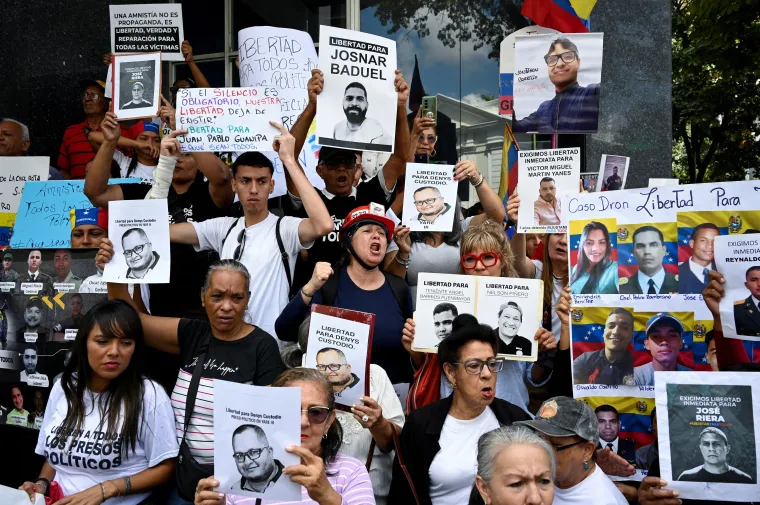
Following the January 3 American military operation that captured Venezuelan President Nicolás Maduro, the country’s interim government has released hundreds of political prisoners, among them journalist Nakary Ramos.
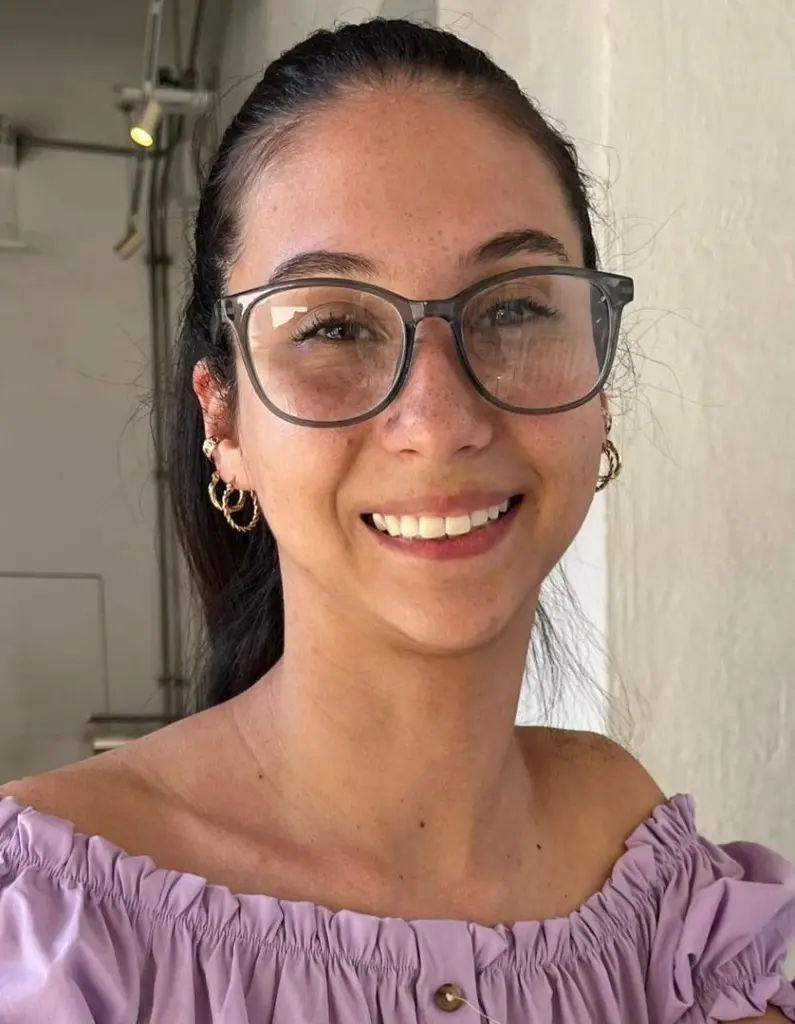
Ramos, 29, was arrested with her videographer husband, Gianni González, on April 8, 2025, after the online news site Impacto Venezuela aired their report on crime rates in Caracas, the country’s capital.
The couple was detained amid a broader crackdown on the press and opposition activists following the disputed 2024 presidential election in which Maduro claimed victory despite widespread evidence that the opposition candidate had won.
Ramos and González were charged with hate crimes and spreading false news, which are punishable by up to 20 years in prison. The two journalists claim they are innocent. They were held for nine months and six days at a Caracas police station until January 14, 2026 — 11 days after Maduro was detained and replaced by his vice president, Delcy Rodríguez.
Rodríguez, who is serving as interim president, is surrounded by many Maduro loyalists but her government has made some moves to accommodate the opposition which is clamoring for a democratic opening. Of the more than 900 political prisoners who were being held in Venezuelan jails, about half have now been released. The National Assembly, controlled by the ruling Socialist Party, is also debating an amnesty bill that could wipe criminal charges against them,
Yet many Venezuelan media workers who fled abroad to escape government repression are wary about returning while reporters inside the country are unsure about where the boundaries of press freedom lie under the new government.
In an exclusive interview with CPJ, Ramos spoke about her arrest, her time under detention and her surprise liberation.
This interview was edited for length and clarity.
You began your journalism career in 2019 at a time when Venezuela’s government was rolling back press freedoms. What was that like?
Reporting the news is what I most like to do. It’s a vocation, a calling. Venezuela is a country with so much going on. The news doesn’t stop. Things change overnight and there is always something that pulls you into covering a story. I could never picture myself doing anything else but journalism. God put me on earth to do this.
I like to go into the barrios and interview people who are rarely heard from and try to help them. They all have amazing stories. Together with my husband, Gianni González, we founded the online Diario Leal to provide community news and then last year I started working at Impacto Venezuela. But to be a journalist in Venezuela is very risky.
Why do you believe you were arrested after reporting on crime rates in Caracas?
I was filming a report about claims that there had been an increase in robberies following deportation flights that brought Venezuelan migrants in the United States back to Venezuela. We interviewed average people about whether crime was getting worse in Caracas. All the people that we interviewed said that there had not been an increase. We interviewed a lawyer who cautioned against stigmatizing migrants as criminals.
The crime rate is a very sensitive issue for the government, but our report actually supported its claims that crime had not gone up. I didn’t think our report was anything controversial or would have a big impact. It was the kind of story any journalist would have done. However, I think it was misinterpreted or taken out of context. After it aired, Gianni and I were arrested as we were leaving a shopping mall.
What was it like in detention?
I was not mistreated, and I had visits on Saturdays. It was very difficult to be separated from my family. Gianni was at the same police station but in the men’s section of the jail. Being imprisoned is a very harsh punishment. It doesn’t make any sense or lead to anything positive. Human beings are not meant to be detained. It made me feel desperate.
But I had faith in God. To pass the time, I watched TV and read the Bible and self-help books. It helped me realize that I was living in the past and in the future and not in the present. I was in jail, so I rejected the present and that caused me a lot of suffering. But the moment I began to accept my situation, and to realize that I had to confront this and survive this, things became a lot better for me. I accepted my sorrow and pain, but I also realized that this situation would not last forever. I realized that I had to stop crying and make the best of the situation. I learned to have more patience and empathy, and I became a more mature person.
How and why were you released?
(During the January 3 U.S. raid that ousted Maduro) we could hear the explosions. They were very loud. Later we began to hear rumors, and we began to figure out what was happening. Later prison officials confirmed that it was true. We saw the change of government as a huge opportunity.
Then on January 8 the new government announced that they would start to release political prisoners. On January 14, the prison officials took me aside and gave me my release papers. Now that I’m free, I would like to return to my job as a reporter, but I don’t want to create new risks for myself or my family. For now, I am going to distance myself from journalism. Time will tell.