
Almost three years after Ethiopia’s civil war ended, Tigray remains tense and dangerous for journalists, who have been shot at, detained, raided, and swept up in a local power struggle that could trigger renewed conflict.
Ethiopian foreign minister Gedion Timothewos warned the United Nations this month that in the northern state of Tigray — the epicenter of the 2020 to 2022 war — a faction was colluding with Ethiopia’s historic rival Eritrea to overthrow the government.
After two years when reporting from Tigray was almost impossible amid war crimes, famine, and a lengthy communications shutdown, covering local news remains risky and challenging.
Merhawi Birhane was travelling with other journalists to report on a July protest by residents of Adi Gudem town when they were detained by a local militia for several hours. At the protest, they saw the fighters storm in, beat people, and fire into the crowd, killing one man.
“They’ve started shooting, Abel. We can’t film,” Merhawi texted Abel Guesh, the chief executive of privately owned Tigray Broadcasting Services (TBS), amid the chaos.
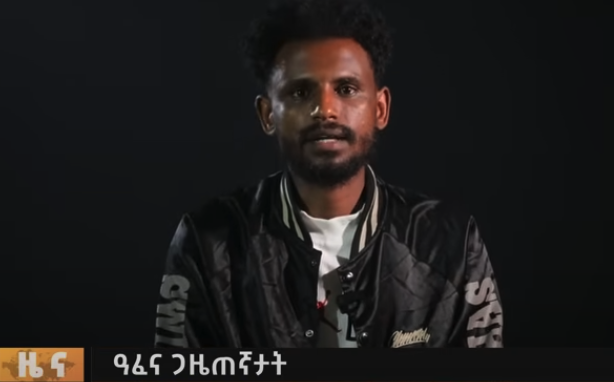
“Leave them; save yourselves,” Abel responded.
One militiaman pointed a gun at TBS camera operator Meaza Wubete, while another shouted at Tigray Public Media’s (TPM) camera operator Sirak Assefa, “Stop filming or I will shoot you!” Merhawi told CPJ.
Merhawi, Meaza, Sirak, and TPM reporter Eyerusalem Birhanu hid until evening, then quietly returned to the regional capital, Mekelle, disguised in villagers’ clothes to dodge the militia. They abandoned their equipment, carrying only their memory cards to broadcast their story, Merhawi said.
TBS and TPM condemned the incident as “a deliberate political attack aimed at suppressing press freedom, silencing the truth, stifling the people’s voice, and keeping Tigray under authoritarian control.”
TBS had complained the previous month about an “environment of repression” after police detained its camera operators Bereket Teklegerima and Ermias Gebrekidan for three days in the city of Axum. The local office of the region’s ruling party said the journalists lacked authorization to work and were attempting to create “chaos.”
Abel told CPJ that his crew had been reporting on complaints of poor governance.
Power struggle in Tigray

The violent dispersal of the July 27 protesters was part of a battle for control of the historically powerful Tigray Peoples’ Liberation Front (TPLF), following the end of its two-year civil war with federal forces.
Founded as a guerilla movement in 1975, the TPLF played a key role in overthrowing Ethiopian dictator Mengistu Haile Mariam in 1991 and went on to dominate politics for 27 years.
Mass protests swept the TPLF from its dominance in Ethiopia’s politics in 2018, with Prime Minister Abiy Ahmed removing some of its key leaders. Tensions between TPLF leadership and Abiy later culminated in the civil war.
A 2022 peace deal, signed in Pretoria, South Africa, brought an end to the conflict, with TPLF fighters promising to disarm within 30 days. But implementation has stalled, with armed groups keeping their guns, a million civilians still displaced, and the TPLF split into rival camps, competing for territory, institutions, and control of the media.
While federal troops are stationed on Tigray’s borders, the region remains under the control of the Tigray Defence Forces (TDF), volunteers loyal to the TPLF who took up arms during the war to fight the national army.
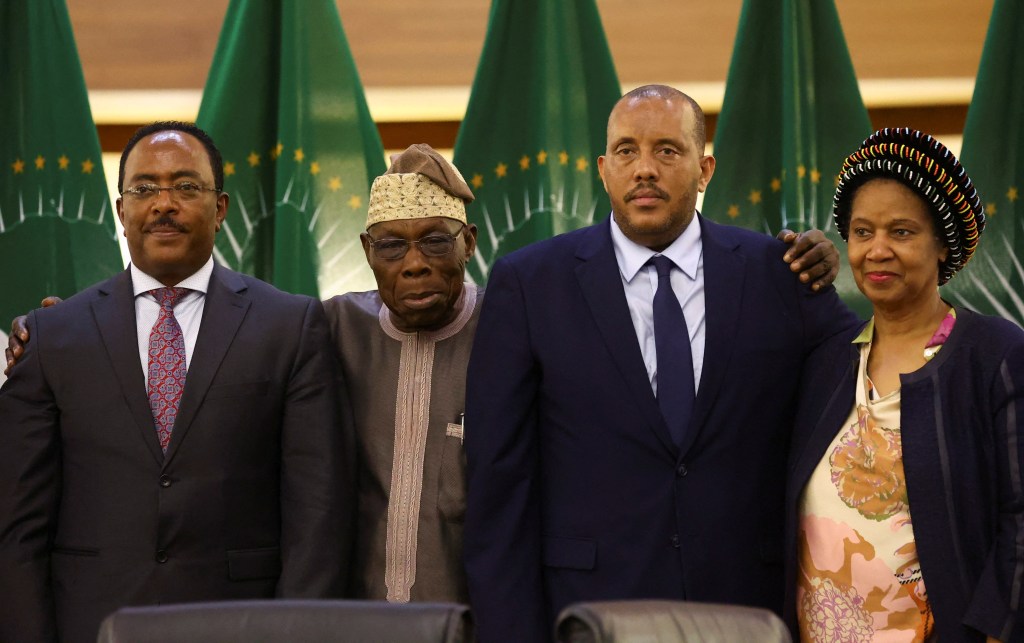
Under the federally backed peace deal, Getachew Reda became Tigray’s interim president. But he and the mayor of Mekelle were ousted in March by a faction loyal to TPLF veteran Debretsion Gebremichael, which accused the federal government of failing to observe the Pretoria Agreement.
Getachew fled to the capital, Addis Ababa, where he formed an opposition party.
In April, the federal government replaced Getachew with a military general, Tadesse Worede, who used TDF troops to replace pro-Getachew officials with Debretsion’s supporters — triggering the July 27 protests.
‘What is left is difficult to even call journalism’

Nine journalists in Tigray told CPJ that press freedom remains precarious in the wake of the war, which crippled the media nationwide. During the war, at least 63 journalists were detained, often accused of links to, or sympathizing with, the TPLF, CPJ data shows.
In addition, at least 54 journalists went into exile between 2020 and 2024.
Mathewos Gebrehiwot, a journalism lecturer at Mekelle University, told CPJ that many reporters had quit because of the war and they were no longer organizing themselves to lobby for press freedom, with untrained activists filling the news vacuum online.
“Now what is left is difficult to even call journalism. Journalists are not even adept at the fundamentals of journalism,” he said. “Many journalists in Tigray side with either of the political factions and further contribute to the polarization of the country … There is a lot of hopelessness.”
‘Saddest day of my life’
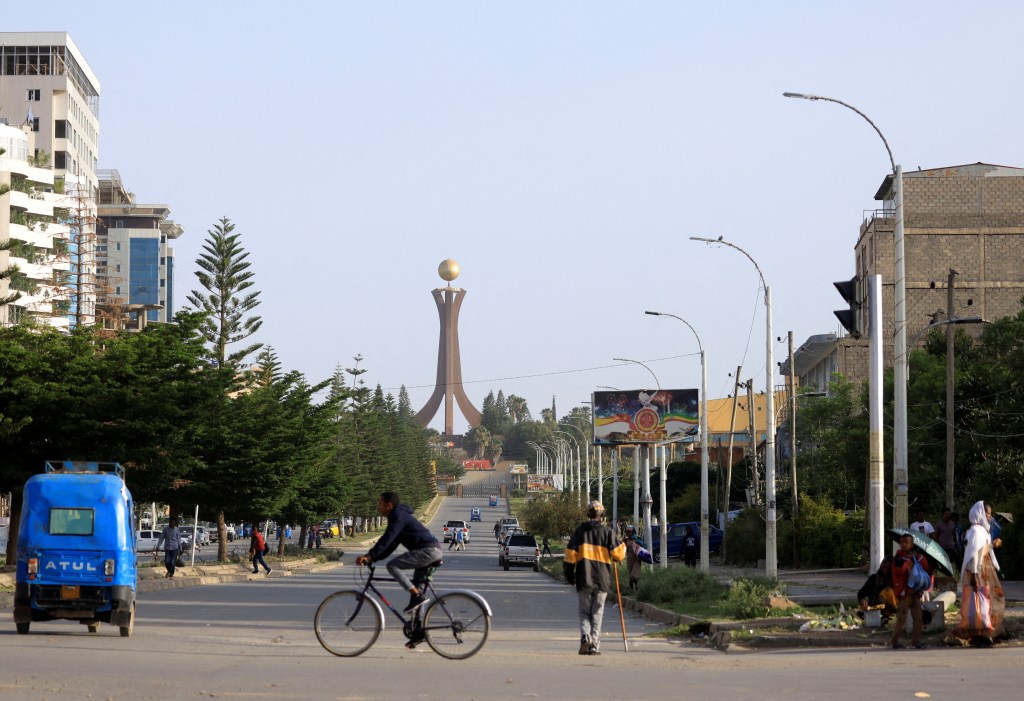
Mathewos pointed to the armed takeover of state-owned radio station Mekelle FM 104.4 as the “epitome of this urge to control the narrative” as Debretsion’s faction battled Getachew’s.
“When military officers become arbiters of the press, freedom can vanish overnight,” he told CPJ.
On March 13, around 20 armed men stormed Mekelle FM’s offices. The station’s head Halefom Nerea sat in a nearby cafe, watching in disbelief as colleagues phoned him with warnings not to enter the building.
“Some of the journalists stood their ground and asked the men why they needed guns,” said Halefom, who has since left Tigray. “They had no answer — only orders.”
The intruders pulled news programs off air, deleted posts on the station’s Facebook page that criticized the faction for alleged abuses, and installed their own manager, Haleform said.
“In my long career as a journalist, that day was the saddest day of my life,” another station employee, who requested not to be named for safety reasons, told CPJ.
It was the second assault in as many months. In January, five armed men launched a similar attack but the police intervened and eventually ousted them.
For several days after March’s successful coup, Mekelle FM aired only music and recycled shows while armed guards patrolled its corridors.
‘Zero tolerance’ towards the media
Journalists say pressure is intensifying.
The TPLF and its forces are ready to enforce a “zero tolerance” policy towards media that push the “enemies’ agenda,” a senior administrative party official, Fetlewerk Gebregziabher said in an hour-long speech on September 19.
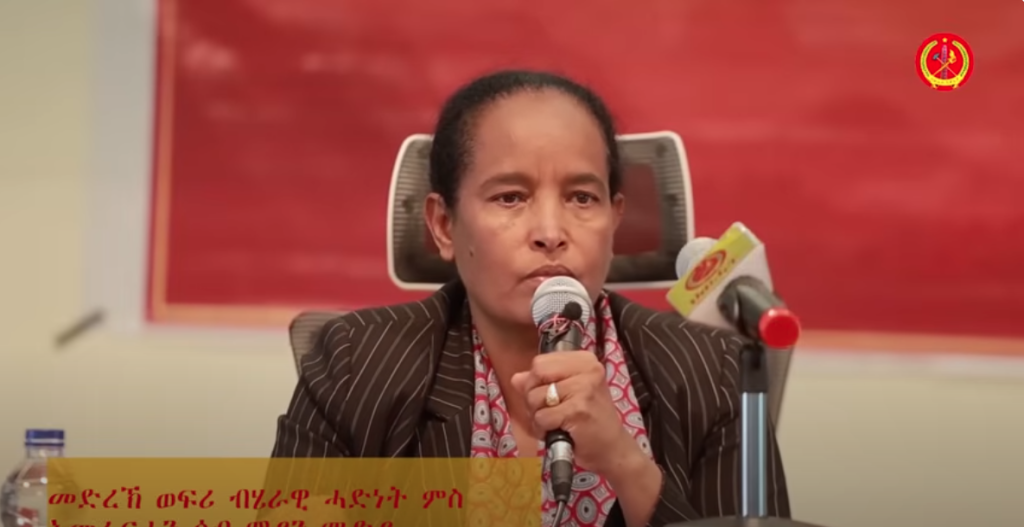
She made multiple threats against the media, accusing unnamed outlets of “calling for violence,” “spreading their poison,” and being “paid by outsiders.”
“We are braced for either death or detention,” TBS head, Abel, told CPJ. “This statement marks the climax of the region’s political tension, and the media has become the first victim. The chilling effect is profound …. Her crude and terrifying declaration that the military is ‘ready’ leaves only one question: Ready to kill or ready to arrest us?”
CPJ’s text messages requesting comment from Shewit Assefa, head of the Tigray Regional State Communication Affairs Office, and TPLF Deputy Chair Amanuel Assefa did not receive any responses.