Go »

Impact


News from the Committee to Protect Journalists, April 2012

CPJ launches Journalist Security Guide

CPJ launched the Journalist Security Guide recently, which provides reporters with concrete steps to minimize the dangers of digital and physical reporting. In the guide, Danny O'Brien, CPJ's Internet advocacy coordinator, and Frank Smyth, CPJ's senior security consultant, discuss the threats facing journalists and outline the relevant steps journalists should take in considering their safety.

The guide, which was created in consultation with prominent journalists such as Sebastian Junger, Umar Cheema, and Carolyn Cole, includes six videos and also features guidelines on protecting digital information, preparing for armed conflict, covering organized crime, and mitigating the risk of sexual violence.

To continuously present journalists with up-to-date security information, CPJ is also launching the Journalist Security Blog, a platform that features posts by CPJ and guest bloggers on safer mobile use, first-aid training courses, and new ways to ensure journalist safety. 

The Journalist Security Guide is available online in Arabic, English, French, and Spanish. It can also be downloaded in e-reader, iBook, and pdf formats.  

News from the Committee to Protect Journalists, March 2012

Landmark legislation in Mexico

After years of advocacy by CPJ and other press freedom groups, Mexico's senate finally approved legislation ensuring the punishment of anti-press crimes. Mexican President Felipe Calderón had promised a CPJ delegation in 2008 and again in 2010 that he would get the measure implemented, and on March 13, the legislation was passed.  

The achievement--which gives federal authorities jurisdiction over crimes against "journalists, people, or outlets that affects, limits, or impinges upon the right to information and freedom of expression and the press"--should go a long way toward bringing justice for the more than 40 Mexican journalists killed since 2006.

During the passing of the bill on the senate floor, CPJ's Mexico representative, Mike O'Connor, was lauded by the senate for CPJ's contribution to making the law a reality. This heartening victory, however, does not signify a defeat of impunity. It is only one step toward bringing to justice the killers of Mexican journalists who must be tried and sentenced.

News from the Committee to Protect Journalists, February 2012

'Attacks on the Press' launched

Repressive governments, militants, and criminal groups across the globe are leveraging new and traditional tactics to control information and obscure misdeeds, silence dissent, and disempower citizens, according to Attacks on the Press, CPJ's yearly survey released on February 21, available here. The 2012 release marks the first year that the report's findings are presented with enhanced interactive features in the online version.

This year's report assessed press freedom in more than 100 countries and found that in the Arab world, journalists face unpredictable new threats, and in Asia, intimidation has a chilling effect. In Africa, investigative reporting is considered a threat to development, and in Latin America, state media serves as a politicized weapon against the independent press. Worldwide, Internet crime laws continue to put journalists in peril.

News from the Committee to Protect Journalists, January 2012

Hermann Aboa (CPJ)

Journalist released after 163 days

CPJ was pleased to report on the January release of imprisoned journalist Hermann Aboa, who languished behind bars for 163 days. The former Ivorian state TV presenter was freed on bail after being jailed in July 21 on antistate charges for his role as a moderator of a political talk show on state TV during the rule of deposed former President Laurent Gbagbo.

CPJ called for Aboa's immediate and unconditional release and urged Ivorian prosecutors to drop the politicized charges against him, which included endangering state security and public order, participating in an insurrection, and inciting ethnic hatred. CPJ reviewed the case and determined any charges based on Aboa's performance as a journalist were baseless.

News from the Committee to Protect Journalists, December 2011

Tajik journalist Makhmadyusuf Ismoilov was convicted on insult charges in October, but was released from prison. He is banned from all journalistic work for three years. (RFE/RL Radio Ozodi)

The year in press freedom

This year was marked by a wave of anti-press violence as social unrest stirred millions into action. Journalists from Belarus to Egypt and Mexico to Beijing continued exposing the truth despite being attacked for their reporting.

The Committee to Protect Journalists' thorough documentation and high-level advocacy helped to ensure that you heard the stories of the journalists silenced by violence, muted by torture, cowed into self-censorship, or suppressed by exile. On the front lines and online--we persevered in the fight to preserve freedom of the press and our collective right to be informed. 

News from the Committee to Protect Journalists, November 2011

Honoring those who buck the system

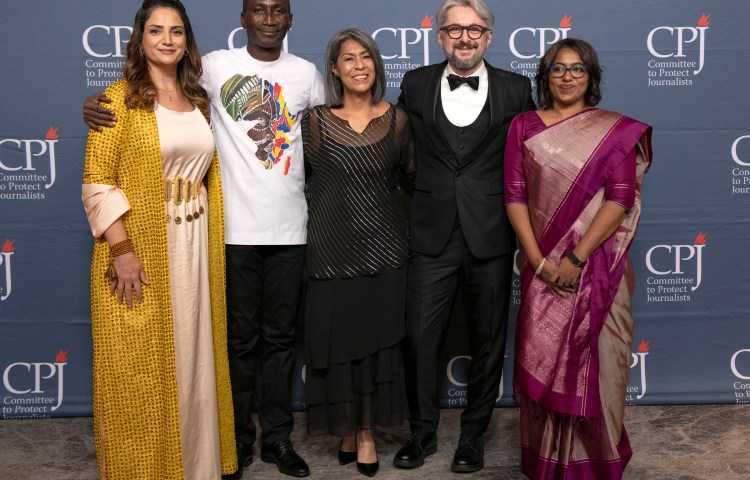
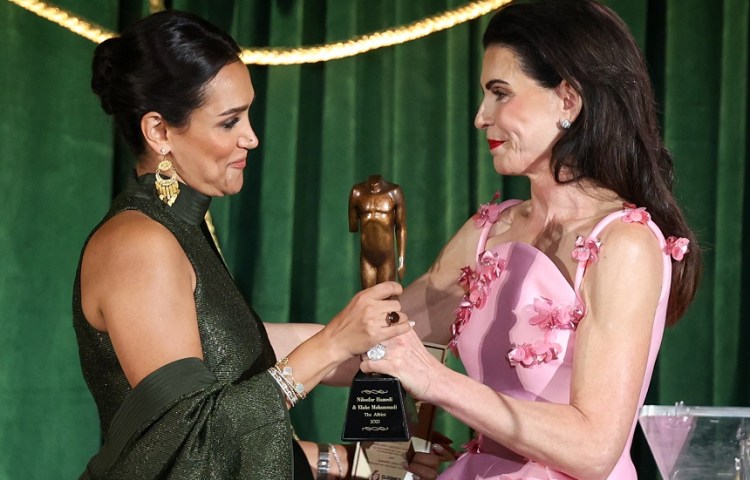
CPJ and about 900 supporters recently embarked on an emotional journey with four journalists from Bahrain, Belarus, Mexico, and Pakistan. At the 2011 International Press Freedom Awards in New York's Waldorf Astoria on November 22, we celebrated their daring reporting and relentless efforts to expose the truth in defiance of violence, torture, self-censorship, and exile.

News from the Committee to Protect Journalists, October 2011

IPFA awardees, from left, al-Jamri, Radina, Cheema, and Valdez.

CPJ announces 2011 press freedom awards

Four courageous journalists from Bahrain, Belarus, Mexico, and Pakistan will be honored with CPJ's 2011 International Press Freedom Awards at an annual awards dinner in New York on November 22.  Following his release after four years in prison, Azerbaijani editor Eynulla Fatullayev will at last join CPJ as a special guest to receive his 2009 award. CPJ and others helped win Fatullayev's freedom in May. CPJ will also honor veteran U.S. journalist Dan Rather with the Burton Benjamin Memorial Award. Click here for more information about attending the dinner.

News from the Committee to Protect Journalists, September 2011

Addis Neger's newsroom in 2009, before the editors fled and the paper folded. (Addis Neger)

Journalist ID'd in WikiLeaks cable, flees Ethiopia

U.S. diplomatic cables disclosed last month by WikiLeaks cited Ethiopian journalist Argaw Ashine by name and referred to his unnamed government source, forcing Ashine to flee the country after police interrogated him over the source's identity. It is the first instance CPJ has confirmed in which a citation in one of the cables has caused direct repercussions for a journalist.

After learning about Ashine's forced exile, CPJ's Africa and Journalist Assistance programs collaborated to assist him. Once at a safe location, Ashine worked with CPJ to tell the world about his abrupt exile. The story generated international attention, along with a critical reply from WikiLeaks. CPJ has defended WikiLeaks in the past when it faced potential prosecution under espionage laws, but we have overriding interest in protecting the safety of journalists. CPJ is now reviewing the more than 200,000 cables recently disclosed by WikiLeaks--most of which were unredacted--to determine whether any other journalists are cited.

News from the Committee to Protect Journalists, August 2011

Detention of a new suspect in the Politkovskaya murder

AP

In a significant development in the investigation into the murder of Novaya Gazeta journalist Anna Politkovskaya, the Investigative Committee of the Russian Federation--the agency tasked with solving Politkovskaya's murder--announced on August 16 that it had detained retired Lt. Col. Dmitry Pavlyuchenkov on suspicion of having organized the crime. Pavlyuchenkov had worked as the head of surveillance at Moscow's Main Internal Affairs Directorate, the city's main police force, when Politkovskaya was shot dead in her apartment building in 2006. Investigators allege Pavlyuchenkov received payment for planning the journalist's murder and recruiting assailants to carry it out. The alleged gunman was arrested in late May

CPJ Europe and Central Asia Program Coordinator Nina Ognianova spent the past three months in Russia researching impunity cases. In September 2010, a CPJ delegation met with the Investigative Committee, which resulted in a pledge by the committee to re-investigate several of the 19 unsolved murders of journalists in Russia, including the case of Politkovskaya. 

News from the Committee to Protect Journalists, July 2011

In Cuba, the Ladies in White were instrumental in drawing attention to the plight of imprisoned journalists and dissidents. Here, they hold a photo of Orlando Zapata Tamayo, who died in custody. (AP/Javier Galeano)

Still struggling for a free Cuban press

As Cuba implements economic reforms and prepares to introduce high-speed Internet, freedom of expression continues to be met with a policy of repression that stifles the free flow of information, according to a new report by CPJ.

The report examines government activities in March and April 2011, a time when sensitive political milestones on the island coincided with 50 instances of independent journalists' repression. In the report, CPJ makes recommendations to the Cuban government, the European Union, the United Nations, the Organization of American States, the U.S. government, and the technology and blogging communities.

  Go »
Text Size
A   A   A