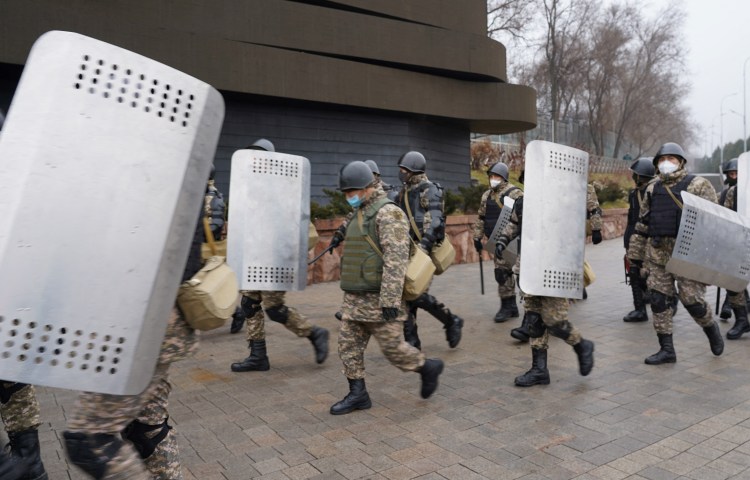
‘Nothing like this ever happened here before’: Journalists describe covering mass protests in Kazakhstan
The nationwide antigovernment protests that erupted in early January 2022 in Kazakhstan – which left 225 dead, according to official figures – upended the country’s reputation as one of Eurasia’s most stable authoritarian regimes. They also posed an enormous challenge to Kazakh journalists. Journalists working to cover the unrest were detained by riot police and…

Kazakhstan’s move to control internet prompts censorship, surveillance concerns
A state-controlled internet service provider in Kazakhstan is requiring at least some of its subscribers to submit to having their internet traffic intercepted when they use specific websites–including social media sites, email and messaging services, and Google News, according to research published this week by Censored Planet, a project at the University of Michigan.

Nazarbayev’s long rule leaves toxic legacy for Kazakhstan’s media
In 2011, I observed an astonishing spectacle in the Respublika newspaper offices in Almaty, Kazakhstan’s financial capital. Journalists were putting a modern-day twist on samizdat, a practice in the Soviet Union whereby dissidents laboriously copied illicit material to circumvent censorship.
CPJ joins calls for Kazakhstan to revise false news law and drop charges against critical media
The Committee to Protect Journalists today joined a coalition of 25 other international press freedom organizations to call on Kazakh authorities to drop criminal defamation cases against media outlets Forbes Kazakhstan and Ratel and revise the law on dissemination of “false information” often used to silence critical media outlets and journalists.
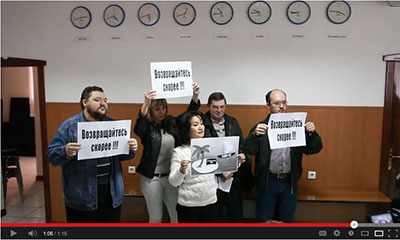
Under official pressure, Kazakh broadcaster closes
A blocked website; reporting equipment confiscated; a newsroom sealed; and reporters denied information from state agencies: these things together spelled the end of Stan.kz, a local, independent Internet-based broadcaster which for two years had tirelessly reported on developments in Kazakhstan. “We are forced to shut down the Stan.kz newsroom,” Bauyrzhan Musirov, owner of parent Stan…
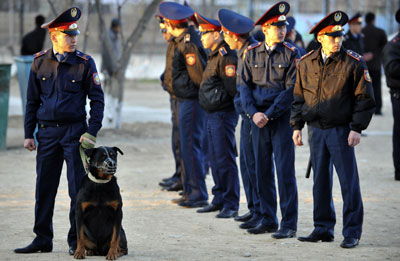
Journalist as a threat to Kazakhstan’s national security
In a reply to CPJ’s protest letter regarding the politicized imprisonment of journalist Igor Vinyavsky, Kazakhstan’s General Prosecutor’s Office said the prosecution wasn’t retaliatory nor related to his journalism. CPJ publicly appealed to Kazakh President Nursultan Nazarbayev after his country’s security service, the KNB, raided Vinyavsky’s newsroom and apartment, confiscated reporting equipment, and imprisoned the…
When a bug fix can save a journalist’s life
One of the most exciting aspects of working on Internet technologies is how quickly the tools you build can spread to millions of users worldwide. It’s a heady experience, one that has occurred time and again here in Silicon Valley. But there’s also responsibility that attaches to that excitement. For every hundred thousand cases in…

Uighur refugee extradited by Kazakhstan, held in China
Kazakhstan authorities have extradited Uighur schoolteacher Arshidin Israil to China, where officials have described him without elaboration as a “major terror suspect,” according to Reuters and other news accounts. Israil and his supporters believe the detention comes in reprisal for reporting he contributed to Radio Free Asia concerning the July 2009 riots in Xinjiang Uighur…
Protecting yourself from denial-of-service attacks
It’s my second link to a report by Hal Roberts (and others at the Berkman Center) in as many days, but I worry that this this detailed document on denial-of-service (DOS) and hacking attacks on independent media and human rights groups might get missed in the holiday season. The news headlines in the last few…
Fighting bogus piracy raids, Microsoft issues new licenses
CPJ has documented for several years the use of spurious anti-piracy raids to shut down and intimidate media organizations in Russia and the former Soviet republics. Offices have been shut down, and computers seized. Often, security agents make bogus claims to be representing or acting on behalf of the U.S. software company Microsoft.