China
2011
In China, real people vs. Internet minders
In the next three months, users of China’s microblog weibo.com — “weibo” is the generic Chinese term for Twitter-like platforms — run by the huge sina.com (the English site is here) news portal, entertainment and blogging site, will have to start providing their real-world identities to the site, instead of simply being able to register.…
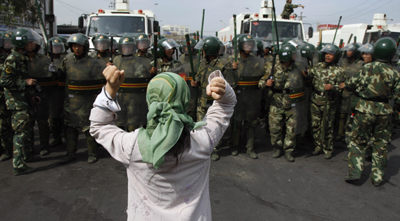
China’s jailed Uighurs: Out of sight, not out of mind
For the first time in more than a decade, China is not the world’s worst jailer of the press in CPJ’s annual census of imprisoned journalists. Among the 27 jailed in China, one group has seen a massive jump in imprisonments. In another first since CPJ began taking its census, more than half of those…
Defending the middle ground of online journalism
It’s easy to use polarizing descriptions of online news-gathering. It’s the domain of citizen journalists, blogging without pay and institutional support, or it’s a sector filled with the digital works of “mainstream media” facing financial worries and struggling to offer employees the protection they once provided. But there is a growing middle ground: trained reporters…
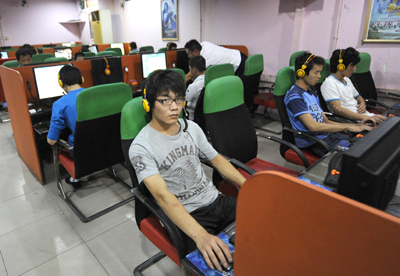
Keeping a website alive behind the Great Firewall
Wednesday’s post, “Advice for colleagues on the digital front lines,” offered practical advice for keeping a website up and running in a hostile political environment. But such measures are not universally applicable. Sky Canaves, CPJ’s new East Asia and Internet consultant in Hong Kong, sent this reality check for Internet writers in China, where tighter…

Planning the next steps in Chinese media control
In the latest sign of increasing pressure on Chinese companies to tighten control of the Internet, Chinese authorities convened an unusual seminar in Beijing for senior executives of 39 major enterprises involved in Internet services, technology and telecommunications.
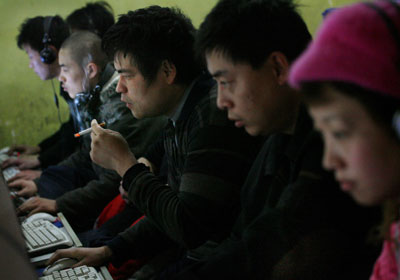
China confronts Internet rumors and trashy TV
Along with cracking down on what it considers trashy TV — China’s State Administration of Radio, Film and Television (SARFT) said Tuesday that it will limit entertainment and add more news and other programs that “build morality and promote the core values of socialism” — the government is going after what it calls rumor mongers…
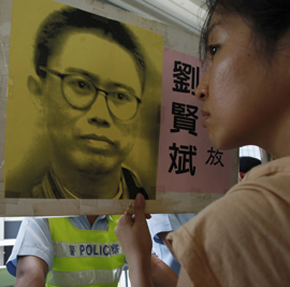
In lawsuit, Chinese writers allege Cisco aids government
Three Chinese writers who have spent time in prison for articles published online are suing California-based Cisco Systems Inc., according to international news reports. The suit accuses the company of providing information and technology to Chinese authorities that facilitated the writers’ detentions–allegations that Cisco flatly denies. Chinese security officials have already interrogated one of the…

Schlesinger: ‘Media, Murdoch, and social responsibility’
CPJ board member David Schlesinger, who is the chairman of Thomson Reuters in China, delivered a speech today at a conference sponsored by Caixin magazine. He touched on several current issues, and found lessons in the News of the World case that are relevant to journalists everywhere. And I particularly like his description of China’s…
The highs and lows of investigative reporting in China
Veteran investigative journalist Wang Keqin has always been positive about his chosen career, characterizing media restrictions in China as a cycle with ups and downs. In an interview for CPJ’s October 2010 special report “In China, a debate on press rights,” he told CPJ that “there was a big fall-off in reporting freedom in 2008…