Go »
  Go »

Ethiopia

2009


Today CPJ released its annual census of imprisoned journalists around the world. Citing 136 journalists jailed for their work around the world, the report brings to the foreground one of the toughest issues CPJ and other advocacy groups grapple with: Advocacy working at its best can make a difference over time and, in some cases, can win the early release of journalists from prison. But when that fails what can be done to for journalists languishing in jail, often in horrifying conditions?

A basement in the gray, Gothic heart of the University of Toronto is home to the CSI of cyberspace. “We are doing free expression forensics,” says Ronald Deibert, director of the Citizen Lab, based at the Munk Centre for International Studies. Deibert and his team of academics and students investigate in real time governments and companies that restrict what we see and hear on the Internet. They are also trying to help online journalists and bloggers slip the shackles of censorship and surveillance. Deibert is a co-founder of the OpenNet Initiative (ONI), a project of the Citizen Lab in collaboration with the Berkman Center for Internet and Society at Harvard Law School. ONI tracks the blocking and filtering of the Internet around the globe.

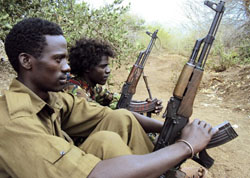
OLF rebels in Ethiopia. (Reuters)

Last week, the Ethiopian government tried to force private Kenyan broadcaster Nation Television (NTV) to drop a four-part exclusive report on separatist rebels in southern Ethiopia. NTV aired the first two parts of "Inside Rebel Territory: Rag-Tag Fighters of the Oromo Liberation Front," which led Ethiopia's ambassador to Kenya to accuse the Nation Media Group of giving a platform to a terrorist organization, the daily Nation reported. The Oromo Liberation Front (OLF), whose Web site is among several authorities block in Ethiopia, is fighting for greater autonomy for the Oromos, the largest ethnic group in the south of the vast Horn of Africa nation.

Reuters

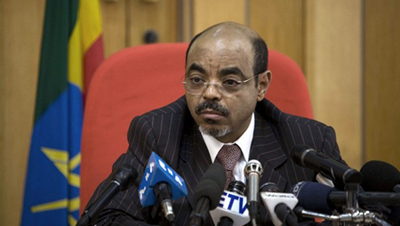
This week, in an exclusive interview with the Financial Times, Ethiopian Prime Minister Meles Zenawi suggested that the press in his country freely expresses dissent. In fact, that is hardly the case. The Horn of Africa nation remains one of the world's worst backsliders of press freedom.

Journalists in Ethiopia informed CPJ over the weekend that our Web site, which was blocked to Internet users in the capital, Addis Ababa, since August, was accessible again. 

« Previous Year: 2008 | Next Year: 2010 »

  Go »
Text Size
A   A   A
Killed in Ethiopia

1 journalist killed since 1992

Attacks on the Press 2012

49 Journalists forced into exile in five years because of intimidation and repression.

Country data, analysis »

Contact

Africa

Program Coordinator:
Sue Valentine

Advocacy Coordinator:
Mohamed Keita

East Africa Consultant:
Tom Rhodes

West Africa Consultant:
Peter Nkanga

svalentine@cpj.org
mkeita@cpj.org
trhodes@cpj.org
pnkanga@cpj.org

Tel: 212-465-1004
ext. 117
Fax: 212-465-9568

330 7th Avenue, 11th Floor
New York, NY, 10001 USA

Twitter: @africamedia_CPJ

Blog: Sue Valentine
Blog: Mohamed Keita
Blog: Tom Rhodes
Blog: Peter Nkanga