MEXICO
APRIL 8, 2005 Posted: April 13, 2005 Raúl Gibb Guerrero, La Opinión KILLED—UNCONFIRMED Gibb Guerrero, 53, owner and director of the daily newspaper in the eastern state of Veracruz, was killed in an apparent ambush in the city of Poza Rica at about 10 p.m., according to local and international press reports. Four unidentified gunmen…
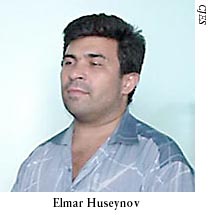
Arrests in the murder of opposition editor met with suspicion
New York, April 8, 2005—Investigators in the capital, Baku, announced late yesterday that they had detained six suspects in the March 2 murder of Elmar Huseynov, founder and editor of the opposition weekly news magazine Monitor, according to local and international press reports.
Prosecutors reopen case of abducted journalist
New York, April 8, 2005—Prosecutors in capital of Minsk, have reopened the inquiry into the July 2000 abduction of Dmitry Zavadsky, a 29-year-old cameraman for the Russian public network ORT, according to the Minsk-based human rights group Charter 97. Olga Zavadskaya, whose son is presumed dead after disappearing nearly five years ago, received a letter…
Editor in hiding after attack; CPJ urges vigorous investigation
New York, April 8, 2005—A Brazilian newspaper editor who denounced political corruption faces a long recovery and has gone into hiding with his family two weeks after being attacked by gunmen. The Committee to Protect Journalists today called on Brazilian authorities to conduct a thorough investigation. Two unidentified assailants shot Maurício Melato Barth, owner and…
Government suspends ads in private media; three journalists detained
New York, April 8, 2005 – The Committee to Protect Journalists condemns the Nepalese government’s abrupt decision to stop publishing all ads in private media—an action that CPJ interprets as an attempt to stifle critical coverage. According to a copy of a government memo reproduced on April 6 in the weekly Jana Aastha, the new…
TV reporter granted early release from home confinement
New York, April 8, 2005—The Rhode Island television reporter convicted of criminal contempt for refusing to reveal a confidential source was granted early release from his home-confinement sentence this week. Jim Taricani, an investigative reporter with NBC-owned WJAR-TV in Providence, R.I., is expected to be released tomorrow after U.S. District Court Judge Ernest Torres found…
CPJ urges vigorous investigation into the death of a reporter
New York, April 7, 2005—The Committee to Protect Journalists today urged Haitian and United Nations authorities to conduct a vigorous investigation into the shooting of a Haitian reporter who died this week from injuries suffered while observing a clash between UN troops and members of the disbanded Haitian military in the city of Petit-Goâve. Robenson…
In Mosul, Iraqi freelancer wounded by U.S. fire
New York, April 6, 2005—The Committee to Protect Journalists is deeply concerned by an incident yesterday in which an Iraqi freelance journalist working for CBS News was wounded by U.S. fire in the northern Iraqi city of Mosul. Troops from the 1st Brigade, 25th Infantry Division, mistook the journalist’s camera for a weapon, the U.S.-led…
Al-Arabiya cameraman detained for more than a week
New York, April 6, 2005—The Committee to Protect Journalists said today that it is alarmed by the more than weeklong detention in Iraq of a journalist working for the Dubai-based satellite news channel Al-Arabiya. Iraqi forces detained Wael Issam, a Palestinian cameraman on assignment for the station, at Baghdad International Airport on March 28, according…

CPJ condemns shooting of border journalist
New York, April 6, 2005—The Committee to Protect Journalists condemns the vicious attack on a Mexican crime reporter, who was in critical condition today after being shot repeatedly in front of her radio station in Nuevo Laredo, a city on the Texas border beset by a wave of drug-related violence.