Brazilian journalist dies after being shot while hosting radio program
New York, August 7, 2015–The Committee to Protect Journalists condemns the murder on Thursday of Brazilian radio journalist Gleydson Carvalho in the municipality of Camocim in the northeastern state of Ceará and calls on authorities to bring the killers to justice. Carvalho was presenting a program on Radio Liberdade FM when two unidentified gunmen entered…
CPJ urges Maldives to launch independent investigation into case of missing journalist Rilwan
Dear President Yameen: The Committee to Protect Journalists, an independent international press freedom organization, is writing to express its concern about a Maldivian journalist who has been missing for a year and to call on your government to ensure a credible and independent investigation into his disappearance.
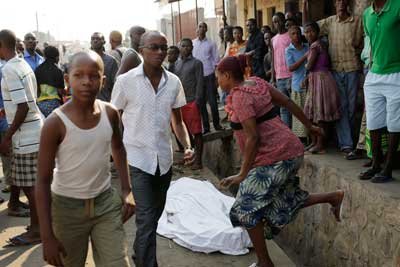
Burundi must investigate attacks on journalists
The Committee to Protect Journalists and 18 other organizations are urging Burundi authorities to investigate attacks on journalists and human rights defenders. Since the April announcement that President Pierre Nkurunziza would run for a third term, defying constitutional limitations and sparking months of protests, journalists have been routinely targeted. At least five radio stations were…
Mexican photojournalist who fled violent Veracruz state murdered in capital
Mexico City, August 3, 2015–The Committee to Protect Journalists condemns the murder of Mexican photojournalist Rubén Espinosa and calls on authorities to investigative all motives in the killing and ensure the perpetrators are held to account. Espinosa, who had fled to the capital from Veracruz state after receiving threats, was found murdered in a Mexico…
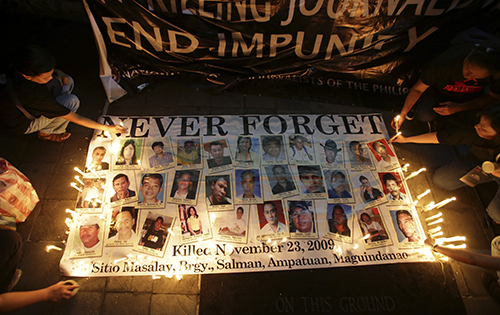
Justice delayed is justice denied in Philippines’ Maguindanao massacre
During his final State of the Nation Address this week, President Benigno Aquino III made only a passing mention of the 2009 Maguindanao massacre that killed 57 people, including 32 journalists and media workers. He did not detail any plans for action on the case, despite his vow to deliver justice before his term ends…
Boko Haram threatens to kill Nigerian journalist
Abuja, Nigeria, July 15, 2015–The Committee to Protect Journalists calls on Nigerian authorities to ensure the safety of a Nigerian journalist who received a death threat from a suspected member of the Islamist militant sect Boko Haram. Adeola Akinremi, the features editor of the independent daily ThisDay in Lagos state, told CPJ about the threat…

Mission Journal: Crimea’s journalists in exile as Russia muzzles free press
“First they asked if my parents had any guns or drugs in the apartment, then they showed my picture to my mother and asked her to identify me,” Anna Andriyevskaya said. The Crimean journalist, who is living in exile in Kiev, was describing a raid on her parents’ home by Russian FSB agents. “Any other…
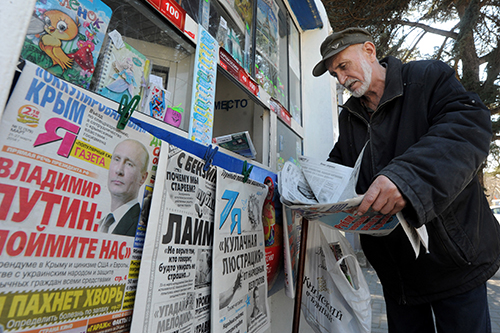
How patriotism with a Cold War tinge is damaging Crimea’s press
“You should move to Kiev,” I was trying to persuade a friend of mine to leave Crimea. I first met him at the time when cassettes were used in voice recorders, there were no e-mail addresses on business cards, and people preferred to make acquaintances in bars, not online. He asked me not to make…