
Google’s Chinese wake-up call
On Monday, Google made good on its promise to stop censorship of its Chinese search engine, Google.cn, by rerouting viewers to its unfettered Hong Kong site. According to the company’s chief legal officer, David Drummond, the move was “a sensible solution to the challenges we’ve faced—it’s entirely legal and will meaningfully increase access to information…

Circumventing India’s radio news ban
Violence against provincial journalists, self-censorship, and the rise of paid news were the leading press freedom concerns cited by editors and journalists that I met with during my recent visit to India. But for Shubhranshu Choudhary, known as Shu, it’s the ban on radio news that most concerns him. He believes the ban is fueling India’s long-simmering Maoist insurgency,…
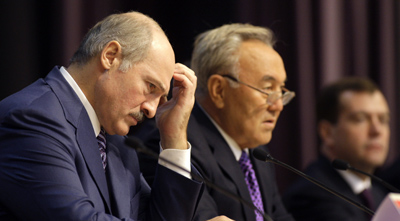
In bad company: Kazakhstan takes page from Belarus
Belarus has been termed Europe’s last dictatorship because of its long intolerance of dissent and press freedom. So accustomed is the world to the clampdowns of President Aleksandr Lukashenko’s regime that neither a recently issued decree on Internet access, which requires that providers record users’ personal data, nor last week’s police raids at a number…
Prime minister says Ethiopia plans to jam VOA broadcasts
New York, March 19, 2010—Ethiopia is preparing to jam the Amharic-language broadcasts of the U.S. government-funded Voice of America (VOA), Prime Minister Meles Zenawi declared Thursday in a press briefing with international media correspondents based in the capital, Addis Ababa.
Jordan’s security court bans coverage of corruption case
New York, March 15, 2010—The Jordanian State Security Court should reconsider its decision last week to ban news media from covering corruption allegations involving the Jordan Petroleum Refinery Company and several leading national figures, the Committee to Protect Journalists said today.
CPJ alarmed by harassment of journalists in Cameroon
Dear President Biya: We are writing to express our alarm at the harassment and abuse of at least a dozen journalists in Cameroon. These reporters each raised questions about your administration’s management of public finances, the progress of an anti-corruption drive dubbed Operation Sparrowhawk, and local government affairs. We call on you to hold members of the administration accountable for using security forces and criminal laws to settle scores with the media. We further urge you to initiate reforms that would refer matters of defamation to civil courts.