Veteran Chinese columnist dismissed for critical articles
New York, January 28, 2011–The Chinese government is stepping up pressure on media outlets in order to silence outspoken journalists, the Committee to Protect Journalists said today. The Guangzhou-based Southern Media Group forced veteran columnist and editor Zhang Ping to resign Thursday following pressure from information authorities due to his candid commentaries, according to international…
CPJ finds obstruction during Sudanese referendum
New York, January 27, 2010–Sudanese authorities harassed, obstructed, and censored local and international news media covering this month’s referendum concerning independence for South Sudan, a CPJ analysis has found. CPJ condemns the harassment of the press in Sudan and calls for an end to the repressive tactics.
Authorities illegally shutter radio station in Zambia
New York, January 27, 2011–Authorities in Zambia’s Western Province must immediately allow community station Radio Lyambayi to return to air, the Committee to Protect Journalists said today. The government raided the private broadcaster based in Mongu, about 360 miles (580 kilometers) west of the capital, Lusaka, carting away computers and other broadcasting equipment on January…
Singapore forces popular site to register as political group
New York, January 26, 2011–In a concerning move against political commentary in advance of upcoming general elections, the government of Singapore has ordered a journalistic website to register as a political association, the Committee to Protect Journalists said today. The Online Citizen says it has complied with the order, and has announced a January 29 “celebration” of…
Preventing video takedowns when reporting
Watching the stream of reporting from Egypt today, I’ve noticed some unconfirmed reports that videos of the events uploaded to YouTube have been taken down by the company. I haven’t been able to find any concrete examples, so I can’t say whether this is true. YouTube takedowns did happen for a few of the more…
Tunisian TV station’s suspension reflects tenuous freedom
On Sunday, the privately owned broadcaster Hannibal TV was forced off the air for more than three hours. The state-owned news agency Agence Tunis Afrique Presse (TAP) issued a statement stating that an arrest warrant had been issued for the station’s owner on charges of “high treason” for an alleged “plot to destabilize national security.”…
Will Tunisia’s ‘Internet revolution’ endure?
There has been a great deal written online about how much of a positive role the Internet played in recent events in Tunisia (if you’d like to catch up, Alex Howard’s link round-up provides a good summary of the many sides, both for and against). At CPJ, our focus is on slightly different questions: How…
In China, Kristof’s blogs are shut down
Nicholas Kristof’s Sunday column in The New York Times documents the latest in a series of tests the journalist has performed in Chinese cyberspace. The conflicting results he achieved while setting up a Chinese-language blog and micro-blog demonstrate how difficult it is to judge what censors will permit in an online space.
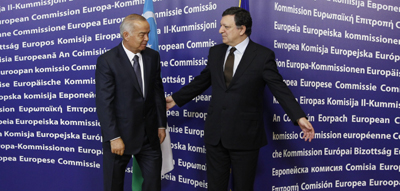
EU has contradictory message on Karimov, Lukashenko
Unless European Union officials mean to expose the inconsistency of their own policymaking, they should stand firm by their declared commitment to defend press freedom and human rights in the former Soviet countries. For now, their drastically different approaches to authoritarian leaders in Belarus and Uzbekistan leave one questioning the EU’s strategy.