Internet law: a good bad example of Russia’s backsliding
Russia’s State Duma has passed a number of new laws in the past week, all seemingly aimed at reining in civil society and criticism of public figures. The bills would re-criminalize defamation and impose limits and labels on NGOs. They follow the introduction last month of excessive fines for unauthorized protests.
News coverage of economic sanctions barred by Iran
New York, July 12, 2012–Iranian authorities have issued new censorship guidelines barring domestic news outlets from reporting on the impact of Western economic sanctions, local and international news outlets reported Wednesday. And, with at least three imprisonments reported, the government is continuing its years-long anti-press campaign.
Shallow victory for China’s journalists, protesters
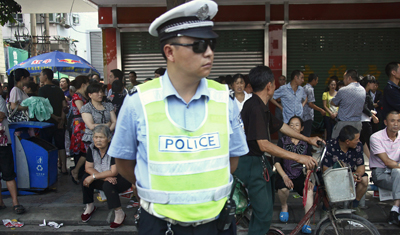
Shi Junrong, Xi’an Evening News bureau chief in the city of Wei’an, ran into trouble recently after he reported on the costly brand of luxury cigarettes favored by local officials. He announced on his microblog that the paper suspended him soon after, according to the U.S. government-funded Radio Free Asia.
Sudan must end crackdown on press covering protests
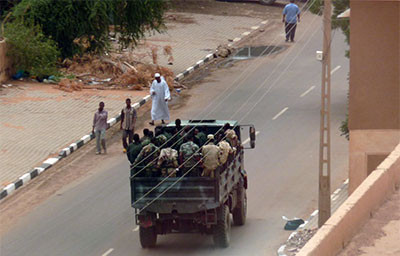
New York, July 3, 2012–Sudanese authorities should allow journalists to cover anti-government demonstrations in Khartoum, the Committee to Protect Journalists said today. Over the past week, authorities have raided a media office and a journalist’s home, arrested one journalist and interrogated another, deported a third journalist, and blocked at least three critical websites.
The New York Times takes on China’s censors
Well, that didn’t take long. Just days after The New York Times’ soft launch of its Chinese-language edition and accompanying microblog accounts, Berkeley-based China Digital Times website reports that the @nytchinese Sina Weibo feed is no longer accessible in China, along with two accounts hosted by Netease and Sohu. We couldn’t pull them up this…

Sri Lankan police raid offices of two news websites
New York, June 29, 2012–The Committee to Protect Journalists calls on authorities in Sri Lanka to immediately stop harassing news outlets. Police in Colombo raided the offices of two opposition news websites today, arresting nine people and confiscating equipment, according to news reports.
High-tech censorship on the rise in East Africa
Ethiopia has always been a country at the cutting edge of Internet censorship in Africa. In the wake of violence after the 2005 elections, when other states were only beginning to recognize the potential for online reporters to bypass traditional pressures, Meles Zenawi’s regime was already blocking major news sites and blog hosts such as…
In Benin, newspapers sanctioned for coverage of officials
Throughout December 2011, HAAC, Benin’s state-run media regulatory agency, summoned more than a dozen newspapers to public hearings and handed them sanctions ranging from a public apology to indefinite suspension, according to news reports. HAAC’s president is appointed by Benin’s head of state, and two-thirds of the agency’s members are appointed by the government, CPJ…