Thwarting Freedom of Information
Agencies exploit every loophole to evade disclosure requirements By Jason Leopold On December 13, 2016, I filed a Freedom of Information Act lawsuit against the FBI seeking a wide range of documents about a series of highly controversial decisions the bureau made in the weeks leading up to the U.S. presidential election that Democratic lawmakers…
Introduction: The New Face of Censorship
Governments and non-state actors find innovative ways to suppress the media By Joel Simon In the days when news was printed on paper, censorship was a crude practice involving government officials with black pens, the seizure of printing presses and raids on newsrooms. The complexity and centralization of broadcasting also made radio and television vulnerable…
In Brazil, outdated defamation laws and costly court cases used to pressure critics
Brazilian journalist Erik Silva never imagined that printing information from a municipal government website would see him accused of defamation and lead to a drawn-out court case. But almost a year after writing about the size of salary earned by a municipal accountant in Corumbá, a city of just under 100,000 people on Brazil’s western…
CPJ Highlights: March edition
Standing in solidarity with the U.S. press In recent months, CPJ has documented charges brought against at least 10 journalists who were covering protests over the Dakota Access Pipeline in North Dakota and Lee County, Iowa. We have consistently called on authorities to drop the charges against the journalists, most recently in a letter sent…
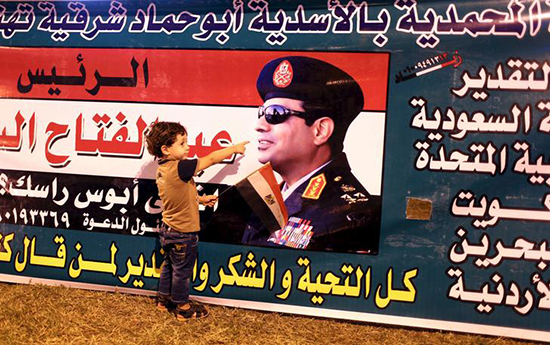
As Egypt-U.S. relationship moves forward, jailed Egyptian journalists left behind
Among the things Egyptian President Abdel Fattah el-Sisi and U.S. President Donald Trump are scheduled to discuss during their April 3 meeting in Washington is Egypt’s fight against terrorism. Egypt’s government has broadly interpreted this fight to include jailing dozens of journalists, including photographer Abdelrahman Yaqot, who a few days before el-Sisi arrives in Washington…
Journalist arrested in Moscow on Belarusian extradition request
New York, March 15, 2017–Russian authorities should immediately release Yuriy Baranchik, chief analytical editor of the pro-Kremlin Russian news agency Regnum, and allow him to work unobstructed, the Committee to Protect Journalists said today.
Deciding who decides which news is fake
Authorities decry the proliferation of misinformation and propaganda on the internet, and technology companies are wrestling with various measures to combat fake news. But addressing the problem without infringing on the right to free expression and the free flow of information is extremely thorny.
Media Law Resource Center Conference 2017
On March 13, 2017 at the University of Miami, the Media Law Resource Center the will hold a conference, “Legal Issues Concerning Hispanic and Latin American Media.” The conference will look at: Journalism Challenges in Latin America Cuba After Castro Online Piracy in Latin America Covering the Immigration Debate