Attacks on the Press 2009: Pakistan
Top Developments• Press has very limited access during two military offensives.• Reporters face attacks, threats from all sides. Four are killed. Key Statistic 6: Homes of journalists destroyed by militants in retaliatory attacks. As Pakistan’s military launched two major offensives within its borders, officials pressured news media to report favorably on the conflicts while the Taliban and…
Attacks on the Press 2009: Thailand
Top Developments• Amid partisan conflict, media owner is target of failed assassination.• Heavily used lese majeste laws criminalize criticism of royal family. Key Statistic 2,000: Web sites blocked by government for violating lese majeste laws. Thai media were caught in the middle of a political conflict that entered its fourth year of destabilizing antigovernment street…
Attacks on the Press 2009: Uzbekistan
Top Developments• Nation is a persistent jailer of journalists.• Security agents enforce rigid censorship. Key Statistic 4: Years EU human rights sanctions were in place before being lifted in 2009. President Islam Karimov’s authoritarian government held at least seven journalists in prison, retaining its notorious distinction as the region’s leading jailer of journalists. Authorities harassed independent…
Attacks on the Press 2009: Venezuela
Top Developments• Regulators strip licenses from critical broadcasters.• Government wages politicized investigation into Globovisión. Key Statistic 34: Private radio and television stations pulled from the air. After scoring a major victory in a February referendum that granted indefinite presidential re-election, President Hugo Chávez Frías and his government intensified their years-long crackdown on the private media. The government’s…
Attacks on the Press 2009: Yemen
Top Developments • Government censors newspapers, establishes new press court. • Two journalists jailed without charge; one missing after being abducted. Key Statistic 8: Newspapers banned for periods beginning in May due to their coverage of unrest in the south. Continuing a steady years-long decline, Yemen became one of the most repressive countries in the…
Attacks on the Press 2009: Zimbabwe
Top Developments• Government fails to implement reforms allowing private media to operate.• Two international broadcasters allowed to resume operation. Key Statistic $32,000: Application and accreditation fees imposed on international journalists. In a measure of the deplorable state of press freedom in Zimbabwe, a year marked by harassment and obstruction was considered a small step forward. “Journalists…
Attacks on the Press 2009: Writing Credits
AFRICA Country summaries were researched and written by Africa Program Coordinator Tom Rhodes and Research Associate Mohamed Hassim Keita. AMERICAS Country summaries were researched and written by Senior Program Coordinator Carlos Lauría, Senior Research Associate María Salazar-Ferro, Washington representative Frank Smyth, and program consultants Mike O’Connor and Claudia Duarte. ASIA Country summaries were researched and…
Amid crackdown, two blogs shuttered in Vietnam
New York, February 12, 2010—The Committee to Protect Journalists condemns the Vietnamese government’s apparent shutdown of two politically oriented blogs, Blogosin and Bauxite Vietnam. The sites, both of which published critical perspectives on sensitive government issues, had been the targets of ongoing hacking, The Associated Press and the Agence France-Presse reported.

U.S military releases detained Reuters photographer in Iraq
New York, February 10, 2010—The Committee to Protect Journalists is relieved that the U.S military has released Iraqi photographer and cameraman Ibrahim Jassam today after holding him without charge for 17 months in Iraq, but calls on the U.S. government to ensure that this release marks the end of its policy of open-ended detentions of journalists. Jassam,…
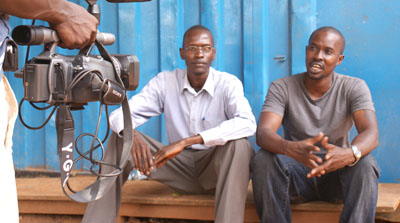
Freedom of information laws struggle to take hold in Africa
In Uganda, a ruling this week in a landmark case of two journalists seeking to compel their government’s disclosure of multinationals oil deals highlighted the challenges to public transparency just before media leaders, press freedom advocates, officials, and former U.S. President Jimmy Carter gather in Ghana next week at the African Regional Conference on the Right…