Iran persists in its crackdown against journalists
New York, September 12, 2012–Continuing their three-year-long clampdown on journalists covering human rights, minority groups, and political reform, Iranian authorities have summoned two journalists to begin prison terms and are bringing two others to trial.
News coverage of economic sanctions barred by Iran
New York, July 12, 2012–Iranian authorities have issued new censorship guidelines barring domestic news outlets from reporting on the impact of Western economic sanctions, local and international news outlets reported Wednesday. And, with at least three imprisonments reported, the government is continuing its years-long anti-press campaign.
State-sponsored attacks: open season on online journalists
The last few weeks have offered the strongest indications yet that nation-states are using customized software to exploit security flaws on personal computers and consumer Internet services to spy on their users. The countries suspected include the United States, Israel, and China. Journalists should pay attention–not only because this is a growing story, but because…
Egyptian police shutter Al-Alam’s Cairo office
New York, May 16, 2012–The Committee to Protect Journalists condemns Sunday’s raid on the Cairo offices of Al-Alam, an Iranian Arabic-language satellite broadcaster, which effectively shut down the station’s news gathering in Egypt. CPJ calls on authorities to immediately return the station’s confiscated equipment and allow staff members to resume their work.
Most censored nations each distort the Net in own way
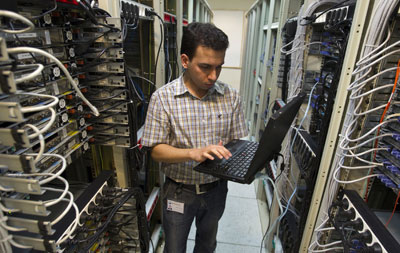
One big reason for the Internet’s success is its role as a universal standard, interoperable across the world. The data packets that leave your computer in Botswana are the same as those which arrive in Barbados. The same is increasingly true of modern mobile networks. Standards are converging: You can use your phone, access an…
Video: 10 Most Censored Countries
CPJ Deputy Director Robert Mahoney counts down the 10 countries where the press is most tightly restricted. How do leaders in these nations silence the media? And which country is the worst of all? (4:03) Read CPJ’s report on the 10 Most Censored countries for more detail on how censorship works, and which countries were…
China not most censored, but may be most ambitious
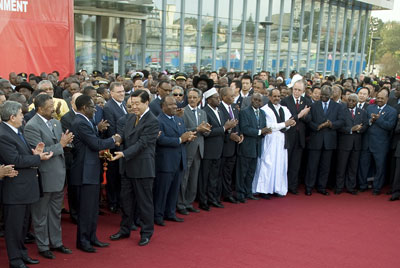
China didn’t make the cut for our 10 most censored countries. While the Chinese Communist Party’s censorship apparatus is notorious, journalists and Internet users work hard to overcome the restrictions. Nations like Eritrea and North Korea lack that dynamism.

Assisting journalists forced to flee censorship
CPJ’s Journalist Assistance Program supports journalists who cannot be helped by advocacy alone. In 2011, we assisted 171 journalists worldwide. Almost a fourth came from countries that made CPJ’s Most Censored list. Eight journalists from Eritrea, five from Syria, six from Cuba, and a whopping 20 from Iran sought our help after being forced to…